Get Full Government Meeting Transcripts, Videos, & Alerts Forever!
Get email alerts on the Firearms Policy topic
No spam. Unsubscribe anytime.
Montana attorney general backs bill to tighten PLCAA exceptions; committee advances measure
Summary
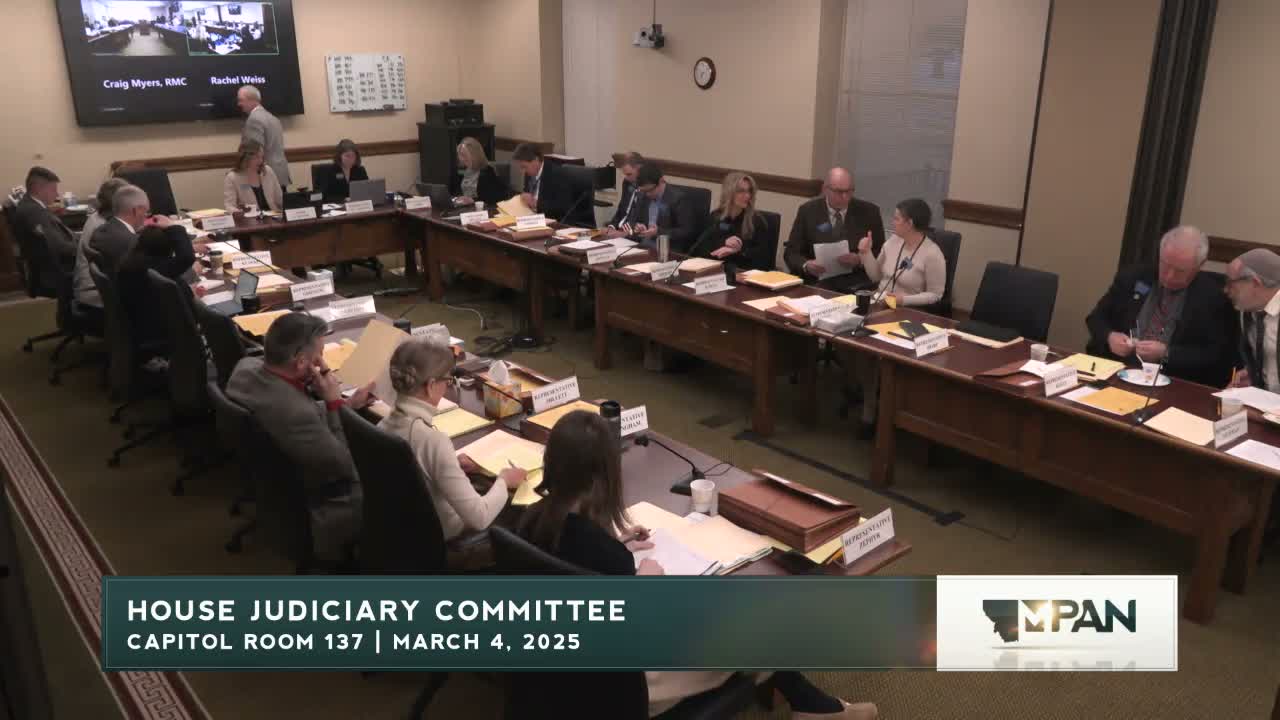
Sponsor Shannon Maness and Attorney General Austin Knudsen told the House Judiciary Committee HB 801 will limit negligent-marketing suits against firearms manufacturers by tightening PLCAA exceptions; proponents framed it as preventative and to attract manufacturers, while some members pressed for Montana-specific evidence. Committee advanced the bill in executive action.
Representative Shannon Maness opened HB 801, invoking recent litigation trends and urging the committee to "close those loopholes" in PLCAA that she described as permitting suits that should not proceed. She said the bill "limits negligent marketing claims" to circumstances involving knowingly illegal marketing or direct targeting of prohibited purchasers.
Montana Attorney General Austin Knudsen testified in support, telling the committee he viewed the bill as timely given developments in federal litigation and said, "The U.S. Supreme Court is literally this morning in about 45 minutes, we'll be hearing Mexico versus Smith and Wesson et al," framing the state measure as a preventive alignment with federal trends.
Committee members asked whether Montana has seen instances of abuse of PLCAA; Knudsen said there were no specific Montana cases he could point to but argued the bill is prudent to protect the state's business climate and to close exceptions exploited elsewhere. A few public commenters (online and in-room) supported the bill on Second Amendment grounds; no organized opponents signed in during the hearing.
In executive action the committee moved HB 801 do pass; roll call recorded 12 yes and 8 no and the motion passed. The committee record reflects sponsor and AG emphasis on preemptive protection of manufacturers and recruitment of manufacturing jobs, and questions from members about local evidence of the problem.