Get Full Government Meeting Transcripts, Videos, & Alerts Forever!
Get email alerts on the Charitable Giving topic
No spam. Unsubscribe anytime.
Montana bill would let donors sue over broken endowment agreements but bar refunding gifts
Summary
Senate Bill 134 would let donors and named legal representatives enforce written endowment agreements in court, require a 90-day notice and permit courts to order remedies short of returning donated funds; sponsor and philanthropy groups say it clarifies donor intent, critics asked about retroactivity and scope.
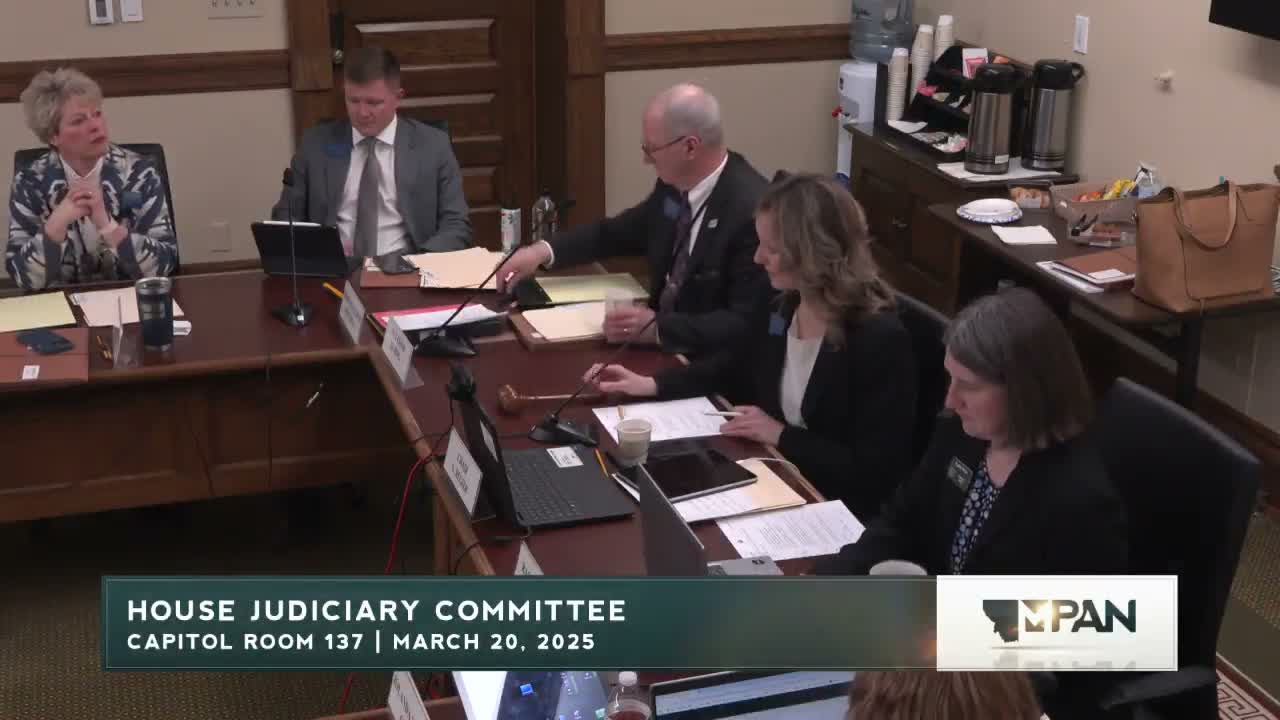
Sen. Greg Hertz, sponsor of Senate Bill 134, told the House Judiciary Committee the bill creates ‘‘the Safeguarding Endowment Gifts Act’’ to give donors a legal pathway to enforce written endowment agreements and to restore donor confidence in charitable giving. Hertz said courts could order remedies that keep funds devoted to their intended charitable purpose — such as directing future compliance or transferring gifts to a charity with a similar mission — but would not allow donors or estates to reclaim donated money or to collect damages.
Megan Schmidt, senior director of government affairs at the Philanthropy Roundtable, testified the measure treats restricted endowment gifts as contractual in effect and provides clarity where state law is unclear. Schmidt said the bill requires donor-imposed restrictions to be in a written endowment agreement, creates a 90-day written-notice requirement to the charity, and allows a complainant to file suit within three years after discovery of a breach. She told lawmakers that, in practice, most disputes have arisen at the university level but that nonprofit organizations can also be affected.
Committee members pressed proponents on key features: the bill’s retroactive applicability to endowments dating back to 1975, how ‘‘endowment agreement’’ is defined, and whether the measure could invite micromanagement of institutions. Schmidt said the 1975 date was selected by stakeholders and that the proposal intentionally prevents donors or heirs from recovering the principal; remedies are limited to judicial accounting, declarations, interpretation of the agreement, or transferring funds to another charity with a similar mission.
Sponsor Hertz and proponents argued the bill would encourage giving by preserving donor intent and offering courts a framework to resolve disputes. Skeptical members sought written examples from Montana; Schmidt offered to provide nationwide case citations but said she could not name specific parties in committee testimony. The committee closed the hearing with the bill’s sponsor urging lawmakers to adopt the measure as a targeted clarification of current law.