Get Full Government Meeting Transcripts, Videos, & Alerts Forever!
Get email alerts on the Judicial Selection topic
No spam. Unsubscribe anytime.
Proposal to replace judicial elections with an appointment system draws sharp opposition
Summary
HB 506 would put a constitutional amendment on the ballot to replace election of Montana Supreme Court justices with a legislative-nominated, governor-appointed process; opponents warned it would politicize the court and remove voter accountability, while the sponsor proposed committee-driven vetting and a fallback 'lottery' if the nominating panel deadlocks.
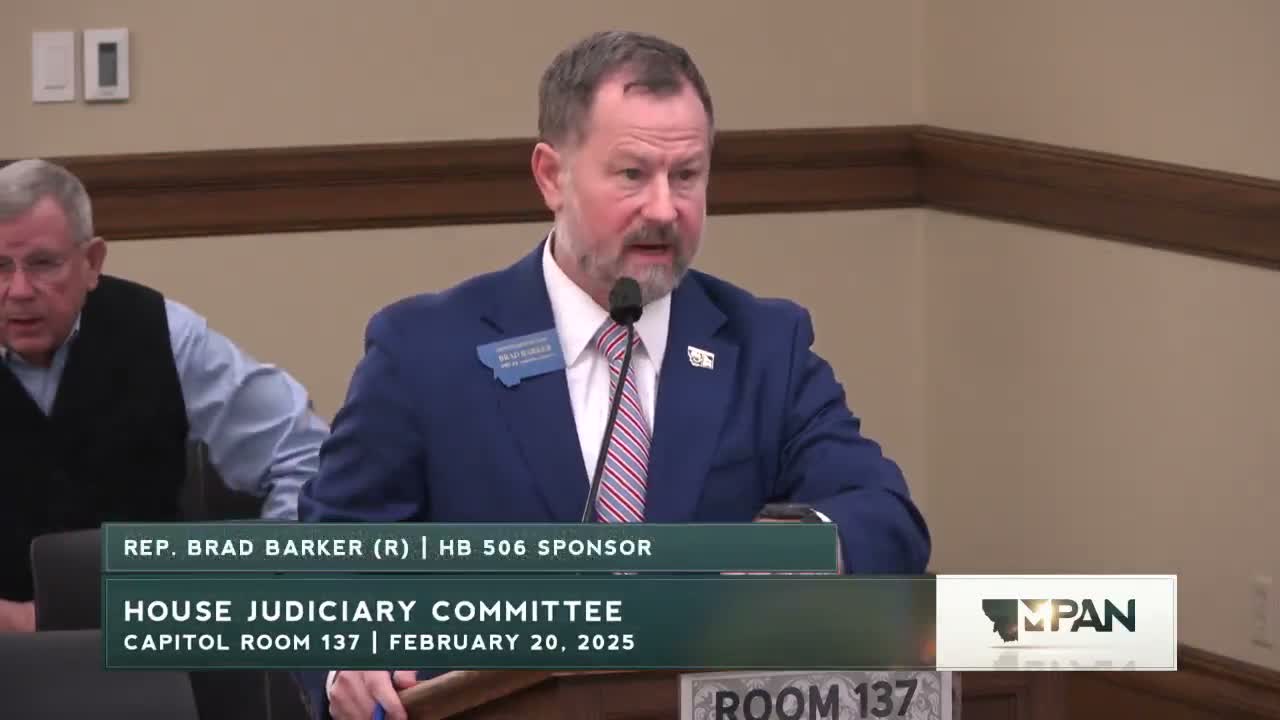
Representative Brad Barker opened House Bill 506, a proposed constitutional amendment that would let voters decide in 2026 whether to replace statewide elections for Supreme Court justices with an appointment system. Barker described a nominating commission of six partisan appointees (three from each side) that would select a short list of nominees for the governor to appoint, with a lottery fallback if the commission cannot agree.
Opponents from multiple organizations — Friends of the Third Branch, Big Sky 55 Plus, the ACLU of Montana, the Montana Trial Lawyers Association and individual witnesses — said the change would reduce accountability to voters, risk politicizing the judiciary and undermine the 1972 constitutional framework that established nonpartisan judicial elections. Anne Sherwood said the measure "is partisan judicial elections all over again, except with less accountability to the voters." Alex Rate of the ACLU warned the governor would gain excessive appointment power if the commission deadlocked.
Committee members raised detailed operational questions about how a 'full list' of qualified nominees would be prepared, how the lottery would work, whether nominees could opt out, whether retention elections should be required to blunt potential chilling effects on sitting justices and how the system would affect transparency. Several members suggested looking to other states' systems (Alaska, merit-commission models) and asked the sponsor to consider retention elections or statutory clarifications. Barker said he would be open to amendments and noted he would strike language that unintentionally required senate confirmation.
The hearing included sustained public and organizational opposition and lengthy committee questioning about mechanics, transparency and long-term effects on judicial independence. Committee did not vote on the proposal during the hearing.