Get Full Government Meeting Transcripts, Videos, & Alerts Forever!
Get email alerts on the Cps Records topic
No spam. Unsubscribe anytime.
Legislator access to CPS files and new definitions on child removal spark heated hearing
Summary
Rep. Mercer’s HB 6 90 would expand legislator access to Child Protective Services records under confidentiality rules and change statutory language so certain parental practices (raising a child "consistent with biological sex") would not constitute abuse/neglect; advocates and county attorneys warned the language is broad and could limit CPS discretion in urgent situations, especially for transgender youth.
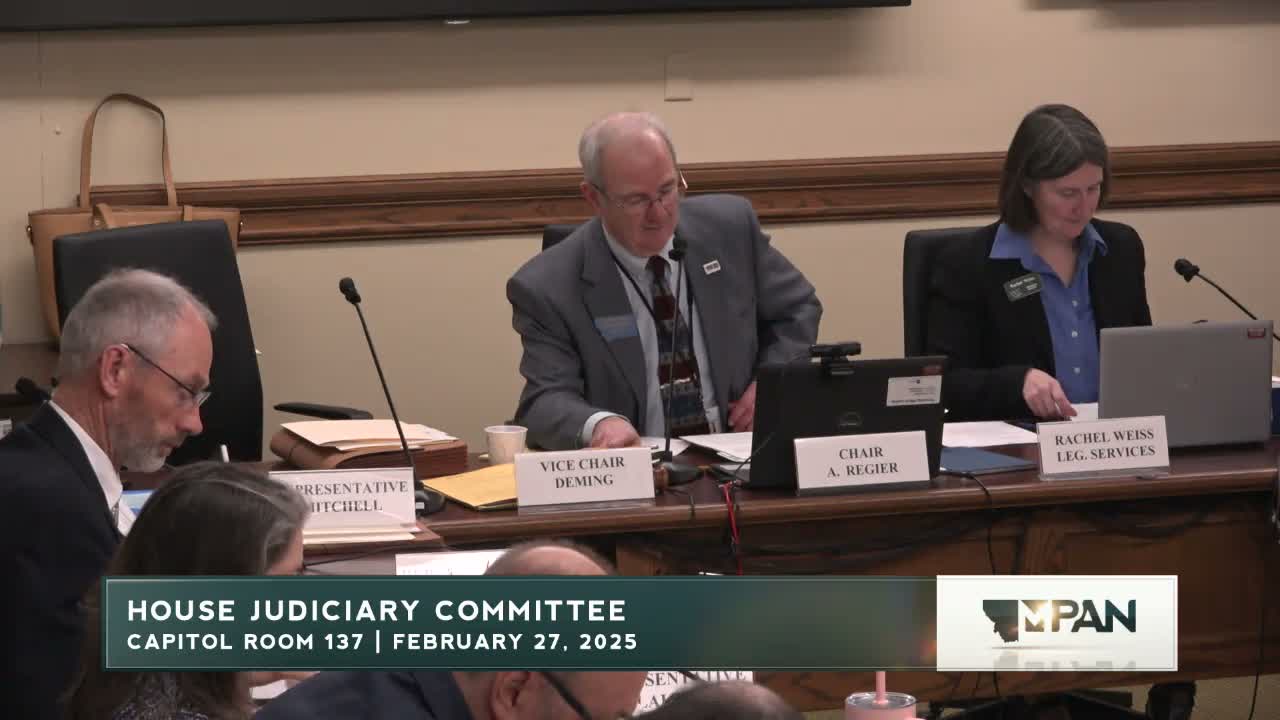
Representative Bill Mercer told the Judiciary Committee that House Bill 6 90 responds to a statutory right legislators already possess to review Child Protective Services (CPS) records and seeks to clarify protections for attorney‑client privileged materials while also amending abuse and neglect definitions. "This section of the code ... allows the legislator to say to the district court ... I don't believe that this is subject to the attorney client privilege," Mercer said, explaining an in‑camera mechanism to challenge privilege designations.
The bill also inserts a definition excluding from "abuse or neglect" parental conduct described as "raising a child consistent with the child's biological sex, including related mental‑health or medical decisions." Sponsors said the language is modeled on another state's code and intends to prevent removal based solely on parental disagreement about transition. But opponents, including the Montana Coalition Against Domestic and Sexual Violence, BridgerCare, and county prosecutors, warned the definition is broader than DPHHS policy and could prevent CPS from investigating or removing children in high‑risk situations. Deputy Yellowstone County Attorney Heather Webster said such changes could narrow investigative thresholds and complicate mandatory‑reporter decisions; she requested committee members review the DPHHS policy language before acting.
Committee members asked whether the proposed language would bar narrowly tailored CFSD policy practice and whether the attorney‑client‑privilege challenge mechanism is administrable when no case is pending. Sponsor Mercer said legislators who request files must sign confidentiality agreements and that the bill merely clarifies the scope of disclosure and provides judicial review where privilege is claimed. Several members asked whether the language is overbroad and whether there should be an explicit "solely" qualifier for the parental‑practice exclusion; Mercer said he would not accept adding the opposite qualifier but referenced that the language mirrors the Virginia statute.
The hearing generated sustained questioning and no immediate committee action; members requested further materials, including the DPHHS policy that sponsor cited.