Get Full Government Meeting Transcripts, Videos, & Alerts Forever!
Get email alerts on the Dui Law topic
No spam. Unsubscribe anytime.
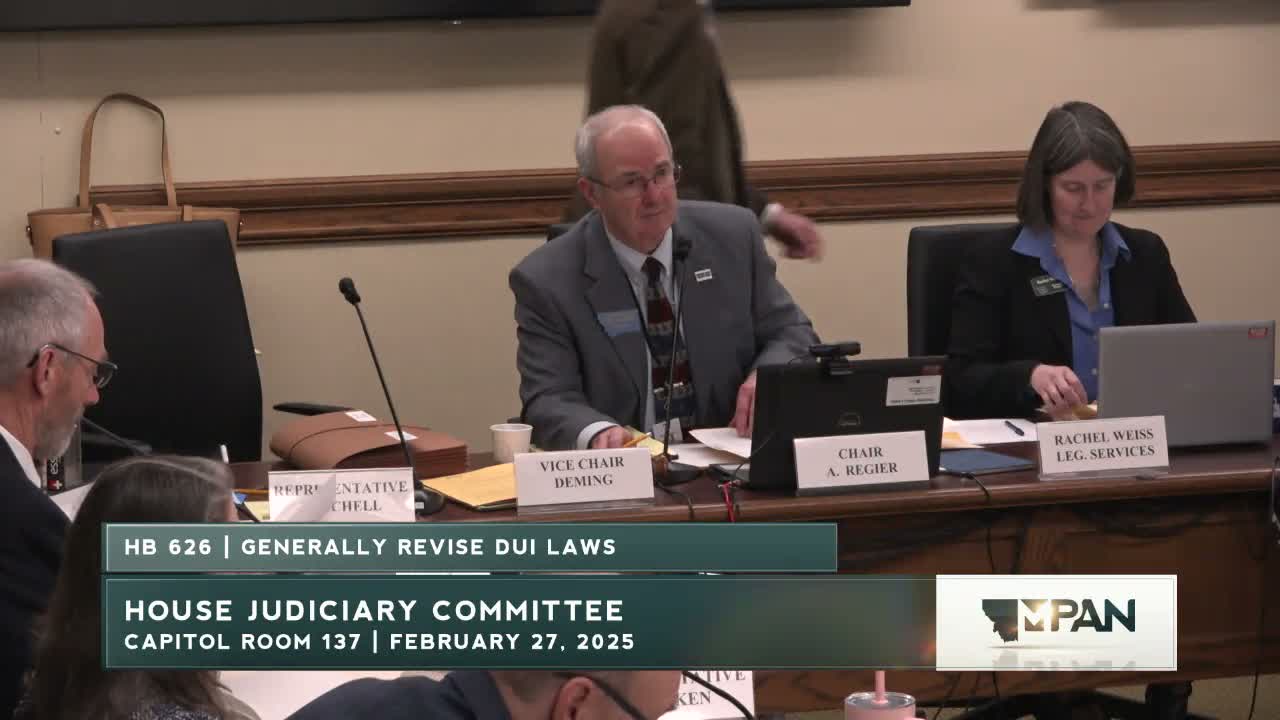
Committee hears technical fix to let prosecutors "stack" pending DUI offenses
Summary
County attorneys and law‑enforcement witnesses told the committee HB 6 26 closes a loophole that treats multiple pending DUIs as separate first offenses; proponents said it’s a technical correction to escalate penalties for repeat dangerous drivers, while lawmakers asked about deferred‑prosecution and cross‑reference impacts.
Representative Bill Mercer opened House Bill 6 26 as a narrowly targeted fix intended to allow prosecutors to treat closely timed pending DUI arrests as successive offenses, giving courts and prosecutors tools to escalate charges for repeat high‑risk drivers. "This bill deals with the problem of stacking ... DUIs," Mercer said, describing the statutory inconsistency that treats DUI sentencing differently from other repeat‑offense statutes.
Matt Jennings, Missoula County Attorney speaking for the Montana County Attorneys Association, described the problem as a drafting anomaly in the DUI statutes: many offenses reference "offense dates" while DUI uses the word "conviction," producing situations where multiple pending DUIs can all be treated as first offenses. Jennings said the change is a "technical fix" and urged support because prosecutors encounter repeat pending DUI offenders routinely. He told the committee, "When somebody gets 1 DUI offense, they're more likely to get a second ... we sometimes average about a 100 DUI deaths each year." Law enforcement witnesses, including the Association of Montana Troopers, described long delays in DUI adjudications and said the bill targets repeat, high‑risk offenders.
Committee members asked about deferred‑prosecution agreements and whether those should count as prior offenses; Jennings clarified that a true deferred prosecution would not count as a prior conviction under this plan. Members also explored cross‑references and the scope of an amendment that tightens the bill to one statute (61 8 10 11) to avoid unintended changes in other code sections.
The hearing closed with proponents urging committee support; no final committee vote was recorded in the hearing transcript.