Get Full Government Meeting Transcripts, Videos, & Alerts Forever!
Get email alerts on the Public Safety DUI topic
No spam. Unsubscribe anytime.
Committee weighs expanding preliminary roadside screening to oral‑fluid tests for drugs and alcohol
Summary
Representative Steve Kelly and law‑enforcement witnesses described HB 467 as adding oral‑fluid (saliva) screening for alcohol and drugs analogous to preliminary breath tests; police said devices are primarily screening tools, not evidentiary tests, and would be one data point in a broader DUI investigation.
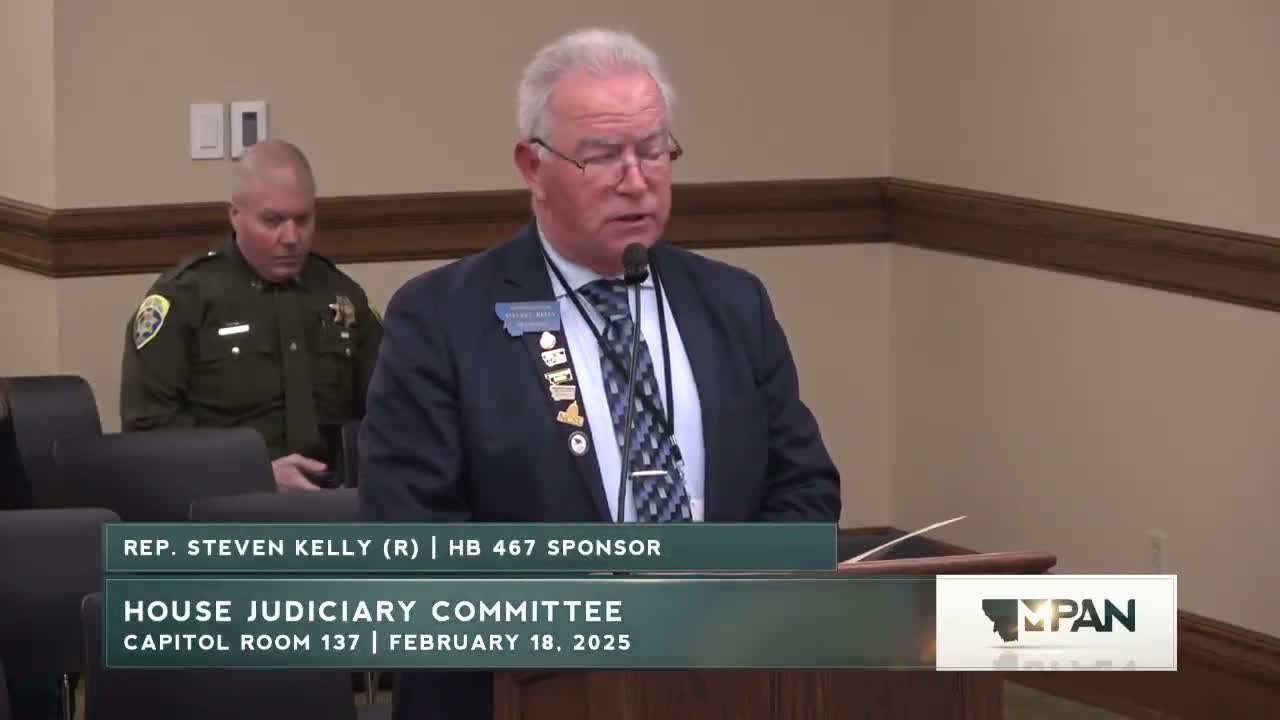
Representative Steve Kelly introduced House Bill 467, a narrowly focused measure to permit oral‑fluid (saliva) screening as a preliminary test for alcohol and to codify oral‑fluid devices already used for drug screening. "It's just a screening test," Kelly said, comparing it to the existing preliminary breath test and emphasizing that the device would not be an evidentiary test.
Captain Doug Samuelson and other law enforcement witnesses described the current state of oral‑fluid technology: most marketed devices are screening tools that detect recent use of multiple drugs and provide rapid roadside results; there is limited evidentiary oral‑fluid capacity in current commercial offerings. Samuelson described the device operation — a short swab into a cartridge with results in about five minutes — and said the test would be a "piece of the puzzle" alongside driving observations, field sobriety testing and blood or evidentiary testing when appropriate.
Committee members raised questions about accuracy, effects of substances and the potential for false positives or negatives (for example, after drinking or using nicotine). Witnesses answered that screening devices are not 100 percent accurate and that the oral‑fluid result would not alone determine prosecution; a positive screening could prompt an evidentiary follow‑up such as blood testing.
Representative Kelly closed by reiterating the bill’s limited scope: oral fluid as a preliminary tool to aid officers in the field, not a replacement for current evidentiary testing. No committee vote was recorded in the transcript.