Get Full Government Meeting Transcripts, Videos, & Alerts Forever!
Get email alerts on the Immigration Employment topic
No spam. Unsubscribe anytime.
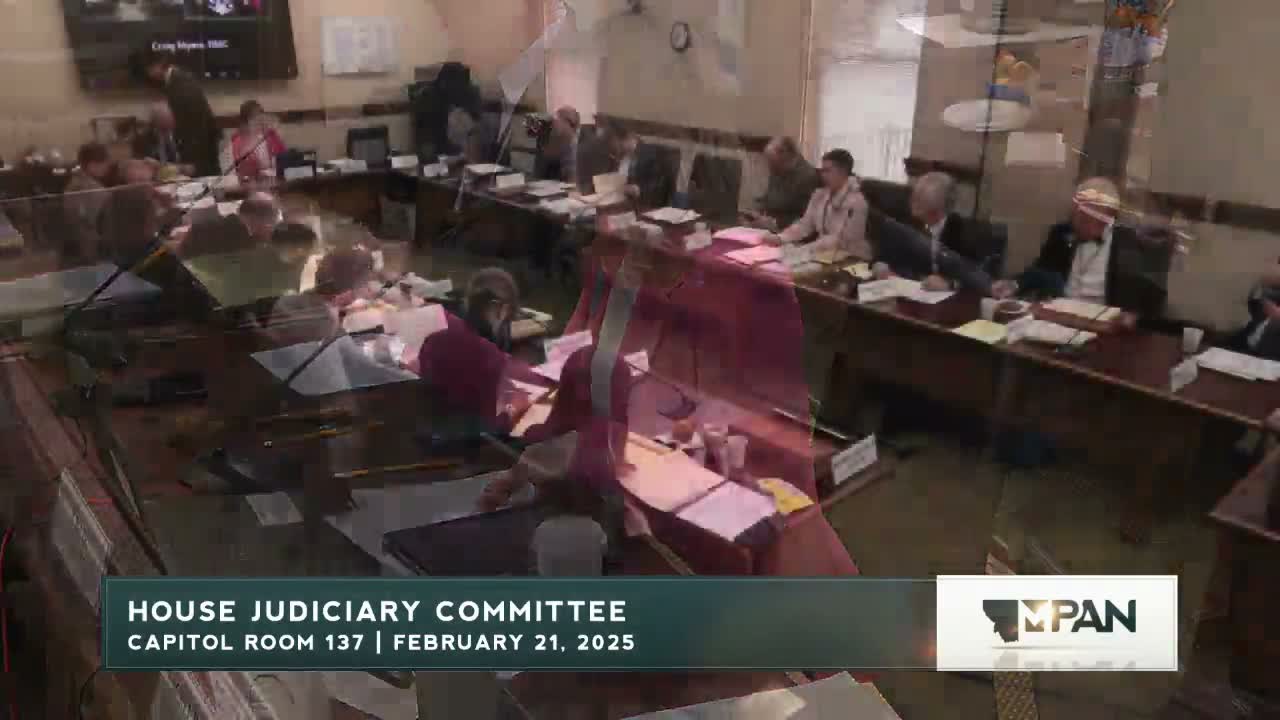
House Judiciary hears bill to revoke licenses of employers who hire undocumented workers
Summary
Representative Lucas Schubert told the House Judiciary committee HB 536 would revoke licenses for employers who knowingly hire undocumented workers and create a private right of action and an AG task force; business groups and farm advocates warned it would force employers to police federal immigration law and risk harming small rural operations.
Representative Lucas Schubert opened a hearing on House Bill 536, proposing civil and administrative penalties aimed at employers who hire people not authorized to work in the United States. Schubert said the bill would allow licensure revocation—"1 year for the first offense, 3 years for the second offense, and 20 years for a third or subsequent offense"—and would let Montana refuse to recognize other-state licenses while a revocation is in effect. The bill would also create a private right of action for businesses that allege economic harm from competitors who hire undocumented workers and would provide an appropriation to the Attorney General to create a small enforcement task force.
The Montana Chamber of Commerce and the Montana Farm Bureau Federation testified in opposition. Kerry Hegerberg of the Chamber told the committee the measure "puts Montana employers in the position of policing federal immigration laws" and warned it could disrupt ongoing business operations. Karli Johnson of the Farm Bureau highlighted farming and harvest-season scenarios where a producer could unknowingly hire workers whose authorization later becomes disputed, and she warned that penalties and fines could be crippling for small operations.
Quinlan O'Connor, chief legal counsel for the Department of Labor and Industry, answered committee questions on statutory language and operations. He said the bill's definitions of "hire," "recruit," and "refer" could reach workforce-development activities and job-service referrals, meaning job-placement programs might need to perform I‑9 verification under the bill as drafted. O'Connor also confirmed that some of the bill's negligence and knowing standards differ across subsections and that certain aspects (for example, whether multiple unauthorized workers would produce multiple violations) would be open to legal interpretation.
Committee members probed enforcement mechanics, the interaction with federal preemption, the role of E‑Verify and the I‑9 process, and the risk of misuse as a competitive weapon. Schubert and O'Connor said licensure revocation would require proof of intentional violations for the harshest penalties and that a private right of action would be limited to competitors who can show harm. The hearing closed without a committee vote on HB 536.
Next steps: the bill remains at the committee hearing stage; no committee motion or vote on final disposition was recorded in the transcript.