Get Full Government Meeting Transcripts, Videos, & Alerts Forever!
Get email alerts on the Education Parental Rights topic
No spam. Unsubscribe anytime.
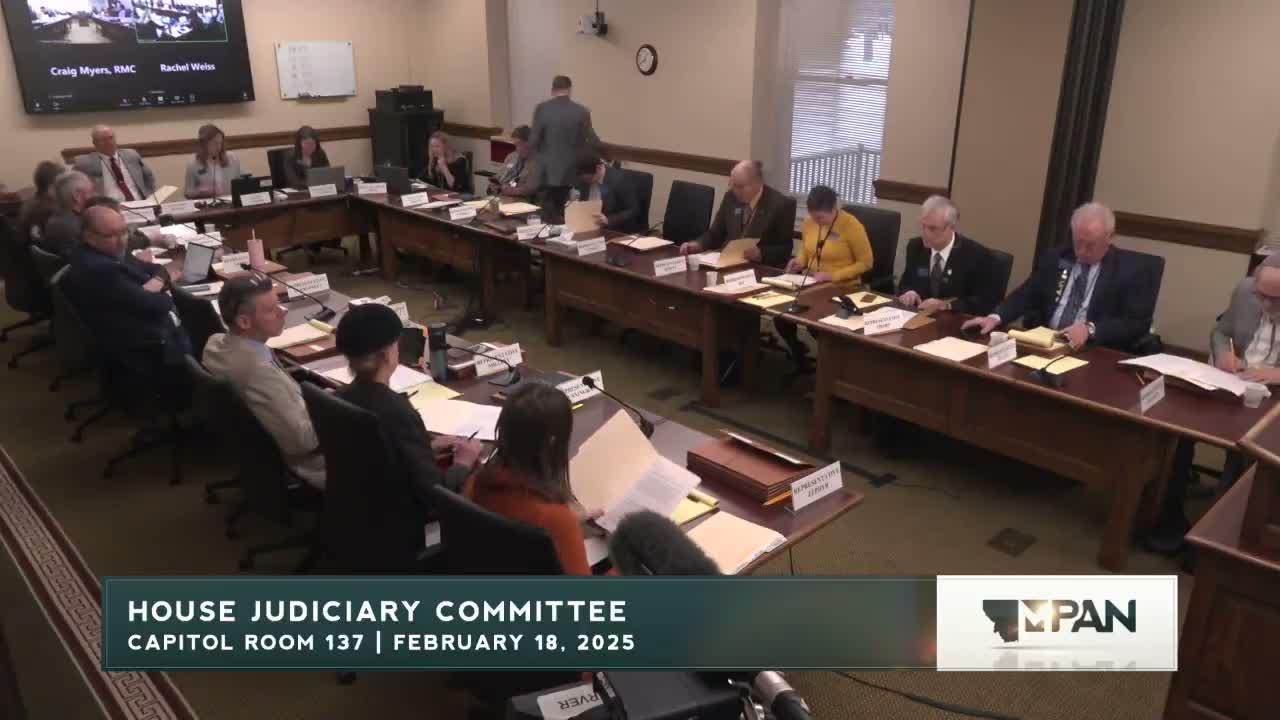
Montana Judiciary hears bill seeking parental opt‑in for identity instruction in schools
Summary
Rep. Jedidiah Hinkle told the House Judiciary Committee HB 471 would clarify prior law, define 'identity instruction' (gender identity/expression, sexual orientation) and require parents to opt in before those materials are introduced; education officials warned the mixed opt‑in/opt‑out model could create administrative confusion for districts.
Representative Jedidiah Hinkle opened testimony on House Bill 471, saying the measure aims to clear confusion created by 2021’s Senate Bill 99 and to give parents more control over sensitive classroom material. "The notices are to be presented to parents between 2 and 10 days and only before the first introducing the materials," Hinkle said, describing an annual opt‑in sheet or similar approach to reduce repetitive mailings.
The bill creates a new category called "identity instruction," defined in Hinkle's presentation as teaching that explicitly addresses gender identity, gender expression or sexual orientation and would require explicit parental permission before a student could be presented that material. By contrast, "human sexuality instruction" would remain an opt‑out activity under the sponsor’s proposal.
Supporters framed HB 471 as a transparency and parental‑rights measure. Katie Bloodgood of the Office of Public Instruction testified, "This bill is not about restricting knowledge, it's about ensuring that parents who know their children best are given the opportunity to make informed decisions regarding sensitive topics." Dylan Klapmeier, the governor’s education policy advisor, told the committee the administration supports clearer definitions to help local districts implement standards.
Opponents said the opt‑in provision would create logistical burdens and potentially limit access to important instruction. McCall Flynn, executive director of the Board of Public Education, said the board "oppose[s] this legislation based mainly on the opt‑in provision," arguing state content standards are meant to be required and that turning parts of them into opt‑in choices risks making core requirements appear optional. Rob Watson representing School Administrators of Montana warned the committee that managing mixed opt‑in and opt‑out lists within the same unit or lesson would produce "logistical chaos" and increase the risk of mistakes.
Teachers’ and public‑employee groups raised workforce concerns. Kim Popham, a former teacher testifying for the Montana Federation of Public Employees, warned that added paperwork and the potential for litigation could worsen an existing teacher shortage; she also raised practical issues such as what to do when parents disagree or fail to return permission forms.
Committee members asked for clarifications about current practice: witnesses noted the existing statute requires an annual notification and a separate 48‑hour advance notice for assemblies or new materials. Witnesses also described local‑level curriculum adoption and said the Board of Public Education sets minimum standards while local trustees adopt specific curriculum.
Sponsor Hinkle closed by saying the bill seeks to prevent materials being "slipped in under the rug," and suggested implementation could be simplified by including an opt‑in permission on the standard school‑year paperwork that travels with a student. The committee heard extensive testimony from both sides; no committee vote was recorded in the transcript.
What's next: The committee will consider amendments and whether to recommend the bill to the full House; witnesses on both sides said technical fixes could address implementation concerns.