Get Full Government Meeting Transcripts, Videos, & Alerts Forever!
Get email alerts on the Gender Policy topic
No spam. Unsubscribe anytime.
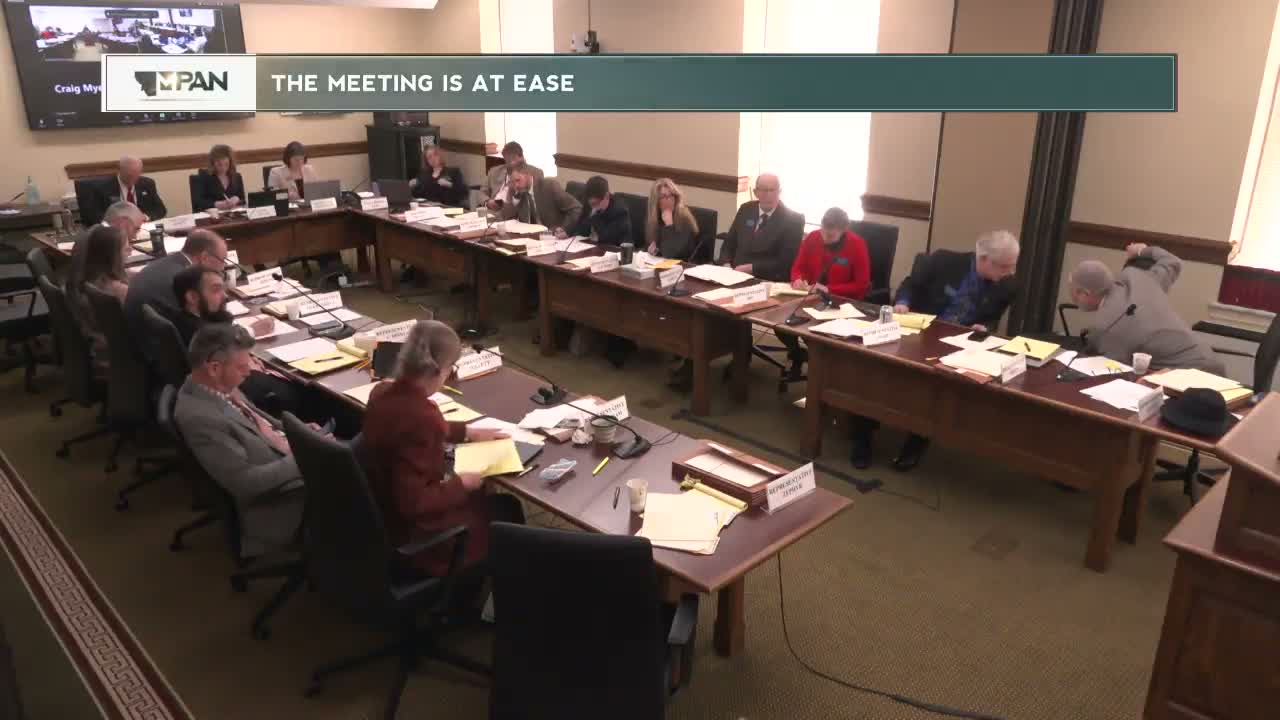
Heated exchange as committee hears resolution urging Congress to bar transgender women from women's sports
Summary
Representative Crow sponsored HJ 10 urging Congress to pass the Protection of Women and Girls in Sports Act; proponents framed the resolution as protecting Title IX-era gains, while dozens of organizations and witnesses testified in opposition and several groups said they would boycott the hearing.
Representative Crow opened House Joint Resolution 10 by asking members to support a joint resolution urging Congress to pass federal legislation restricting participation in girls' and women's sports to biological females. "This is Montana. It's not happening in Montana," the sponsor said while citing national examples and a contested collegiate case to argue the resolution addresses a fairness problem.
Proponents: Derek Streicher of the Montana Family Foundation and several online witnesses urged a due pass, arguing the resolution protects Title IX opportunities and fairness in competition.
Opponents and boycott: Sean Reagor of the Montana Gender Alliance said more than 80 organizations signed a letter boycotting the HJ 10 hearing and called the resolution harmful and unnecessary; Legal Voice, Catalyst Montana and other witnesses echoed opposition, urging the committee to table or reject HJ 10. Opponents argued the resolution stigmatizes transgender people and diverts attention from substantive policy priorities like housing and education.
Committee questioning: Legislators probed local evidence for the sponsor's claims, Title IX interactions and possible accommodations; the sponsor cited studies on post-testosterone-suppression differences and described collegiate examples. Committee members asked whether accommodations or alternative approaches had been considered; testimony divided sharply along ideological lines.
Outcome: The hearing closed without a recorded committee vote. The transcript records robust public comment and strong disagreement about the resolution's necessity and effects.