Get Full Government Meeting Transcripts, Videos, & Alerts Forever!
Get email alerts on the Public Safety topic
No spam. Unsubscribe anytime.
Committee hears proposal for per se drugged-driving law focused on blood tests and nonprescription drugs
Summary
Rep. Braxton Mitchell's HB 344 would create per se offenses for driving with certain nonprescription drugs (including fentanyl, methamphetamine and cocaine) detected in blood, replace urine testing with blood testing, and exclude valid-prescription users; prosecutors and law-enforcement witnesses urged passage while toxicologists recommended a detect/not-detect approach tied to lab capability.
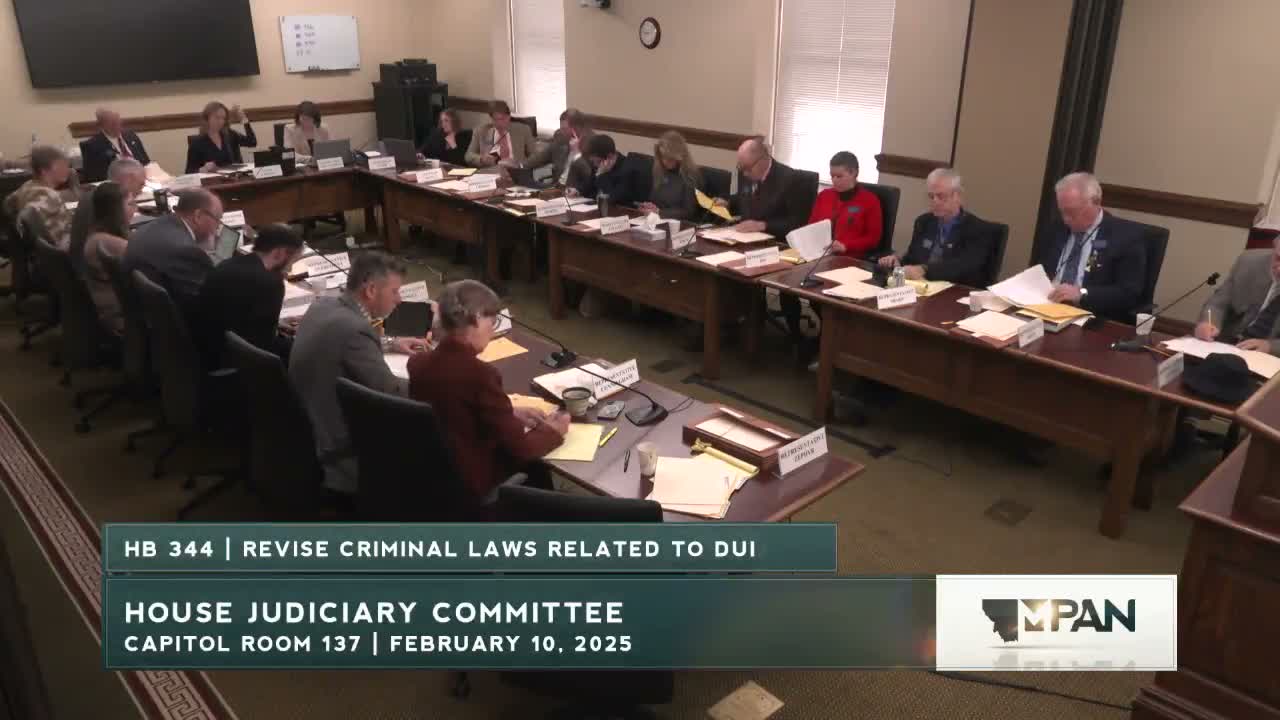
Representative Braxton Mitchell told the committee House Bill 344 would create a per se offense for drivers who have listed "dangerous drugs" in their blood while operating a vehicle, limited to nonprescription use and relying on blood tests rather than urine. "This bill addresses a crucial gap in our current law by creating a specific, per se DUI offense, for drivers only on dangerous drugs," Mitchell said.
Prosecutor and enforcement testimony: Missoula County Attorney Matt Jennings, Lewis and Clark County Attorney Kevin Downs and other county attorneys described a growing problem of drug-involved crashes and argued juries expect a numerical standard similar to blood-alcohol concentration. Jennings said prosecutors lack a consistent criterion to explain impairment to juries and urged a statutory per se limit to help secure convictions. Lake County Attorney James Lipotka told the committee the state prime lab processed 3,703 blood samples in 2023 and that 24% of drug-tested samples contained methamphetamine and 7% contained fentanyl.
Forensic concerns and amendments: Toxicology supervisor Beth Smalley and the State Crime Lab advised removing urine-based quantitative levels and recommended either a very low per se threshold tied to current detection limits or simply a detect/not-detect standard based on the lab's validated capabilities; the lab team warned that fixed numeric thresholds can become outdated as methods evolve. Law-enforcement witnesses said drug-recognition experts (DREs) are useful but not always available in rural counties, and prosecutors stressed the bill would still require observable impairment and probable cause before testing.
Scope and safeguards: Witnesses and the sponsor said the bill would exclude individuals with valid prescriptions for listed drugs and emphasized prosecutorial discretion for cases with accidental exposure or medical explanations. The bill also cross-references existing DUI penalties so repeat convictions would interact with Montana's escalating penalty scheme.
Next steps: Committee members questioned the scientific basis and practical detection windows for various drugs; sponsor Mitchell said amendments were expected to address lab concerns and that the committee closed the hearing without recording a floor recommendation in the transcript.