Get Full Government Meeting Transcripts, Videos, & Alerts Forever!
Get email alerts on the Judiciary Structure topic
No spam. Unsubscribe anytime.
Chief justice and bar groups warn against shrinking Montana Supreme Court in HB322 hearing
Summary
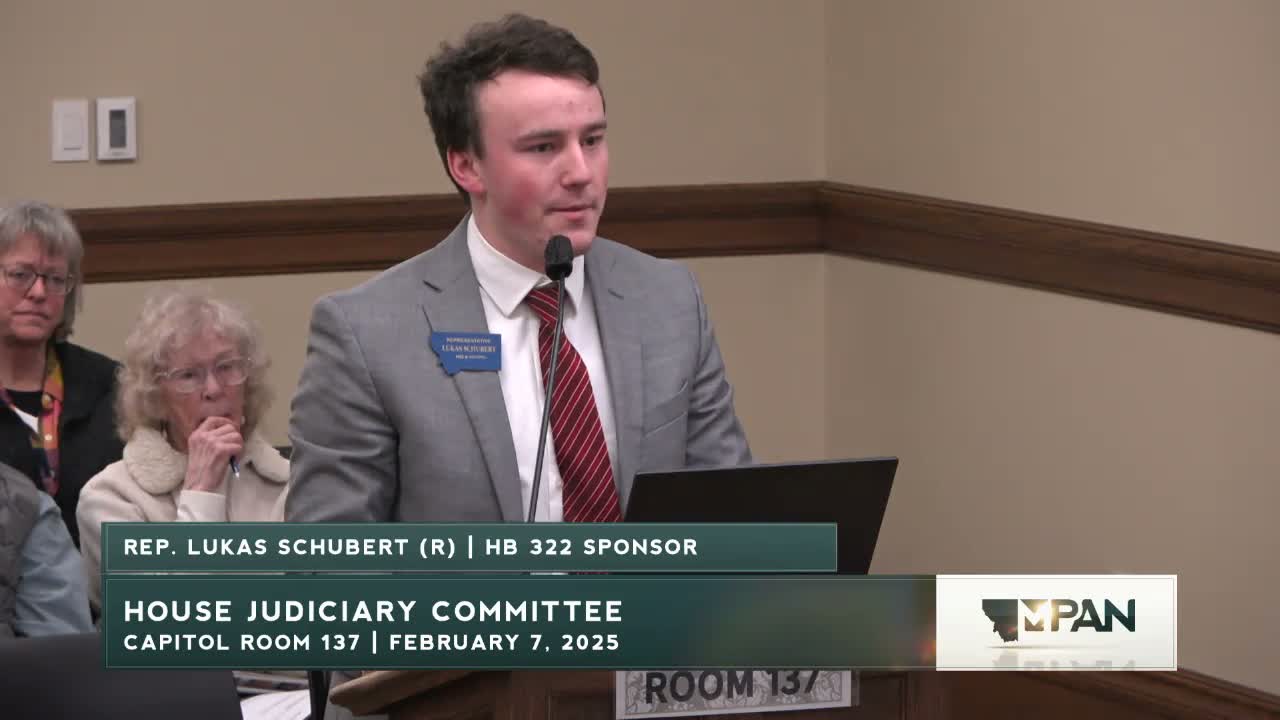
Sponsor Lucas Schubert said cutting the Supreme Court from seven to five justices would save about $1.2 million; the chief justice, past justices and bar groups warned the change would create backlogs, delay opinions and may raise constitutional questions about whether the legislature can reduce court size.
Representative Lucas Schubert opened House Bill 322 by arguing a smaller Supreme Court would save roughly $1.2 million annually and reduce ‘‘bureaucracy.’’ Schubert said several states with similar populations operate five‑member high courts and that an incoming chancery/intermediate court could mitigate workload concerns.
Chief Justice Corey Swanson and a broad coalition of opponents — including the Montana County Attorneys Association, the State Bar, defense lawyers and former Justice Patricia Cotter — urged the committee to reject the measure. Swanson said justices are at capacity and that removing seats would reduce the court’s ability to research, draft and deliver timely opinions. Patricia Cotter and other former justices and practitioners warned that reducing the court would produce a backlog of decisions and could impair access to justice.
Opponents also raised a textual constitutional question: Article 7, section 3 of the Montana Constitution authorizes the legislature to ‘‘increase’’ the Supreme Court from four to six justices; lawyers testifying before the committee noted that the plain text does not explicitly say the legislature may reduce the court and urged the committee to consider legal notes before acting.
Witnesses described how Montana’s lack of an intermediate appellate court means many appeals reach the Supreme Court, requiring the court to process a wide range of criminal and civil cases; reduction in justices would likely force the court to handle fewer cases annually or extend decision times. The chief justice and bar witnesses also described the court’s staffing model — law clerks and judicial assistants — and emphasized that writing and circulating opinions is a collaborative, time‑intensive process.
Representative Schubert said an amendment to delay the effective date could give the legislature more sessions to consider the impact and that the pending chancery court bill could alter workload dynamics. The committee closed the hearing with no immediate vote; members asked for additional data from the court about opinions and caseloads over the last decade.