Get Full Government Meeting Transcripts, Videos, & Alerts Forever!
Get email alerts on the Criminal Justice topic
No spam. Unsubscribe anytime.
Montana bill would add 2–10 year gun sentence for firearms used in drug trafficking
Summary
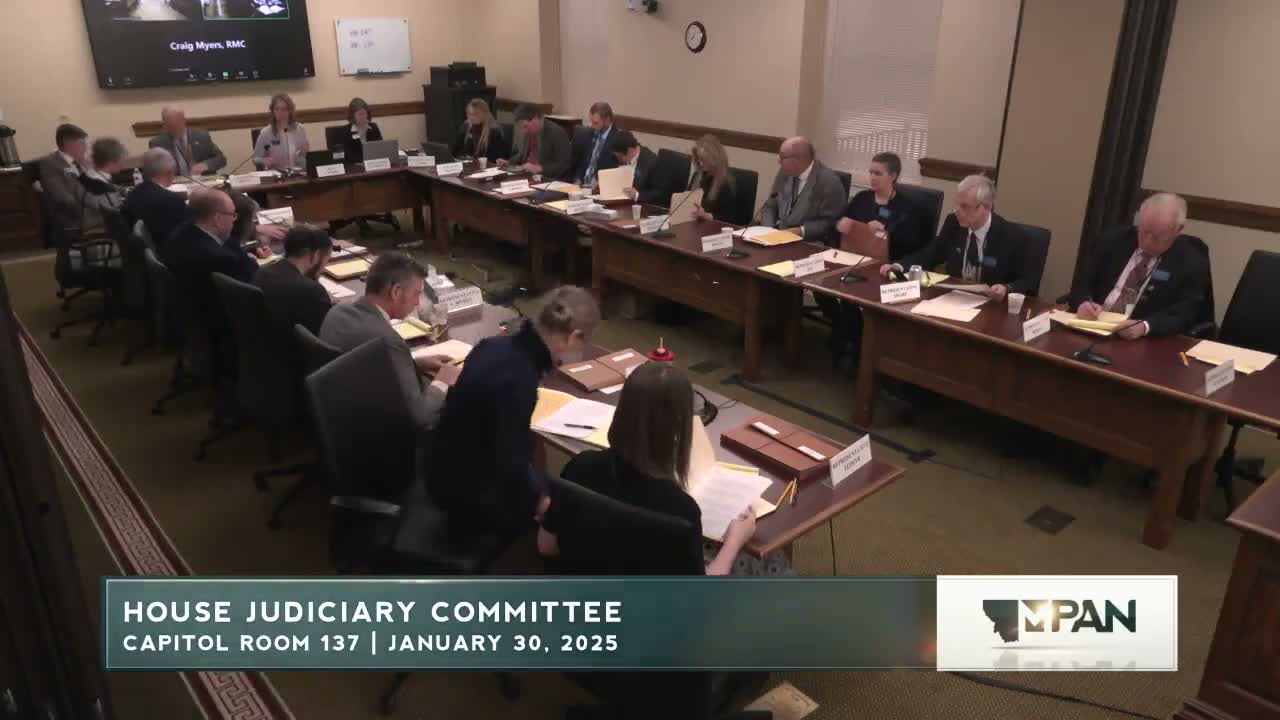
Sponsor Rep. Denise Baum said HB 287 would let prosecutors seek a penalty enhancer when a firearm is knowingly possessed or used during felony drug trafficking; law-enforcement witnesses urged a local tool while an opponent warned of constitutional risk. No vote was taken today.
Representative Denise Baum introduced House Bill 287, saying it would allow prosecutors to seek a sentencing enhancement when a person "knowingly possesses or uses a firearm" while committing felony drug-trafficking offenses such as criminal distribution or criminal possession with intent to distribute dangerous drugs. Baum said the measure targets armed drug dealers, not people with addictions, and described the statutory process for filing a notice under the enhancement statute and the separate fact-finding the court or jury must make.
Supporters framed the bill as a public-safety tool. Ed Zink, chief of criminal litigation for the Yellowstone County Attorney's Office, described local drug- and gun-related enforcement experience and said many cases with firearms are routed to federal prosecutors, which can delay state action. Zink gave local seizure figures—Billings' street-crimes unit seized more than 14 pounds of illegal drugs, about 9,000 fentanyl pills, roughly $110,000 in cash and 63 firearms in a recent year—and said a state enhancement could let counties prosecute and remove dangerous individuals more quickly.
Other proponents included Dan Smith of the Montana Police Protective Association and Nate Kamerman of the Missouri River Drug Task Force; both said the bill is aimed at dealers who bring firearms into drug transactions and is not intended to be a Second Amendment restriction on lawful gun owners. Several county and state law enforcement witnesses described firearms commonly encountered—handguns most often, with occasional rifles, shotguns and modified or stolen firearms.
Opponents and constitutional questions: Ken Conrad, representing the Montana Shooting Sports Association, said the bill risks constitutional challenge under recent U.S. Supreme Court precedents regarding firearm possession and argued criminalizing possession in this way may raise serious constitutional concerns. Committee members pressed sponsors and prosecutors about how "possess" is defined in statute and whether the enhancer could sweep in conduct where a firearm is not on the person's person. Supporters pointed to Montana law and case law defining possession as knowing control for a sufficient time to terminate control and emphasized the bill targets an armed dealer "on the person" while engaged in trafficking.
Statutory interaction and discretion: Witnesses and members discussed interplay with existing unlawful-possession statutes and federal law. Prosecutors testified that enhancements are discretionary under existing Montana procedures (the sponsor and proponents repeatedly noted filing and notice requirements modeled on the cited enhancement statute), that an enhancement need not require a prior felony conviction to be filed, and that Montana Supreme Court precedent prevents double punishment where an enhancement's element overlaps the underlying offense. Counsel referenced federal statute 18 U.S.C. 924(c) and its mandatory minimums (discussed in testimony as a 5-year minimum for possession in furtherance of certain crimes).
Outcome and next steps: The committee closed the hearing on HB 287 without an immediate vote. Members asked staff and sponsors for clarifications about statutory language, definitions and fiscal effects that could be addressed prior to the planned executive action Monday.