Get Full Government Meeting Transcripts, Videos, & Alerts Forever!
Get email alerts on the Personhood Amendment topic
No spam. Unsubscribe anytime.
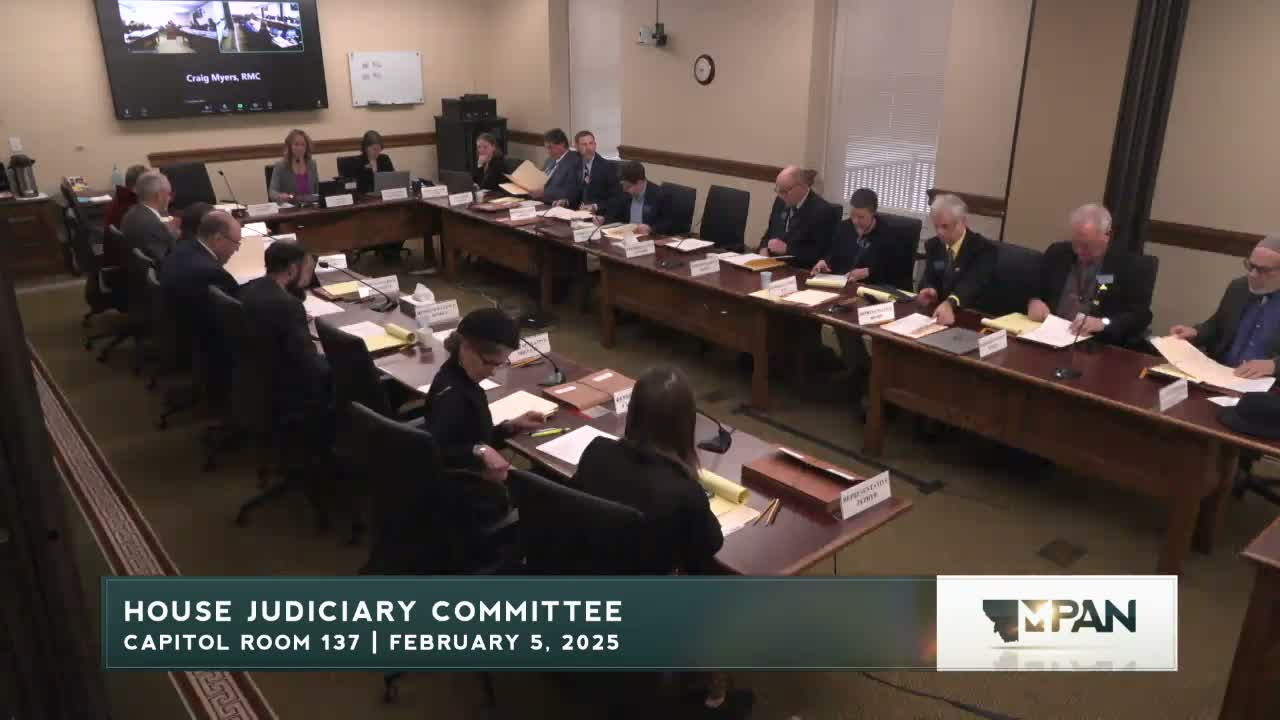
House hearing on personhood amendment exposes clash over IVF, medical care and voter mandate
Summary
Rep. Lee Deming’s proposed constitutional amendment (HB 316) to define 'person' from fertilization prompted hours of opposing testimony. Proponents cited scientific and moral claims that life begins at conception; opponents warned the measure could threaten IVF access, clinical care and conflict with CI-128, the voter-approved reproductive-rights measure.
Representative Lee Deming opened House Bill 316 by proposing constitutional language to define a "person" as applying "beginning at the stage of fertilization or conception," framing the change as an extension of constitutional safeguards and asking the committee to consider amendments to address concerns.
The bill drew immediate support from anti-abortion groups and individuals. Derek A. Stryker, chief legal counsel for the Montana Family Foundation, urged the panel to "respect[] the scientific fact that a new and unique human life begins at fertilization," and asked members for a "do pass." Several proponents repeated similar lines of scientific and moral argumentation, with Anne Bucachek of the Montana Pro Life Coalition stating, "A baby is a baby born and unborn." These supporters sought a constitutional recognition of personhood from conception.
Opponents, including reproductive-health providers and advocacy groups, warned of broad and harmful consequences if the amendment were adopted. Ella Smith, speaking for Blue Mountain Clinic, read a letter asserting that "the human suffering laws such as House Bill 316 create are no longer hypothetical," saying providers in other states have been unable to provide timely, life-saving care under comparable laws. Martha Fuller, president and CEO of Planned Parenthood Advocates of Montana, said the amendment "could undermine medical decision making for pregnant families and health care providers" and pointed to CI-128, a 2024 voter initiative she said enshrined protections for personal medical decisions.
Witnesses described specific risks. Multiple speakers cited IVF: opponents said clinics suspended treatment in other states after personhood litigation, and several people testified that the amendment could leave embryos "unusable" or expose providers and patients to liability. Ann Angus, who said she had used IVF, warned that if HB 316 were law by the time she sought treatment again, she might not be able to use her stored embryos. Legal advocates with Legal Voice explained that establishing separate legal personhood for a fetus could enable third parties — estranged spouses, child-protective authorities or law enforcement — to assert rights on behalf of an unborn entity, potentially putting pregnant people at legal and medical risk.
Committee members pressed witnesses and the sponsor on constitutional conflicts and practical consequences. Representative Overstreet asked whether later-enacted provisions override earlier ones; a legal witness said the later-enacted provision would control. Members also raised hard hypotheticals about end-of-life decisions, incarceration, and miscarriage management; Representative Deming reiterated he sought to protect life "from conception to natural death" and said he expected the legislature to craft implementing statutes.
The hearing closed after roughly four hours of testimony and questioning. Representative Deming concluded by saying he understood the deep emotions on the subject and by restating his belief that abortion is a violation of human dignity. The committee did not take a vote at the hearing and indicated executive action would occur at a later date.
The bill now faces questions about how it would interact with CI-128 and existing Montana constitutional provisions, how implementing legislation would address IVF and medical exceptions, and how courts might resolve conflicts if the amendment advanced to the ballot or became law.