Get Full Government Meeting Transcripts, Videos, & Alerts Forever!
Get email alerts on the Housing Policy topic
No spam. Unsubscribe anytime.
Witnesses split on two-year minimum lease for manufactured-home lots; landlords warn of unintended consequences
Summary
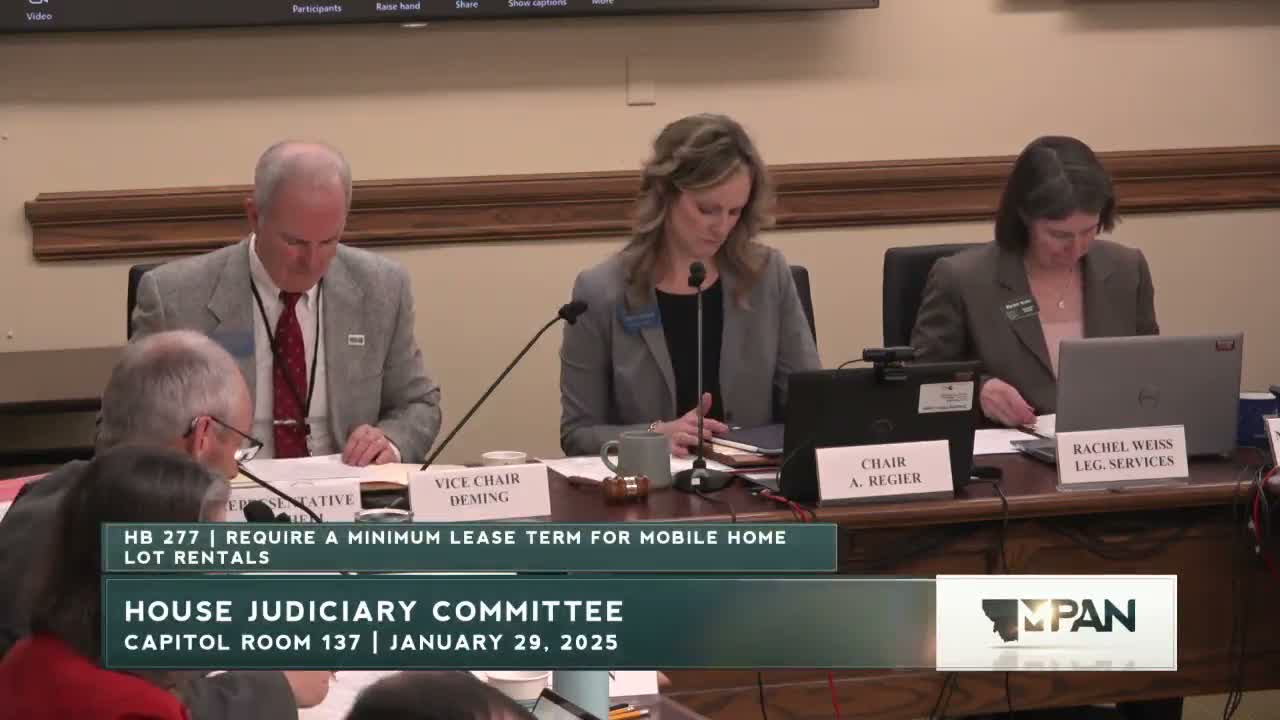
Sponsor said HB 277 would stabilize manufactured-home communities with a two-year minimum lease to support mortgage access; NeighborWorks and resident advocates supported it, while landlord and realtor groups warned it could be structurally flawed under current code and could hinder park sales or tax-driven rent adjustments.
Representative Brian Close opened the hearing on House Bill 277, saying the state faces an affordable-housing crisis and that manufactured homes and communities are an efficient way to add low-cost units. He said a two-year minimum lease for lots would give homeowners stability, help lenders offer mortgages and reduce turnover costs for landlords.
Maggie Hodges with NeighborWorks Montana testified in support, saying extended leases let residents access mortgages and make the investment of a manufactured home more secure. John Rhodes (online) also supported the bill, saying month-to-month lot tenancy makes residents vulnerable to short notices and sudden rent increases that can threaten homeownership.
Opponents included John Sinrud of the Montana Landlord Association, who said the code governs lot rentals and that a two-year floor would not create true stability and could be structurally inconsistent with existing sections of the Montana Residential Mobile Home Lot Rental Act (he cited several code sections during testimony); Daniel Cox of the Montana Association of Realtors likewise opposed the change. Sharon Lodge, a long-time park owner, said mandatory two-year terms could lock owners into lease terms that leave them unable to respond to tax or utility increases and complicate estate transitions and sales.
Committee members pressed on technical points: whether the bill intends to cover lots or parks, how a sale of the park interacts with staggered lease terms, whether the current code already limits lease duration to a one-year effect, and whether the bill inadvertently prevents landlords from responding to increased costs. Legal testimony noted provisions in current law for termination and change-of-use notices and suggested some protections already exist (for example, notice periods tied to a change of use).
Sponsor Close closed saying the bill is not rent control, landlords can include escalator clauses to account for taxes or utilities, evictions for cause remain available, and the bill simply acknowledges reality that many lot tenancies are effectively long-term.
What happens next: committee closed the hearing on HB 277; no executive action was recorded on this measure during the session summarized here.