Get Full Government Meeting Transcripts, Videos, & Alerts Forever!
Get email alerts on the Judicial Elections topic
No spam. Unsubscribe anytime.
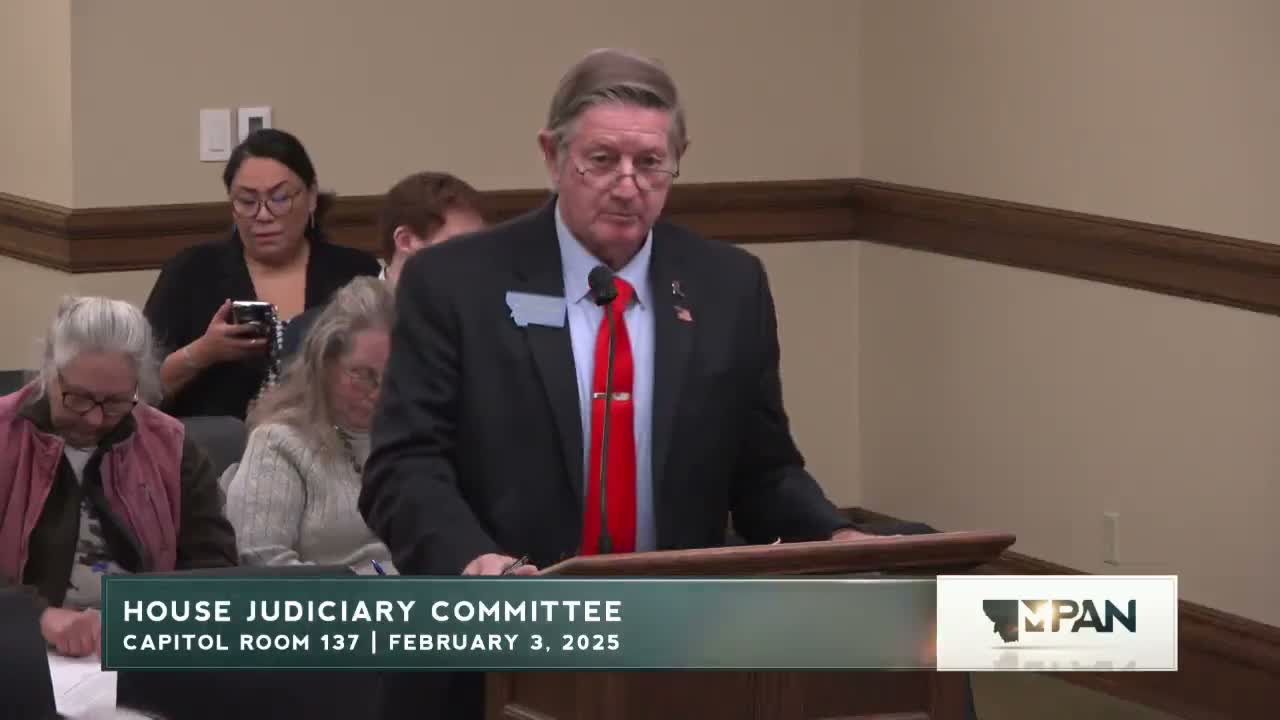
Montana hearing tests bill to let judicial candidates opt into party labels on ballots
Summary
Supporters said HB 295 would give voters more information and protect judges' associational rights; opponents, including the State Bar, warned that partisan labels would erode judicial independence and mislead about qualifications. The committee took testimony and questioning; no vote recorded in committee on the bill during this session.
Representative Paul Fielder opened the House Judiciary hearing on House Bill 295 by saying the measure would let judicial candidates "declare their party affiliation or leaning if they choose to" and have that listed on ballots, while also allowing candidates to accept party endorsements if they opt in.
Proponents framed HB 295 as a transparency measure. John Synrude, testifying as a private citizen, said many voters "have no clue who the judges are" and argued party labels help citizens understand a candidate's general outlook. Bart Crabtree of the Montana Citizens Council on Judicial Accountability and Henry Kriegel of Americans for Prosperity Montana urged the committee to give the bill a due pass; Kriegel argued the bill "protects the First Amendment rights of judges and the right of free association."
Opponents — including Bruce Spencer for the State Bar of Montana and the Montana Judges Association, retired Judge Jeff Sherlock, and Anne Sherwood of Friends of the Third Branch — said partisan labels would undercut the unique role of the judiciary. Spencer told the committee, "The majority does not rule in a court," and warned that attaching party designations would invite the very political sorting courts are designed to resist. Sherlock, who sat on the bench for decades, recommended asking voters directly via referendum and suggested replacing the word "undisclosed" with "nonpartisan" or "independent" if the committee moves forward with any opt‑in mechanism.
Members pressed witnesses on practical and legal points: Representative Staffman asked whether party labels change the fundamental qualifications for judges, and Judge Sherlock replied that they do not, noting bar membership and years of practice remain requirements. Several legislators questioned the word choice "undisclosed," and the committee discussed historical practices (the transcript includes references to the Clancy rule and to French v. Jones) and whether party affiliation actually helps voters choose.
The hearing closed after extended questioning. Committee members did not take final action on HB 295 during this meeting; the record captures pro‑ and con‑testimony and repeated committee requests for more evidence and clarifications.
What comes next: The committee closed the public hearing and moved on to other items on its agenda. Any future action would appear on a subsequent executive action docket.