Get Full Government Meeting Transcripts, Videos, & Alerts Forever!
Get email alerts on the Property Law topic
No spam. Unsubscribe anytime.
Bill narrows who may enforce restrictive covenants; sponsor says clean‑up avoids ambiguity
Summary
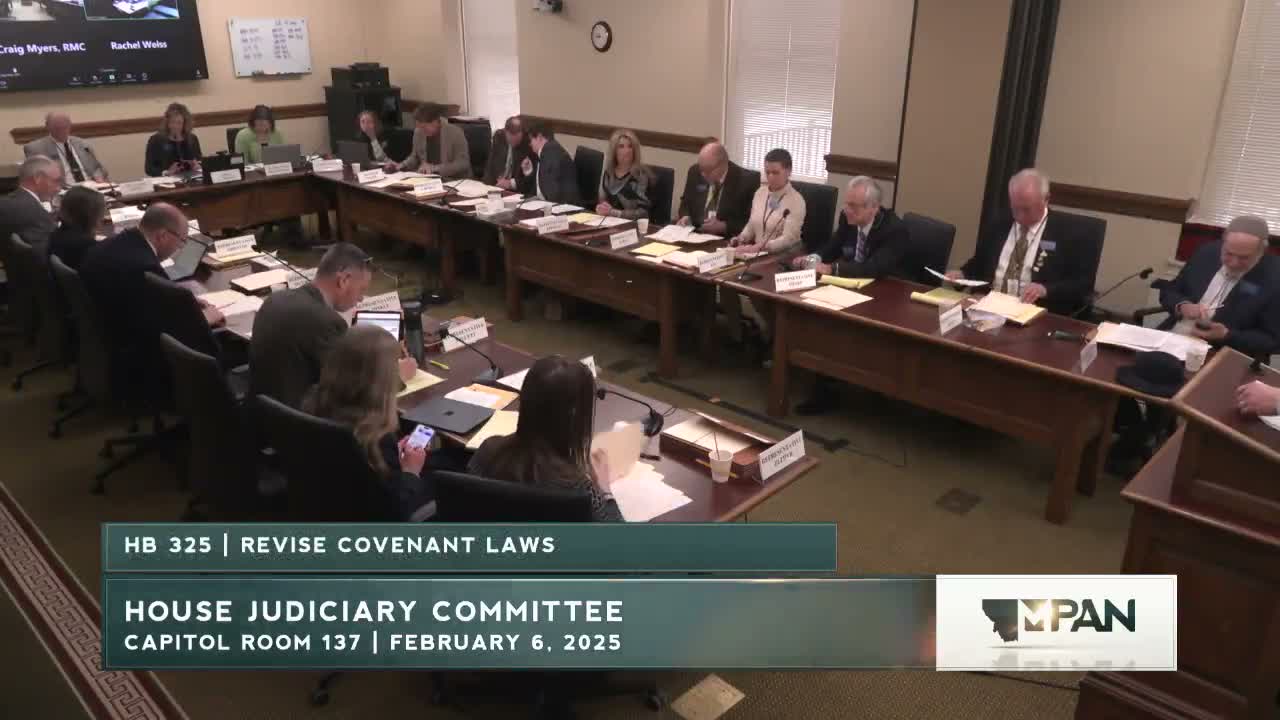
Representative Steve Fitzpatrick told the committee HB 325 tightens statutory language so only parties to covenants — owners burdened by them or governing associations — can enforce homeowner covenants; an attorney who practices statewide supported the cleanup.
Representative Steve Fitzpatrick opened House Bill 325 as a statutory cleanup aimed at clarifying which parties may enforce covenants, conditions and restrictions in real property developments. "A covenant is a contract," Fitzpatrick said, and the bill limits enforcement to parties to the agreement, owners whose property is burdened by covenants, or an HOA/governing body subject to the covenants.
Stephanie Baucus, testifying online as an attorney, said the change would help practitioners and property owners by narrowing ambiguity about who may bring claims and suggested interpretive questions about voluntary homeowners associations. Fitzpatrick told the committee he did not believe county‑required covenants would be waivable by the proposed language because they are conditions of development approval.
Committee members asked clarifying questions about drafting choices and the list of exceptions; Fitzpatrick said the bill should be read as a whole and that the changes aimed to prevent unintended expansion of enforcement rights. The committee closed the hearing on HB 325 without amendment.