Get Full Government Meeting Transcripts, Videos, & Alerts Forever!
Get email alerts on the Assault By Drugs topic
No spam. Unsubscribe anytime.
Bill to criminalize nonconsensual drug administration draws questions on scope
Summary
Sponsor says HB 174 would criminalize giving drugs to another person without consent, including certain prescription medicines and Benadryl; committee members worried the bill's broad drug schedules could unintentionally criminalize benign parental/medical acts or incidental exposures.
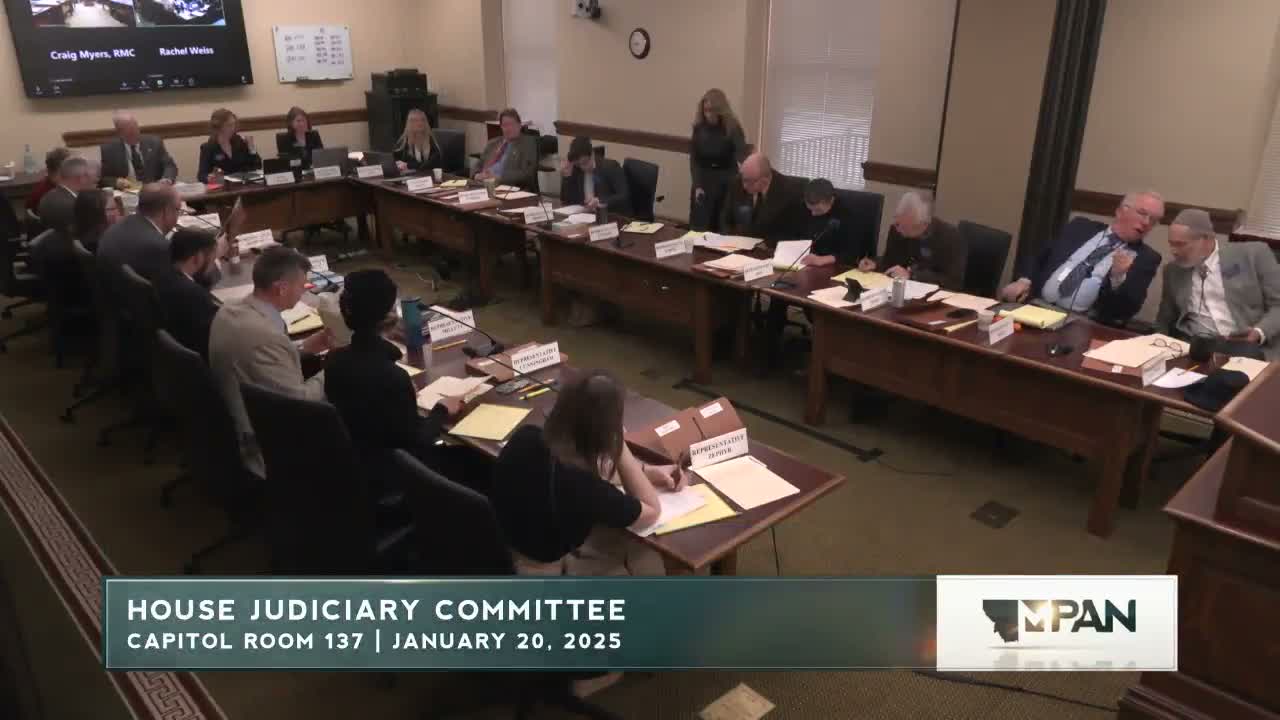
Representative Neil Durham opened testimony on House Bill 174 by saying last session’s work showed a gap: "it's not against the law to give a person drugs without their consent," he said, and HB 174 aims to criminalize nonconsensual administration of a wide range of scheduled drugs including alcohol and certain OTC medicines listed by schedule.
Informational witnesses included Kelson Young of the Montana Coalition Against Domestic Violence and Brian Smith, Public Defender Division Administrator. Members tested the bill’s boundaries: Representative Kelly asked whether marijuana and THC derivatives are included; Durham answered yes, saying schedules 1–5 cover a wide range of substances. Representative Cunningham and others questioned the inclusion of diphenhydramine (Benadryl) and whether parents, guardians and medical providers would be unfairly penalized for routine or necessary medication administration. Durham said the bill includes exceptions for medical providers acting under consent or standing orders and for parents/guardians with valid prescriptions.
Representative Howell and others pressed whether ordinary scenarios — a shared punch bowl with alcohol, mislabeled kombucha, or a friend offering an over-the-counter remedy — could be criminalized. Sponsor Durham said intent and consent matter: if a drug is secretly added to a beverage and causes effects on the person, that should be an assault; he said prosecutors and county attorneys would exercise discretion on charges.
Committee members raised drafting and definitional concerns ("medical provider" vs. "health care provider," the statutory meaning of "guardian," and the practical impact on caregivers and school/daycare settings). Witnesses and the sponsor invited amendments to narrow or clarify the bill’s language. The hearing closed with the sponsor inviting committee amendments to refine exceptions and scope.