Get Full Government Meeting Transcripts, Videos, & Alerts Forever!
Get email alerts on the Employment Trainings topic
No spam. Unsubscribe anytime.
Montana bill would bar employers from requiring 'controversial' workplace trainings; key terms left to rulemaking
Summary
Representative Steve Kelly told the House Judiciary committee his bill would ban adverse actions against workers who refuse trainings that "promote a controversial social vision," with carve‑outs for churches and political organizations; the Department of Labor said key terms would be defined through administrative rulemaking and warned of a likely increase in complaints.
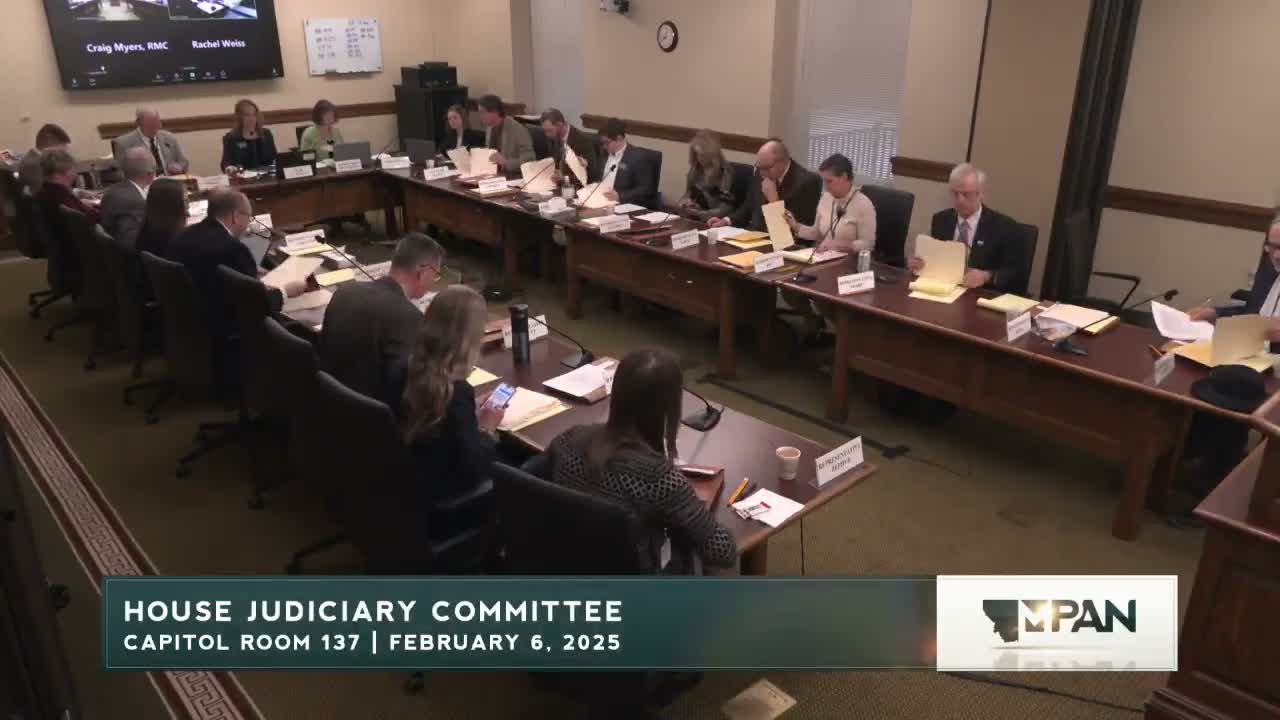
Representative Steve Kelly, sponsor of House Bill 319, told the House Judiciary committee he wrote the bill to stop employers from compelling workers to attend trainings that push contested social or political views. "The whole point is the workplace is the workplace," Kelly said, arguing employees "should not have to conform to somebody's ideology just to have a job." He described the bill's core: a definition of "controversial social vision" and a prohibition on "unlawful discriminatory practice" for employers who penalize workers who refuse such trainings.
Quinlan O'Connor, chief legal counsel for the Department of Labor and Industry, which houses the Human Rights Bureau, said the department enforces the Human Rights Act and would need to clarify undefined terms through administrative rulemaking if the bill becomes law. "That term isn't defined in the bill and so that's something that we would work to define through the administrative rule making process," O'Connor said, noting the Human Rights Commission typically conducts that work.
Committee members raised multiple implementation questions. Representative Staffman warned the bill's phrase "broadly accepted in society" and "mainstream" would force agency staff to make cultural judgments. O'Connor said the bureau would administer complaints under usual intake and investigatory procedures, which can include interviewing witnesses and issuing a final investigative report; he cited the bureau's statutory 180‑day investigative timeline and an additional Office of Administrative Hearings process that can extend the duration.
Members also probed likely unintended consequences. Representative Howell asked whether the bill would bar implicit‑bias or anti‑harassment training; Kelly said he did not expect widely accepted trainings (for example, harassment prevention) to be covered because those concepts "are fairly well recognized in psychological community." Others — including Representative Cunningham and Representative Zephyr — pressed on how the bill would treat medical trainings and customer‑facing employee instruction; Kelly replied the distinction turns on whether the training is "within the scope of employment."
O'Connor told the committee the fiscal note assumes an increase in complaints if the bill creates a new protected category and that the agency would need to hire additional investigators to handle a projected caseload increase. He described the department's typical enforcement path: intake, drafting the complaint, employer response, investigation, a written investigative report, conciliation if a cause is found, administrative hearing, and potential judicial review.
Kelly closed by saying he welcomed amendments to clarify language and that the bill was intended to "level the playing field" for employees. The committee did not take final action at the hearing.