Get Full Government Meeting Transcripts, Videos, & Alerts Forever!
Get email alerts on the Child Protective Services topic
No spam. Unsubscribe anytime.
Montana bill trims duplicative CPS statute, adds 90‑day rule to emergency protective services
Summary
House Bill 77, carried by Rep. S. J. Howell, consolidates temporary investigative authority into the emergency protective services statute, adds a 90‑day time frame to EPS, and aims to reduce jurisdictional inconsistency in dependency/neglect cases.
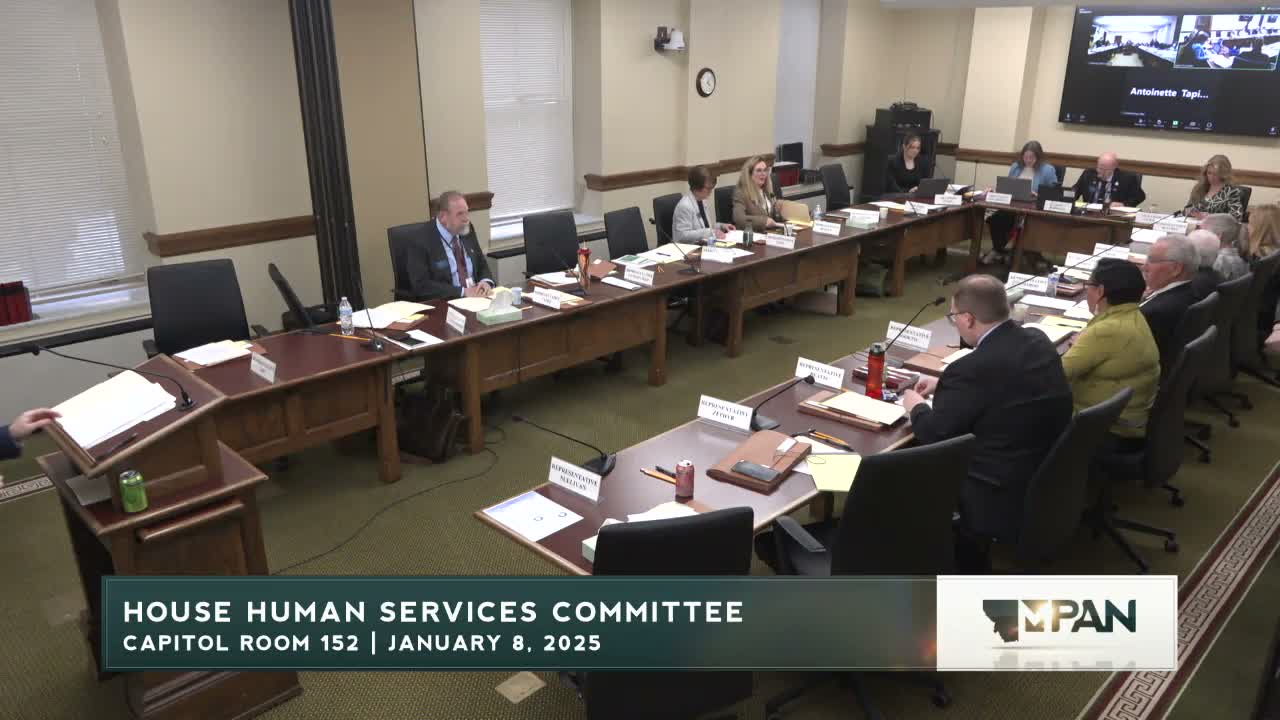
Representative S. J. Howell opened House Bill 77 as a statutory cleanup bill produced by a Children and Families work group that included legislators, DPHHS, judges, prosecutors and tribal representatives. Howell said the bill removes duplicative temporary investigative authority language and consolidates authority within the emergency protective services (EPS) statute, while adding a 90‑day limit to the EPS filing so investigations and court processes align across jurisdictions.
Senator Dennis Lentz, who chaired the interim working group, and Nikki Grossberg, Child and Family Services Division Administrator, supported the bill as a necessary clarity measure. Grossberg provided data handouts showing recent child‑welfare improvements and pointed committee members to Title 41, Chapter 3 for statutory context.
Informational witnesses addressed procedural effects on removal hearings. Kelly Driscoll (family defense bureau, Office of Public Defender) said parents retain the right to ask the court for placement determinations and that the EPS hearing (probable cause at five business days after removal) remains in statute. Heather Webster (deputy chief county attorney) said she did not expect the removal rate to increase if the temporary‑investigative petition were removed: “I don't think that removing that would change our offices likelihood to file a petition that would lead to more removals of children from their parents' care.”
Representative Howell walked members through the bill’s long text, explaining that many temporary sections are being struck because the same language exists immediately afterward in permanent form; the main substantive change is adding a 90‑day timeframe to the EPS statute and repealing the separate temporary investigative authority provision.
Committee members asked detailed questions about whether judges would still have authority to order short‑term removals, how the Indian Child Welfare Act burden and related language are preserved, and whether practice or filing patterns would change. Witnesses and the sponsor said statutory authority for emergency determinations and ICWA burdens remains in other code locations, and that the bill is intended to reduce confusion rather than expand removal powers.
No formal vote was taken; Representative Howell closed the hearing and the committee planned executive action at a later date.