Get Full Government Meeting Transcripts, Videos, & Alerts Forever!
Get email alerts on the Jsc Chair topic
No spam. Unsubscribe anytime.
Bill barring judges from serving as JSC chair prompts debate over expertise vs. perception of conflict
Summary
House Bill 36 would prohibit a judge from serving as chair of the Judicial Standards Commission; supporters said the change reduces perceived conflicts while opponents including the ACLU said it would exclude valuable judicial expertise and risk undermining the judiciary—s independence.
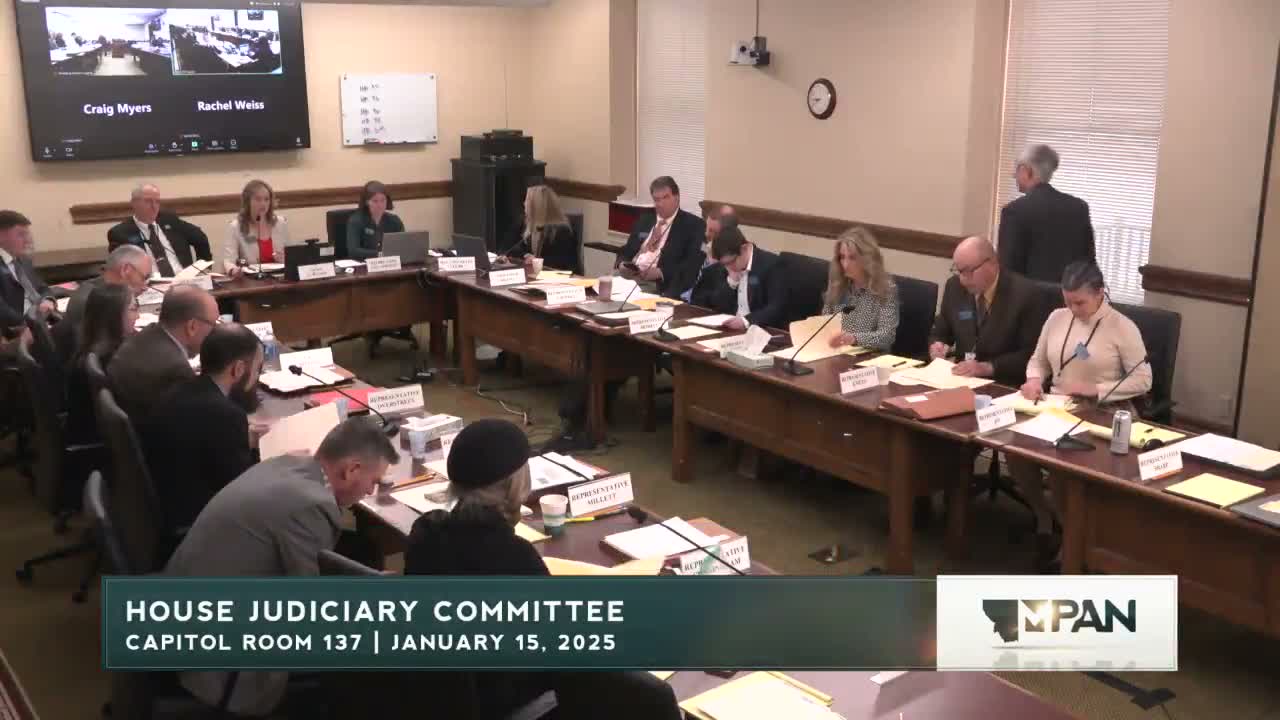
Representative opened House Bill 36 as a companion measure to HB 35, saying the proposal would change the commission—s leadership by preventing a judge from serving as chair while leaving judges on the commission as members. "The chair of that commission will not be a judge," the sponsor told the committee, describing the change as a further step to disassociate commission decisions from the Supreme Court.
The ACLU of Montana—s representative testified in opposition, arguing that prohibiting judges from serving as chair would "silence an important voice in the regulation of the judicial practice" and could undermine confidence in impartial oversight. An online opponent said the bill seemed unnecessary and possibly partisan.
Committee members questioned whether statute or JSC rules currently require a judge to serve as chair and whether the change would prevent judges from participating fully in deliberations. Informational testimony from the court administrator and staff pointed to JSC Rule 15(c), which provides that the chairperson or designee shall preside at hearings, and committee members raised the practical question of whether a chair may vote or only break ties.
Several legislators suggested friendly amendments: making clear the commission itself may elect its chair, or specifying that the chair cannot be an "officer of the court" rather than narrowly barring all judges. The sponsor said he was open to amendments designed to achieve the same goal.
The hearing closed without a recorded committee vote. The debate centered on balancing the perceived conflict created by judge-chairmanship against the value of judicial expertise on the commission and on whether rule changes or statutory language would best secure the intended independence.