Get Full Government Meeting Transcripts, Videos, & Alerts Forever!
Get email alerts on the Family Peer Support topic
No spam. Unsubscribe anytime.
Montana bill would create certified family peer-support specialists to help families of children with special health needs
Summary
House Bill 76, sponsored by Rep. S. J. Howell, would establish certification for family peer supporters — trained parents or caregivers who help families navigate medical and behavioral-health systems — and is pitched as a pathway to Medicaid reimbursement and workforce development.
Representative S. J. Howell introduced House Bill 76 as a measure to create a certified family peer support system for families of children and youth with special health care needs. The bill defines the role, adds family peer support to the state’s behavioral‑health scope, includes a clergy exemption, and directs the Board of Behavioral Health to set eligibility and training criteria.
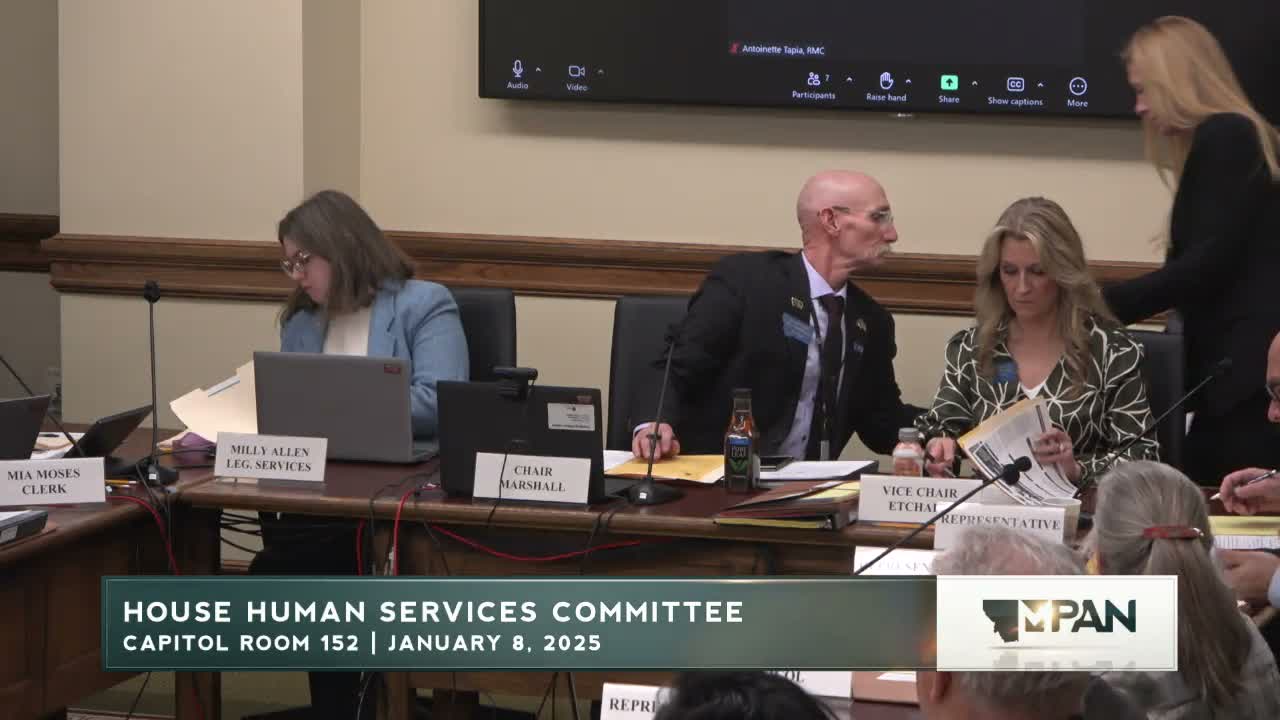
Proponents told the House Human Services Committee that family peer supporters are paraprofessionals with lived experience who provide nonclinical, parent‑to‑parent assistance: empathetic listening, navigation across schools, medical and justice systems, referrals and follow‑up. Beth Ayers of Montana Peer Network, who testified as a former family peer supporter, said the program’s pilot surveys showed strong subjective gains: “92% of families surveyed felt the quality of their family's life had improved,” and “86% felt that the quality of their child's care had improved.” Ayers also presented cost estimates from the pilot, saying a full‑time family peer supporter yielded an annual Montana Medicaid savings figure and that “every interaction with a family peer supporter saved the family $132.6.” She and other witnesses said certification would open the door to Medicaid reimbursement and make organizations more comfortable hiring peer supporters.
Clinicians and system officials described how certification would work in practice. Dr. Laura Nicholson, a developmental pediatrician, said certified peers reassure medical teams that members understand confidentiality and crisis protocols. Renee Novak of DPHHS told the committee certification is a necessary first step for Medicaid to later add family peer support as a reimbursable service; historically, behavioral‑health peer certification in Montana was followed by Medicaid coverage in a subsequent session.
Committee members pressed witnesses on money and terminology. Several speakers used “certification” in testimony while the bill’s text uses licensing language; Quinlan O'Connor, chief legal counsel to the Department of Labor and Industry, said Montana statute treats the terms as overlapping: “the definition of license includes certificate,” and that in practice the Board of Behavioral Health would determine form and standards. Witnesses recommended a ~40‑hour curriculum covering HIPAA, mandatory reporting, suicide prevention, code of ethics and scope‑of‑practice materials.
No formal vote occurred at the hearing. Representative Howell closed by noting the bill came from the Children and Families Interim Committee and asking members to consider the measure as part of wider behavioral‑health workforce efforts. The committee paused to arrange the room and scheduled future executive action on the bills.