Get Full Government Meeting Transcripts, Videos, & Alerts Forever!
Get email alerts on the Ticket Bots topic
No spam. Unsubscribe anytime.
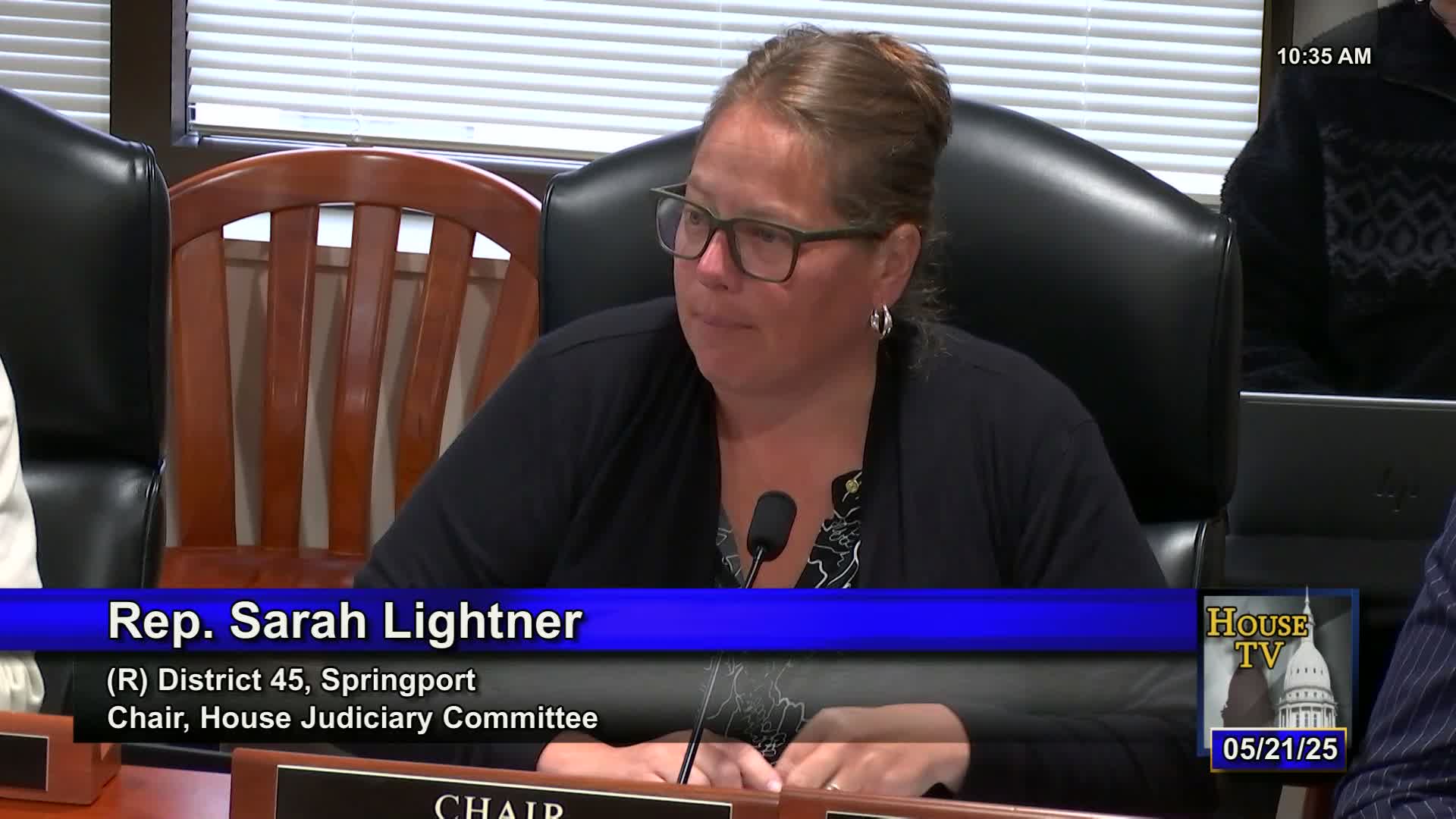
House Judiciary Committee hears bills to curb ticket-buying bots, give state AG new enforcement power
Summary
Sponsors told the House Judiciary Committee that House Bills 4,262 and 4,263 (the Event Online Ticket Sales Act) would let Michigans attorney general investigate use of bots to buy event tickets and impose civil fines—sponsors described penalties of up to $5,000 per violation; Live Nation signaled support while StubHub registered neutral.
The House Judiciary Committee listened to testimony on House Bills 4,262 and 4,263, a two-bill package sponsors described as the Event Online Ticket Sales Act that would target automated ‘bots’ used to buy event tickets and give the state attorney general expanded authority to investigate and pursue civil penalties.
Sponsors told the committee the bills would bar the use or creation of automated bots to purchase tickets in excess of posted limits, use multiple accounts to obtain more tickets than allowed, or circumvent security measures that control sales volume. The sponsors said the measures are aimed at reducing extreme resale markups that can price ordinary consumers out of concerts and sporting events.
The sponsors described enforcement as complaint-driven: consumers would file complaints with the attorney generals consumer-protection division, which could then investigate with cooperation from ticketing platforms. Committee members pressed sponsors on how investigations would start and what data the attorney general could obtain; sponsors said platforms have the technical ability to identify suspicious mass requests and could provide data during an investigation.
A co-sponsor summarized the proposed penalty structure in the hearing: the bills would authorize civil fines of up to $5,000 for each violation, and in the testimony sponsors characterized the legislative approach as a way to keep remedies and fines in state court rather than relying solely on federal enforcement mechanisms.
Industry reaction was mixed: the clerk read notification cards stating StubHub (represented on the card by Matt Solash) registered neutral and did not wish to speak, while Evie Sweeney of Live Nation registered support and did not appear. Sponsors told the committee they had coordinated with the attorney generals office while drafting the bills and said other states, including Arizona, have passed similar measures targeting high-profile, bot-driven ticket sales.
Committee members also raised follow-up policy questions for staff and sponsors, including whether the bills address secondary-market resale platforms or provide statutory protections for vendors that block suspected bot traffic. Sponsors said secondary-market monitoring could be a future step beyond the current bills.
Procedural notes: earlier in the meeting Representative de Boyer moved to adopt the minutes from May 7 and the committee adopted them by unanimous consent; no formal votes were taken on either ticket bill during this hearing. The committee moved on to other business and later adjourned.
Whats next: The bills received their committee hearing and public testimony cards were entered into the record; sponsors and staff did not announce a final date for further action during the session.