Get Full Government Meeting Transcripts, Videos, & Alerts Forever!
Get email alerts on the Ai Policy topic
No spam. Unsubscribe anytime.
House Judiciary Committee hears testimony on AI bills; refers HB4668 to communications committee
Summary
The House Judiciary Committee heard competing testimony on HB4667 (criminal penalties for malicious AI misuse) and HB4668 (Artificial Intelligence Safety and Security Act). Lawmakers referred HB4668 to the Communications and Technology Committee by a 10-0 vote after testimony from industry groups, civil‑society advocates and trade associations.
The House Judiciary Committee on an in‑session hearing took testimony on two AI bills and moved to refer the larger AI‑safety measure to the Committee on Communications and Technology.
Chair Leitner opened the session and the committee heard from a mix of trade groups, civil‑society advocates and industry representatives on HB4667 and HB4668. The committee voted earlier in the meeting to report House Bill 4596 with a recommendation (6 ayes, 0 nays, 4 pass).
In testimony, Rain DeGross, Senior Director of Legislative Affairs for the Michigan Chamber of Commerce, told the committee the Chamber had no official position on HB4668 but warned state action could create inconsistent regulation across the country: "Our our biggest concern with the legislation, quite frankly, is we think this should be done at the federal level," DeGross said, arguing a federal approach would avoid a patchwork of differing state rules.
Felix Desimone, organizing director of Pawsey IUS (appearing by video), testified in support of HB4668 and argued the bill would address serious risks posed by advanced AI. Desimone described examples he said show dangerous model behavior and summarized key provisions in the bill: "It would mandate testing and assessment of these critical risks," and "establish third party auditing to verify compliance," while also including "whistleblower protections" and enforcement authority for the Michigan attorney general. Desimone said the bill applies narrowly to models that pose "critical risks," which testimony defined as systems capable of causing the death or injury of more than 100 people or more than a billion dollars in property damage.
Rob Ellerveld, cofounder and CEO of the Transparency Coalition, urged support for both bills and for stronger criminal penalties for malicious uses of AI. "so I urge your, yes vote on h b 4 6 6 7," Ellerveld said, and defended state action as a way to build national pressure for federal standards, pointing to bills in Colorado, New York and California as comparable efforts.
Industry groups offered counterarguments. Tyler Dears, Midwest Executive Director for TechNet, a technology trade association, opposed the bills and warned of compliance burdens if states adopt differing rules: "if each US state, were to set its own rules for frontier models that companies would face 50 different compliance regimes," Dears said. He also raised technical concerns about vague definitions and the absence of accredited third‑party AI‑audit standards.
Committee members asked clarifying questions. Rep. Brean pressed the authors on the criminal‑penalty language in HB4667, saying he was "concerned because it says any crime" and noting the bill as drafted did not distinguish between misdemeanor and felony offenses; the committee did not take a final vote on the criminal provision.
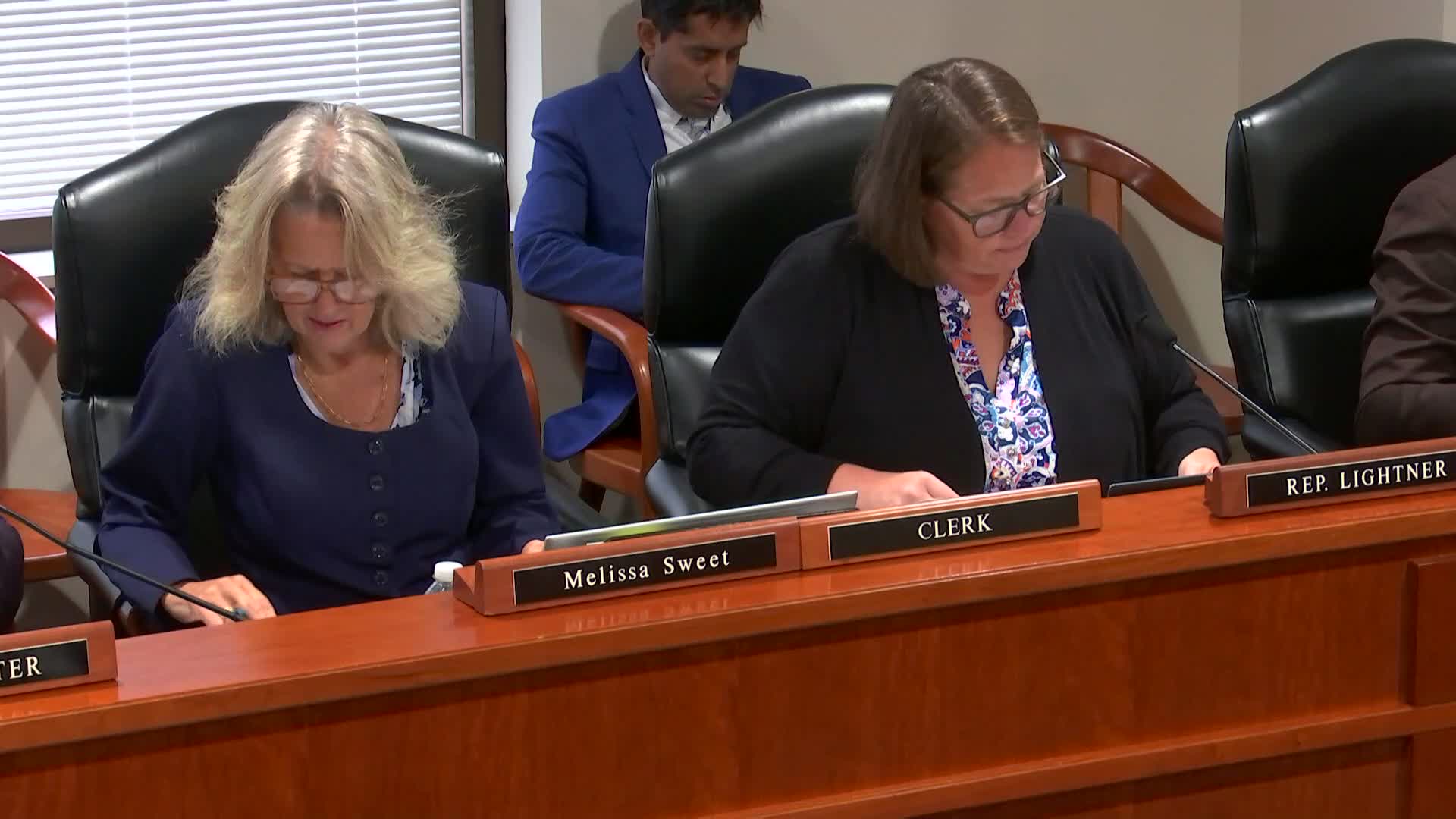
After testimony and brief member remarks, Chair Leitner moved to refer HB4668 to the Communications and Technology Committee. The clerk called the roll and the motion passed 10‑0.
The committee adjourned after completing the referral. The bills will next be considered in the committee to which HB4668 was referred; no final action on HB4667 was recorded at this meeting.