Get Full Government Meeting Transcripts, Videos, & Alerts Forever!
Get email alerts on the Criminal Ai Hb4667 topic
No spam. Unsubscribe anytime.
Michigan committee hears companion bill to criminalize AI‑assisted crimes with new felony categories
Summary
Chair Leitner presented HB4667, a companion bill that creates new felony offenses for possessing, developing, deploying or modifying AI with criminal intent and sets enhanced penalties (described in the hearing as up to eight years for certain offenses and four years for distribution/design), restitution under MCL 769.1a and limits on parole/probation during mandatory terms.
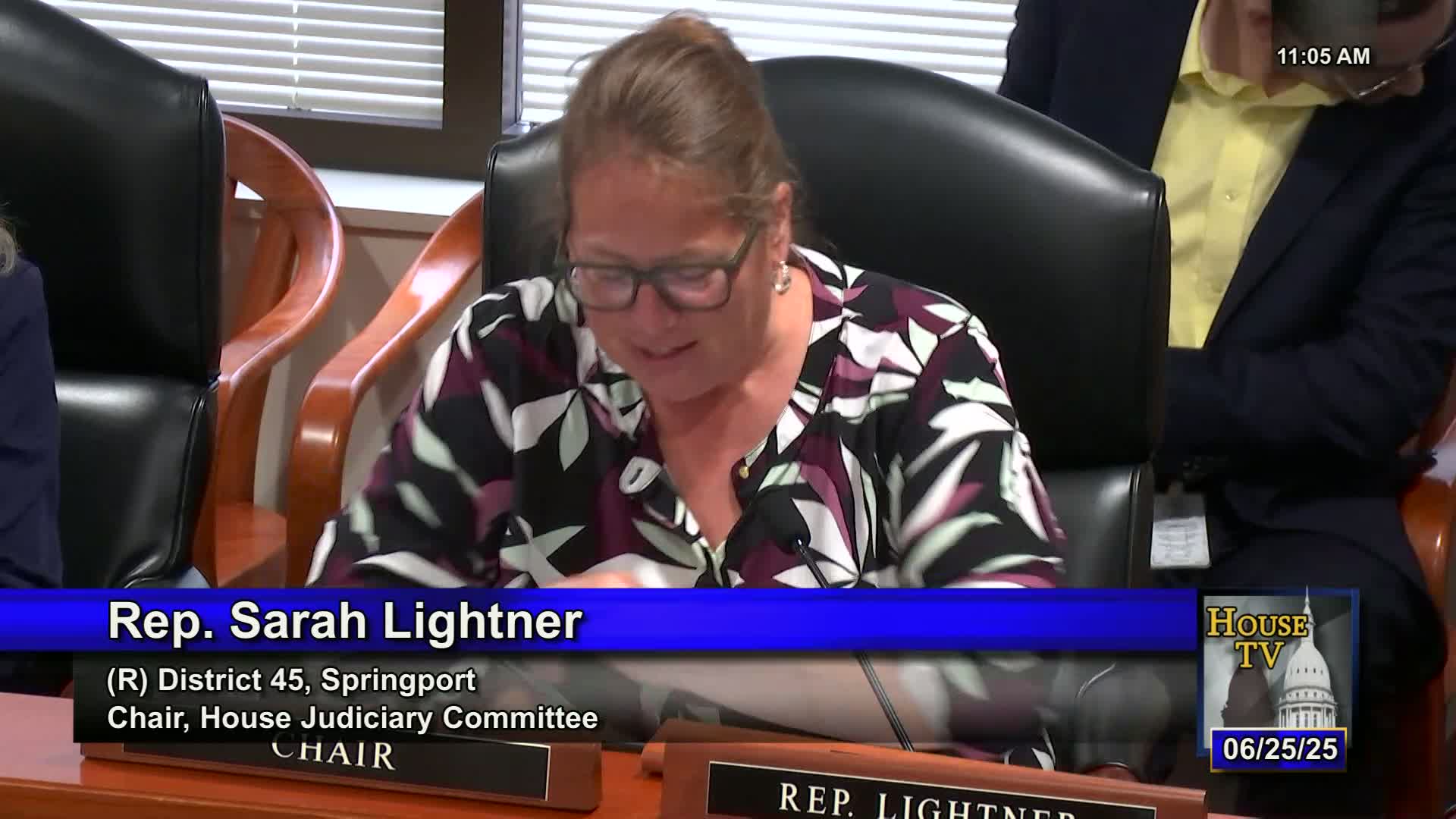
Chair Leitner presented a companion criminal bill, House Bill 4667, to the House Judiciary Committee, saying the measure would create distinct felony offenses for using or designing AI systems with criminal intent.
Leitner opened with an illustrative example: a caller using an AI‑generated voice to impersonate a relative and trick a Detroit grandmother into wiring $12,500. "Under current law, we can charge the scammer when they're caught with fraud, but we can't charge them for using AI to pull off the fraud," Leitner said. The bill would close that gap by establishing separate felony offenses for possessing, developing, deploying or modifying an AI system with the intent to commit a crime, punishable in the bill as described in the committee presentation: up to eight years for certain offenses and up to four years for knowingly designing, cataloging or distributing AI tools for criminal use. Leitner also said the bill would bar parole, probation and suspension of sentence during the mandatory term and require victims’ restitution under MCL 769.1a.
A prosecutor scheduled to testify by Zoom did not appear because of technical difficulties. Committee members asked clarifying questions about the penalty level; the chair described the eight‑year penalty as a starting point subject to further deliberation. The committee did not take a vote on HB4667 during the session.
The presentation framed the bill as a forward‑looking tool to give prosecutors additional statutory options when AI is a mechanism of deception or facilitation of crime; the committee moved on to other agenda items pending further testimony and discussion.