Get Full Government Meeting Transcripts, Videos, & Alerts Forever!
Get email alerts on the Attorney General Presentation topic
No spam. Unsubscribe anytime.
Attorney General Dana Nessel outlines department caseload, recoveries and priorities
Summary
Attorney General Dana Nessel told the Appropriations - Judiciary Committee the Department of Attorney General handles roughly 48,000 cases a year, recovers hundreds of millions through settlements, and outlined priorities including human trafficking, guardianship reform, consumer protection and parole-appeal assistance.
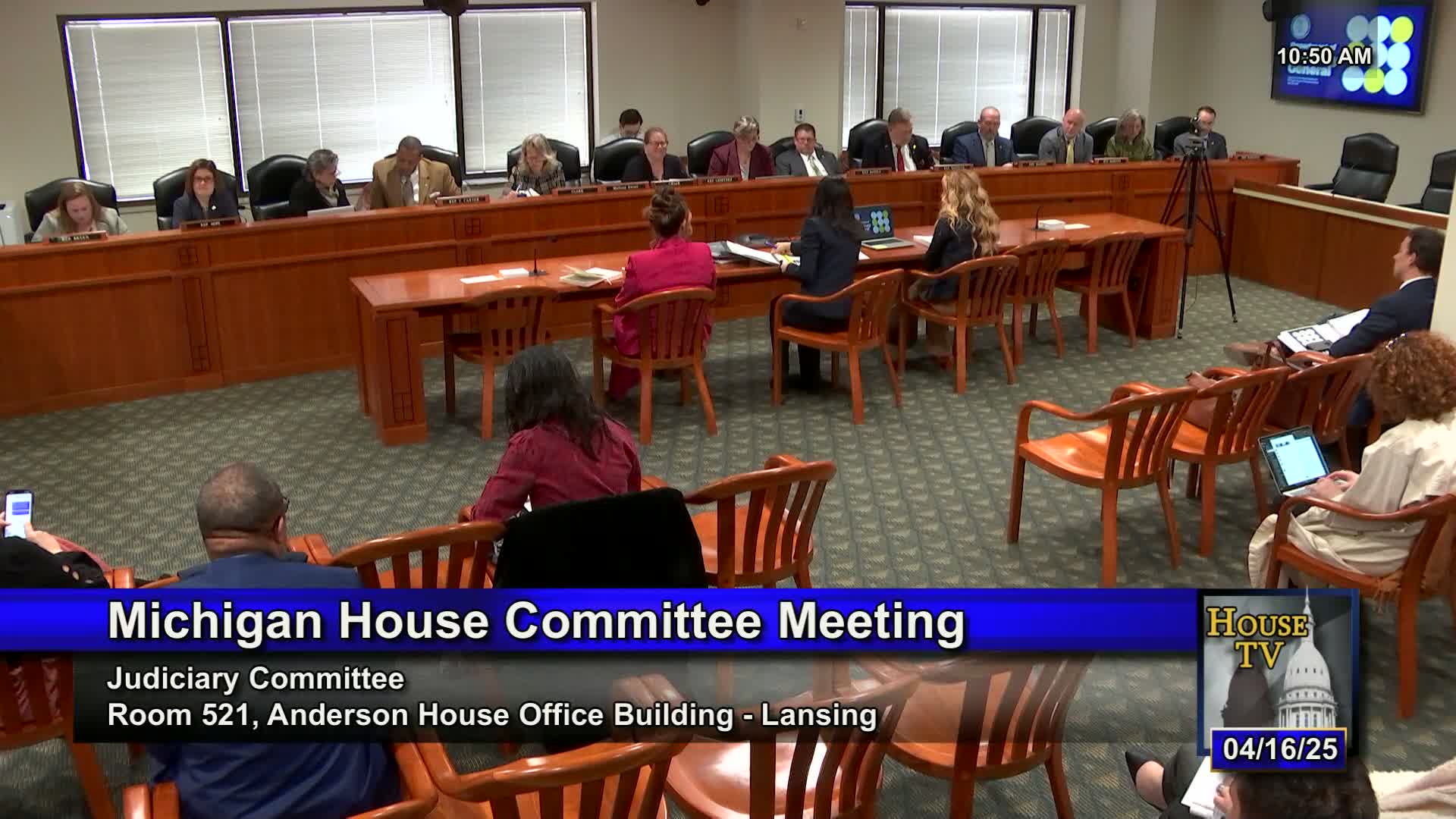
Attorney General Dana Nessel told the Appropriations - Judiciary Committee that the Department of Attorney General is the state’s lawyer and handles a substantial docket of cases, arguments and enforcement work on behalf of Michigan and its residents. Speaking after multiple bills were advanced, Nessel described the department’s caseload, program work and legislative priorities and answered members’ questions about resources and procedures.
Nessel said the department’s anticipated caseload is about 48,000 cases per year and described staffing that includes assistant attorneys general, investigators, victim advocates and support personnel. She told the committee the department operates on a small share of the state general fund and cited fiscal recoveries from judgments and settlements, saying that in 2024 the department reported $282 million paid out to the state and that local governments received over $176 million from recoveries. "For every dollar that the state pays for our department, we bring $4 back to the state and to the state residents," she said.
Nessel reviewed program work that she said saves consumers and ratepayers money: special litigation challenging utility rate increases before the Michigan Public Service Commission, a consumer-protection unit that fields roughly 10,000 complaints a year, and a sexual assault kit initiative (SAKI) that uses grant funding and agreements with county prosecutors to advance testing and prosecutions. She described the organized retail crime unit (charged more than 85 defendants and recovered millions in merchandise) and a sentinel project that conducts surprise visits to nursing homes to inspect care; the sentinel program logged 36 visits in 2024 and in some cases led to criminal referrals.
Nessel said the office also runs an Address Confidentiality Program (315 applicants) and has new divisions for parole appeals and Operation Survivor Justice to pursue defendants found outside Michigan. She identified legislative priorities she planned to return to the committee with, including human-trafficking bills, guardianship and conservatorship reforms, and consumer-protection measures. On consumer protection litigation, Nessel said the Michigan Supreme Court requested supplemental briefing in an Eli Lilly matter; the office has completed briefing and awaits the court’s scheduling of further argument.
Members asked follow-up questions about implementation and timing. AG staff described how parole appeals are triggered (usually by victim notification or a county prosecutor), the short statutory window to file appeals and the challenge of assembling historic case files quickly; they suggested statutory timing changes to allow adequate prosecutorial review. Nessel described a new AG web page for Social Security-related complaints (launched the prior Friday), which had logged 126 cases within days: missed or late checks, incorrect payment amounts and callers who could not reach the Social Security Administration.
When members raised SLAPP-related amendments offered earlier in the meeting, Nessel declined to intervene but supported working with the committee on legislative fixes proposed by her office. She closed by thanking the committee and offering her staff as resources for follow-up questions and materials. The committee adjourned following the Q&A.