Get Full Government Meeting Transcripts, Videos, & Alerts Forever!
Get email alerts on the Emergency Management topic
No spam. Unsubscribe anytime.
County safety adviser urges tornado drills and clearer sheltering plans; AME has rated shelter
Summary
Risk and safety advisor Adam Greer told department heads the ambulance/medical examiner facility has a rated storm shelter but that moving staff there during warnings requires preplanning; discussion covered watch vs. warning, capacity, badge access and the need for drills and off-site planning.
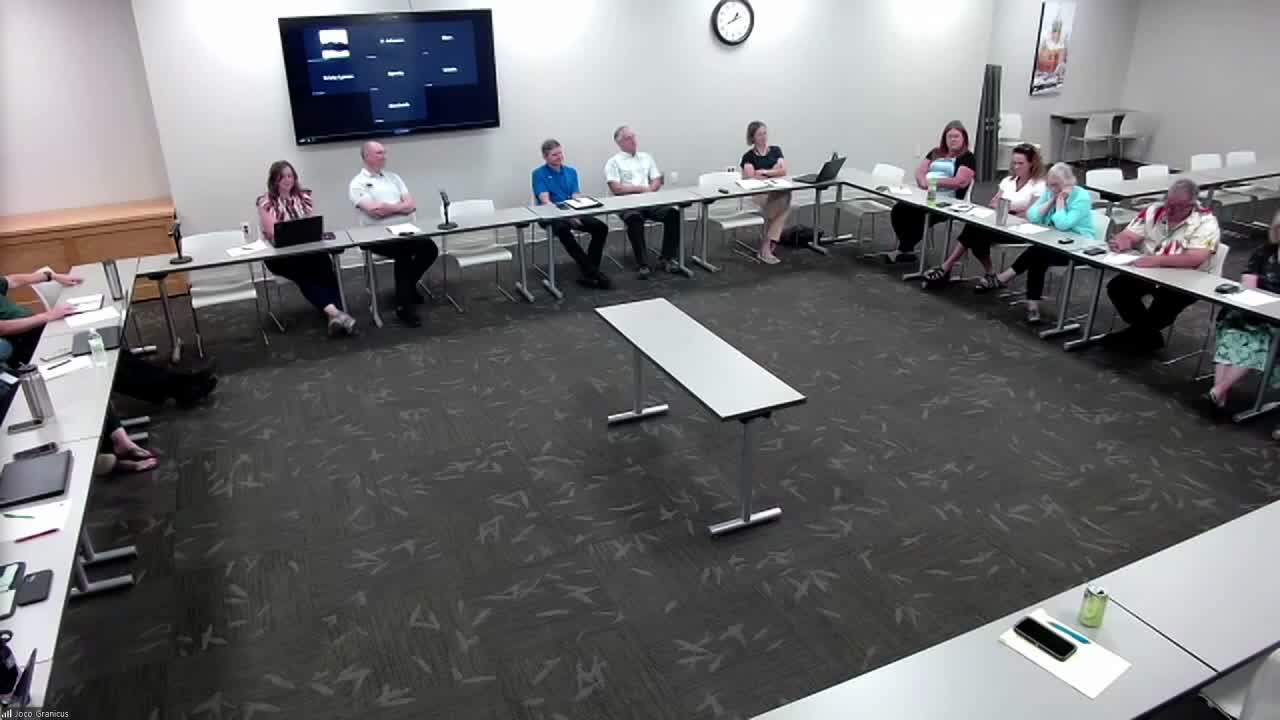
Adam Greer, the county's human resources risk and safety advisor, briefed department heads June 17 on proposed internal tornado procedures and urged offices to finalize department-level plans that cross-reference a countywide approach.
"The good news is there's a properly adequate storm shelter at the ambulance the medical examiner's facility," Greer said, but he added that reaching that shelter during a warning could be unsafe without prior coordination. Discussion among department heads focused on the difference between a 'watch' and a 'warning,' capacity limits in alternate interior spaces, badge-access procedures and how to account for members of the public and staff in multiple buildings.
Speakers recommended preplanning and a tabletop exercise followed by a live drill to test routes, door unlock procedures and capacity. One participant suggested the county run an exercise and hot-wash to identify gaps: "Let's do a tornado drill...then debrief it," a participant said. The group discussed that interior rooms are an acceptable second-best option when a rated shelter is not immediately accessible, and one speaker cited a hospital practice of using interior hallways when a building is not storm-shelter rated.
Capacity concerns were raised: a presenter cited a storm-shelter capacity figure (spoken as "272"), and staff discussed how to designate which departments go to which location and how to notify and unlock doors in case of power loss. Badge access and the ability to know who is in a building during a siren were described as operational risks to be addressed.
Next steps: departments were asked to finalize or refresh office-specific tornado plans, coordinate with Greer and the safety committee, and schedule exercises to test and refine procedures. The county will follow up on door-unlock protocols and on ensuring staff have needed badge access where appropriate.