
Mosinee elementary highlights eSpark, VR and portfolios as part of district engagement push
Get AI-powered insights, summaries, and transcripts
Subscribe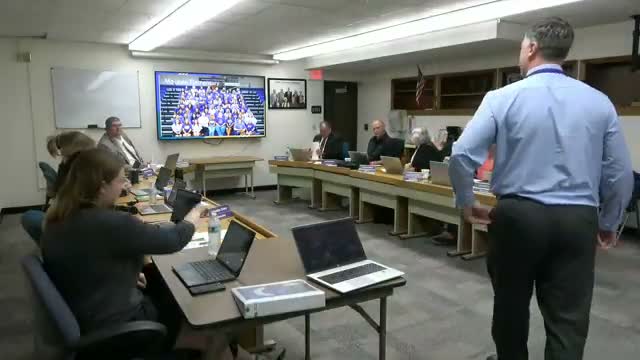
Summary
Elementary Principal Tom Fitzgerald told the school board the district is using eSpark, virtual-reality tools and individualized portfolios to boost student engagement; district leaders tied those strategies to a broader school-improvement plan that aims to reverse recent declines in proficiency.
Tom Fitzgerald, principal at the elementary school, told the Mosinee School District Board of Education about classroom changes intended to increase student engagement, citing short, individualized digital lessons and hands-on experiences.
"I'm Tom Fitzgerald. I'm the principal at the elementary school," he said, and described a recent "freedom walk" and ongoing character-education work organized around core values "safe, respect, responsible." Fitzgerald said each student will keep a personalized portfolio that follows them from kindergarten through fourth grade and records goals and leadership learning.
Fitzgerald demonstrated eSpark, an adaptive reading and math platform the elementary piloted last year and is now implementing. He described lessons as short — roughly 10 minutes a day — and emphasized the tool "is merely a tool" that "isn't replacing books" but gives teachers additional flexibility. Fitzgerald also showed teachers can receive reports indicating whether students demonstrate "mastery," "approaching mastery" or need further instruction.
Board members and a parent asked whether families can see ongoing eSpark progress. Fitzgerald said parents do not have direct access to progress reports through the program, though teachers can share reports at conferences and the district will request parent-account functionality from the vendor.
District administrators framed these classroom-level changes as part of a district school-improvement plan that seeks to increase engagement to drive academic gains. An administrator presented aggregate assessment context, saying proficiency across grades 3–11 fell in recent reporting (he cited a district aggregate and percent changes) and noted the district will examine cohort data when state report cards are released.
The board heard that the elementary will also continue using Seesaw as its learning-management system, incorporate a fab-lab grant into elementary instruction and continue ACT 20 reading-strategy work. Middle- and high-school leaders described complementary engagement goals at their levels, including staff-led strategies, department data collection and coaching to scale successful practices.
The board did not take formal action on the presentation; the briefing served as information and previewed topics (report cards, more detailed data) slated for future meetings.