Get Full Government Meeting Transcripts, Videos, & Alerts Forever!
Get email alerts on the Municipal Finance topic
No spam. Unsubscribe anytime.
Oswego board votes to retain 1% municipal grocery tax, debates how to spend proceeds
Summary
The Village of Oswego voted to keep the 1% municipal grocery retailers and service occupation tax that state law would otherwise eliminate on Jan. 1, 2026. Trustees discussed using some revenue for water-bill rebates or transferring dollars to the water fund and scheduled a follow-up at the Oct. 25 budget workshop.
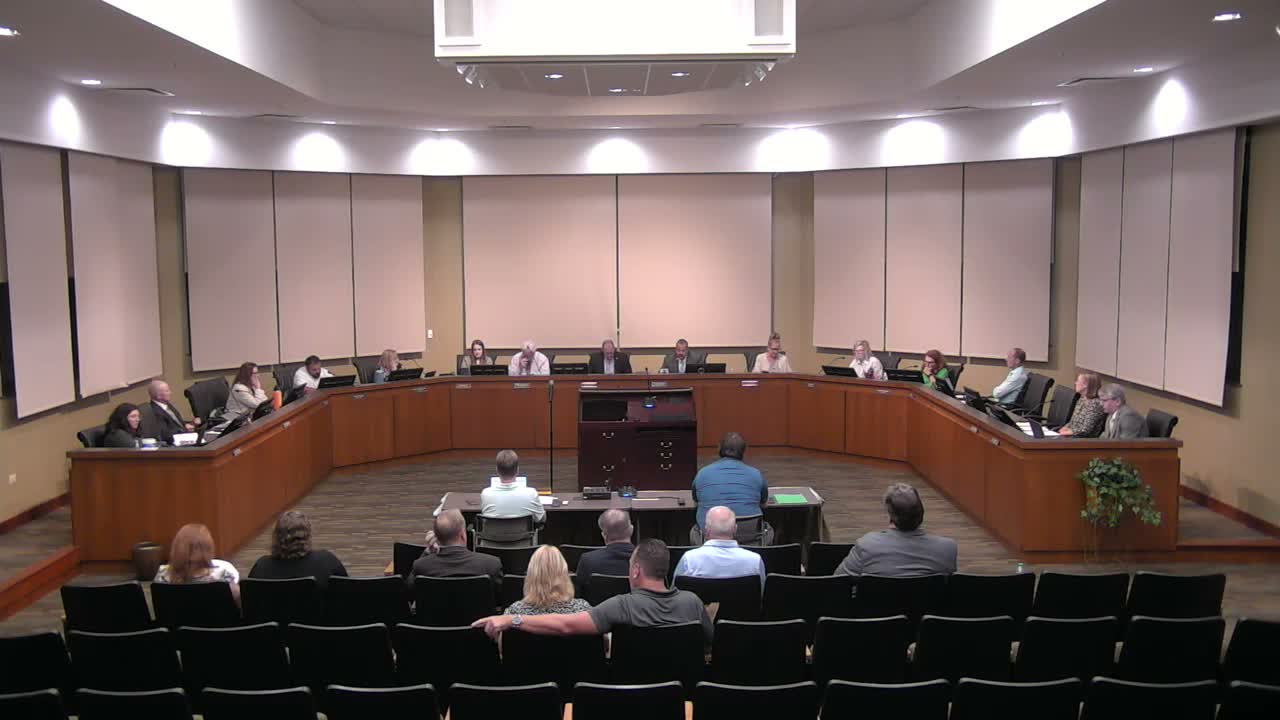
The Village of Oswego Board of Trustees voted unanimously on Sept. 16 to retain the municipal grocery retailers occupation tax and the grocery service occupation tax — a 1% levy on groceries that staff said yields roughly $1 million annually for the village.
Dan (village staff) told trustees the state passed legislation that would end the municipal grocery tax on Jan. 1, 2026 unless municipalities affirmatively vote to keep it. "The grocery tax has been in place in the state of Illinois for many decades. It is a 1% tax on groceries," Dan said, and "on 01/01/2026, the grocery tax goes away unless municipalities vote to keep it." Trustees acted to keep the tax in place rather than absorb the revenue loss.
Trustees framed the decision around two issues: revenue stability and resident impact. Trustee Torres noted that the village "usually gets about a million dollars off of this tax, and again about 50% of that is from people outside of Oswego," arguing the tax brings in revenue largely paid by nonresidents. President Ryan Kaufman proposed returning part of the revenue to residents in the near term, describing a possible rebate plan: "What I would like to see happen... is that we will... keep this revenue and split it, roughly $50.50 or $60.40... channeling at least, you know, some of it back to our residents so that it goes back directly into residents' pockets."
Staff provided a budget context for the choice: the draft FY2026 budget showed roughly a $200,000 gap that would grow if the tax were lost; retaining the grocery tax preserves a roughly $1 million gross inflow and helps avoid immediate cuts to services or personnel. Dan outlined an example rebate program in which a $50 residential credit would cost about $600,000 and leave approximately $400,000 in the general fund.
Several trustees said they favored sustaining the revenue stream while reserving the details of any rebate or transfer until the budget workshop. "I think we need to talk more about the funds at the budget workshop as a whole," Trustee Hughes said. The board agreed to revisit allocation options at the Oct. 25, 2025 budget workshop, where staff will present specific proposals — for example a water-bill credit versus rate relief over time.
The board recorded the vote by roll call and approved the ordinance to retain the two grocery taxes. The next formal step is the budget workshop and staff follow-up on allocation options and the fiscal impact of any rebate program.