Get Full Government Meeting Transcripts, Videos, & Alerts Forever!
Get email alerts on the Building Accessibility topic
No spam. Unsubscribe anytime.
Yuma council pauses accessibility ordinance after emotional public testimony; item continued to Sept. 17
Summary
Dozens of residents urged the council to require second‑floor accessibility in new two‑story buildings. Councilmember McClendon moved to continue Ordinance O2025‑33 for amendment to require elevators/lifts in two‑story buildings under 3,000 sq. ft.; the council voted to continue the item to Sept. 17.
A group of residents and disability‑advocacy speakers urged the Yuma City Council on Sept. 3 to require universal access to second‑floor spaces in new buildings, prompting the council to continue consideration of a proposed accessibility ordinance to allow time for an amendment.
At the public comment portion of the meeting, Diana Flurman of the Arc of Yuma County said she leads a community social group and asked council to "allow no barriers to a second‑floor building" and to require access for people who cannot use stairs. Sarah Burris described her husband’s recent traumatic injury and said, "He is wheelchair bound. I am the sole caregiver for him and my children," arguing that limiting access to second floors excludes families from everyday life. Alexis Liggott and other speakers echoed calls for accessibility regardless of building size.
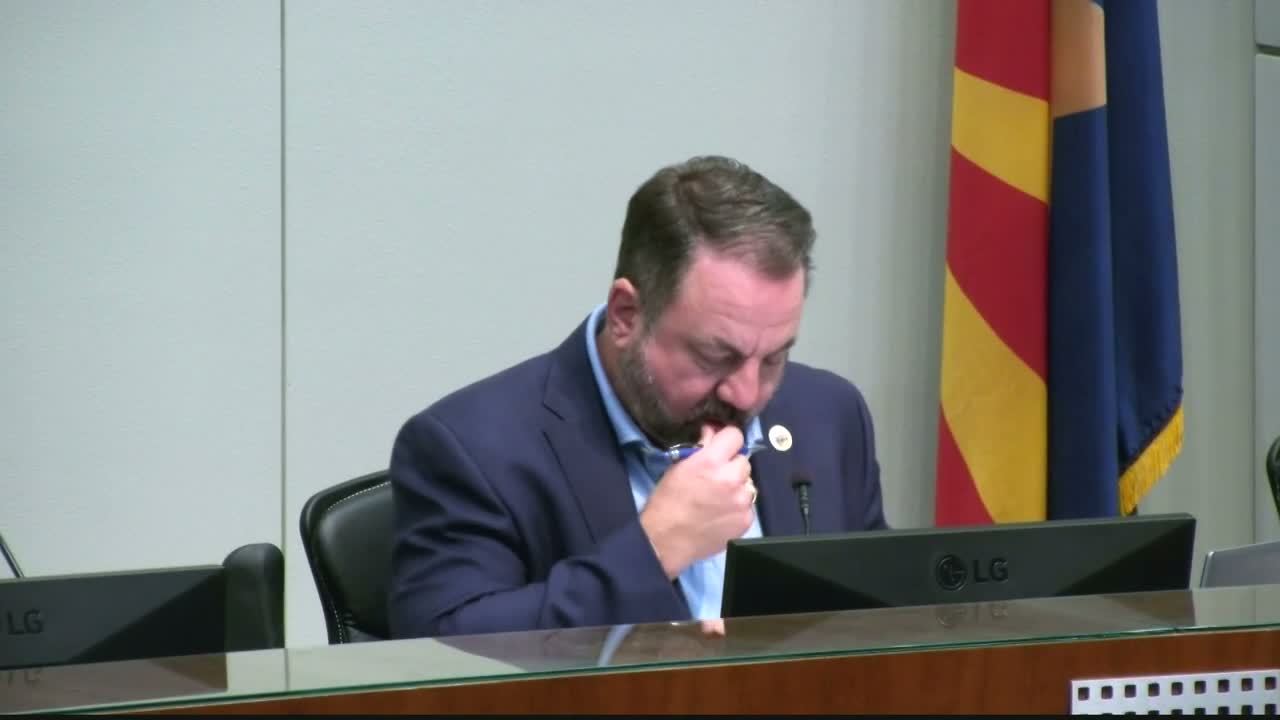
Councilmember McClendon said he would like an amendment requiring "some type of an elevator or slash lula" for all two‑story buildings under 3,000 square feet and moved to continue Ordinance O2025‑33 to the Sept. 17 meeting to draft that language. Building official Randy Crist noted the process and timing: if introduced as currently written and adopted at the next meeting, code changes generally take effect 30 days after adoption with an additional implementation window—he said staff has discussed an effective date around Feb. 1 to allow time for plan updates.
The motion to continue O2025‑33 to the Sept. 17 meeting was moved by Councilmember McClendon, seconded by Councilmember Watts, and carried by voice vote.
What happens next: Council discussion and a formal amendment will be drafted for reintroduction on Sept. 17; staff will provide code‑impact analysis and a proposed effective date for any change.