Get Full Government Meeting Transcripts, Videos, & Alerts Forever!
Get email alerts on the Tax Policy topic
No spam. Unsubscribe anytime.
After heated debate, commission recalibrates library mill under state tax law in 4–1 vote
Summary
Following staff advice that state law (House Bill 231) permits a one‑time recalculation of fixed library mills, the commission voted 4–1 to reset the library mill cap to roughly 19.55 mills to preserve FY2025 revenue; some commissioners criticized the legislature for overriding charter voters.
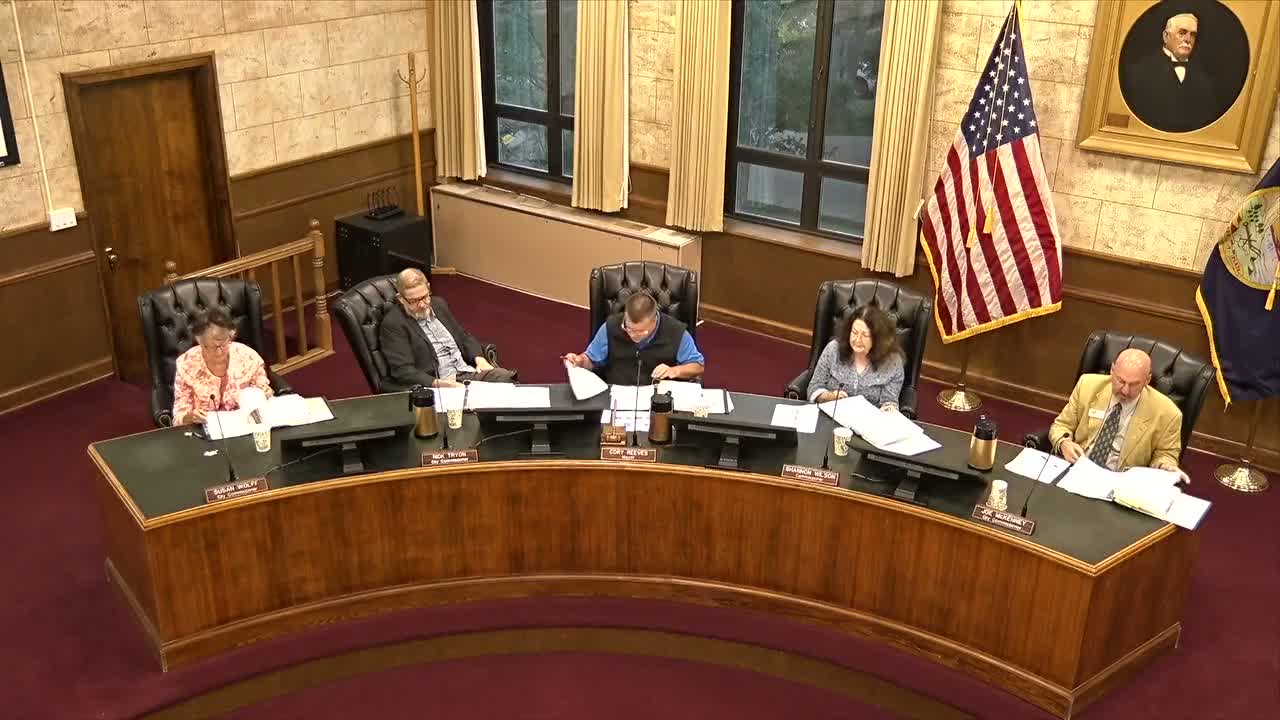
The City Commission voted 4–1 on Aug. 19 to adopt Resolution 10,599, recalculating the Great Falls Public Library’s charter‑authorized mill limit to approximately 19.55 mills, a change staff said is authorized by Montana House Bill 231 and related tax legislation. Staff said the recalculation preserves the library’s FY2025 revenue (about $2,246,354) despite changes to taxable valuations enacted by the legislature.
Finance Director Melissa Kinsler explained that recent state legislation changed taxable valuations and created a tiered rate system; for jurisdictions with charter‑authorized fixed mill limits, Section 373 of House Bill 231 provides a mechanism to reset the mill value necessary to raise the same revenue the library received in FY2025. Kinsler said the recalculated 19.55‑mill cap will be the maximum mill limit going forward unless the commission later lowers it.
Several commissioners criticized the legislature’s approach. Commissioner Tryon repeatedly described the legislative intervention as “BS,” arguing the legislature should not amend city charter entitlements by statute without a local vote. City Attorney David Dennis said he reviewed the statute and concluded the legislature’s changes to taxable valuations and tax policy are within its authority and that a legal challenge would likely fail, though he called the situation "an odd way of conducting business."
Commissioner Tryon cast the lone dissenting vote; the motion carried 4–1. The commission also subsequently adopted the city’s annual tax levy (Resolution 10,582) for FY2026, which reflects the recalculated mills.
Next steps: The recalibrated mill cap is now reflected in the city’s chartered limits for future budgets; the commission may elect to set fewer mills in future budgets but the recalculation sets a new maximum unless changed by future action.