Get Full Government Meeting Transcripts, Videos, & Alerts Forever!
Get email alerts on the Water Service Line Replacement topic
No spam. Unsubscribe anytime.
Great Falls approves pilot to replace lead water service lines using SRF loan funds
Summary
The City Commission authorized a pilot project to replace up to 20 private lead-containing water service lines using a $300,000 SRF loan with 60% principal forgiveness from DNRC; the voluntary program has 13 property owners signed and passed 5–0.
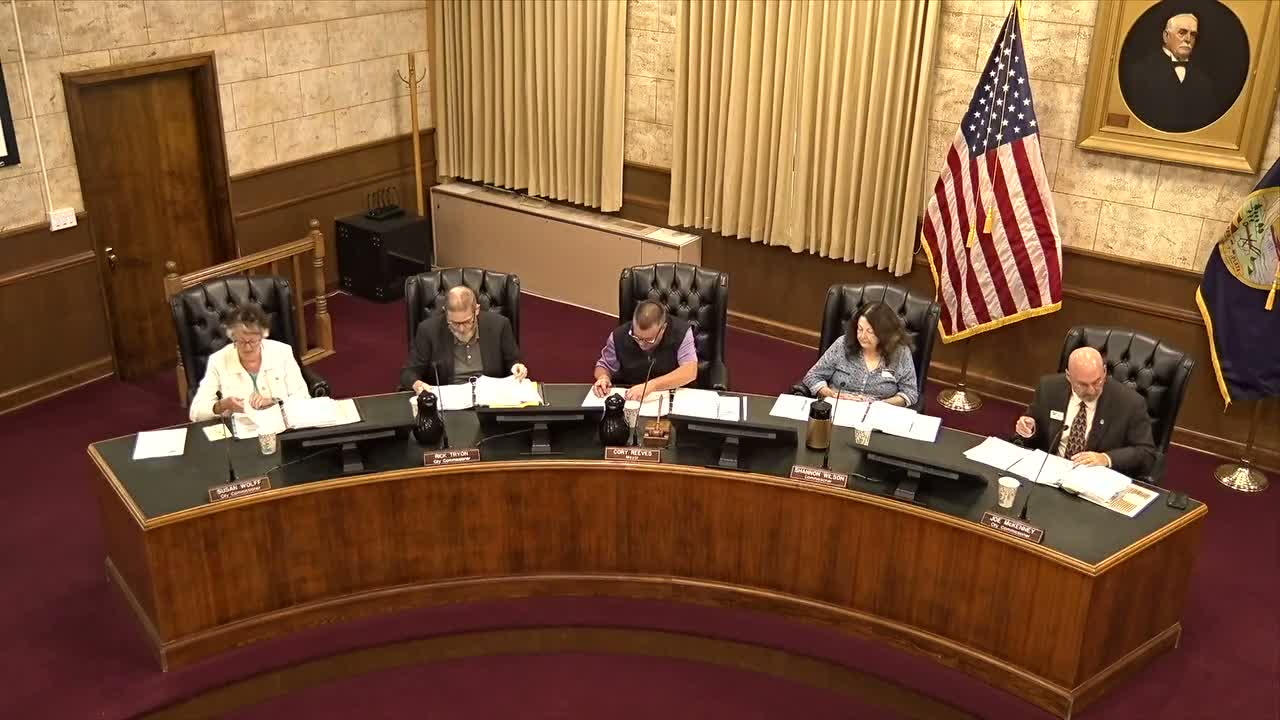
The Great Falls City Commission on Sept. 2 authorized a pilot program to replace up to 20 private lead-containing water service lines, a project staff said will cost an estimated $300,000 and use a State Revolving Fund (SRF) loan that forgives 60% of principal through DNRC programing tied to the Bipartisan Infrastructure Law.
Public Works Director Chris Gough told commissioners the agreements would permit city staff and contractors to enter private property to perform replacements and are required to qualify for SRF reimbursement. "The next step in the SRF funded pilot project is to approve an agreement and to authorize city staff to enter into these agreements with property owners," Gough said, adding the pilot is ratepayer-funded with loan principal forgiveness.
Commissioner Tryon pressed staff to confirm replacements would be voluntary and not forced into private homes. "It almost sounds like we're going to be sending agents out into somebody's house and replacing their water lines, you know, by force," Tryon said. Gough clarified the pilot depends on voluntary agreements and noted 13 property owners had already signed to participate. "It is the general rate payer funding that will pay for these up to 20 lines," Gough said, describing it as a ratepayer-subsidized pilot rather than an individual property-owner-funded program.
Staff said the pilot is intended to prepare the city for potential EPA requirements beginning in 2027 that could mandate broader replacement; Gough said the city could face fines if it failed to comply with future federal mandates. Commissioners debated whether it is fair for all ratepayers to subsidize replacements for a limited set of volunteers; staff said the pilot approach is a cost-benefit posture to avoid city-level penalties if a larger replacement order is required.
The motion to approve the form and terms of the water service line replacement and temporary access agreement and authorize the public works director to execute agreements with property owners passed 5–0.
Next steps: staff will proceed with the pilot replacements under the approved agreement, pursue remaining volunteer property owners and return to the commission with construction details and any required contingency steps tied to SRF funding availability.