Get Full Government Meeting Transcripts, Videos, & Alerts Forever!
Get email alerts on the Wastewater Billing topic
No spam. Unsubscribe anytime.
Peace Lutheran Church and parishioners urge Belgrade to reconsider wastewater billing for irrigation
Summary
Multiple speakers from Peace Lutheran told the Belgrade City Council they are being charged sewage fees on irrigation water and asked the city to allow wastewater averaging, install irrigation meters, or change ordinances to permit irrigation wells for large tax‑exempt properties.
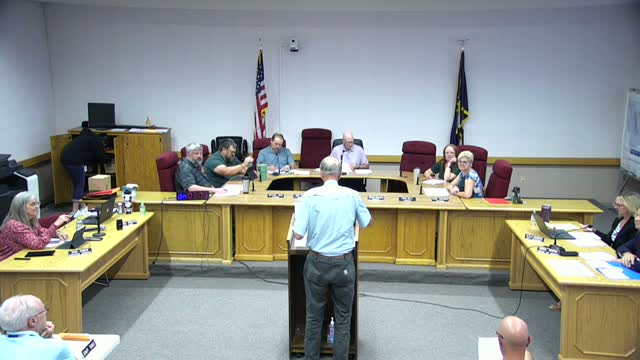
Peace Lutheran Church leaders and parishioners told the Belgrade City Council on July 21 that recent changes to the city’s wastewater billing are imposing steep costs on the congregation and limiting the church’s community services.
Bruce Sorensen, speaking for Peace Lutheran Church, said the congregation is being charged a sewage fee on the water used for irrigation and that “we have a large bill because of that.” He told the council the church is categorized as nonresidential while schools received an exemption until 2027 and asked the council to discuss relief options. “The cart of development went way ahead of the horse of sewage and water infrastructure,” Sorensen said, urging the city to address distribution and billing problems.
Senior Pastor Andrew Young said Peace Lutheran runs a food bank, a personal-care pantry and other community programs and that the new charges strain a fixed church budget. “These rising costs, especially wastewater, it feels like a gouging,” he said, asking the council to review the policy for places of worship.
Nick Sorensen, vice president of the church council, gave a specific example: he said moving wastewater fees onto the water bill led to an increase “by almost $4,500 over the course of 2 months,” roughly 2% of the church’s annual budget, and urged the city to allow separate metering for irrigation. Fred Haas and other speakers described attempts to install an irrigation meter; Haas said city rules prevented teeing off the existing service line and that the contractor bids for alternatives were costly.
Derek Monson asked why churches are not eligible for the city’s wastewater averaging (which, for residential accounts, averages November–February usage and applies that average starting in April). He suggested the city consider applying wastewater averaging to places of worship so irrigation use would not be billed as sewage. Landscaping professional Brandon Lavender urged the council to consider amending the city ordinance that currently prohibits wells inside city limits to permit irrigation wells on tax‑exempt properties larger than one acre.
City staff acknowledged the issue and thanked speakers; the mayor noted staff would take the matter into their hands for follow-up. No formal action was taken during the meeting, and speakers were invited to continue working with city staff on technical solutions such as irrigation metering, ordinance changes or possible billing classifications.
Next steps: council members and staff indicated the issue would be left with city management and staff for further review; no vote or change in policy occurred at the July 21 meeting.