Get Full Government Meeting Transcripts, Videos, & Alerts Forever!
Get email alerts on the Utilities topic
No spam. Unsubscribe anytime.
Helena council debates phased water‑and‑sewer rate increases to meet rate‑study and loan requirements
Summary
Councilmembers and staff discussed multiple rate‑design options (A–F) to meet a required rate study while limiting bill shock; staff will publish interactive scenarios and council will reconvene to finalize a path that balances loan repayment, MHI constraints and affordability.
Helena City Council members spent the bulk of the meeting reviewing proposed water and sewer rate changes, asking staff for clearer public examples, and weighing the legal timeline tied to a recently completed rate study.
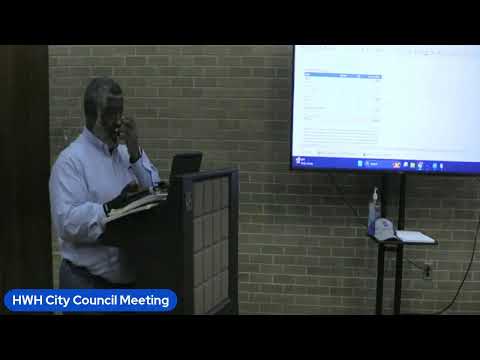
Staff showed a rate‑comparison tool and several proposed schedules (options A–F) designed to phase increases in smaller increments. Staff and councilors warned that some models, as presented, would produce large bills for high‑usage accounts because per‑thousand‑gallon charges multiply steeply at larger volumes. One staff example showed bills jumping from roughly $26 to $80 for a 4,000‑gallon usage case under a particular model.
Legal and administrative staff reminded the council the adopted rate study sets a minimum revenue standard the city must meet within 365 days; the body can phase the increases but must ultimately meet the study minimum within that period to comply with loan requirements. Council members repeatedly raised affordability concerns, questioned which median household income (MHI) figure the study used, and urged staff to present “dummy bills” so the public can see concrete impacts at typical usage levels.
An $11,000,000 loan and related bond discussions were cited repeatedly as drivers of the proposed increases. Staff said some loan or bond conditions assume higher rates and that meeting loan‑repayment capacity is part of why rate increases were proposed. Council discussed options including slower phasing, a flat monthly charge (which staff cautioned would be regressive), and targeting larger increases at high tiers rather than across the board.
Syed Rose, the water superintendent, briefed the council on temporary overnight pressure reductions, meter replacement plans for high‑use cases, and a near‑term timeline to bring a new well online (staff said electrical conduit and tapping work are done and a fitting is being machined with an expected return to service within one to two weeks). Rose said the overnight maintenance is temporary and intended to protect system health.
Members asked staff to make an interactive Google Sheet rate calculator available to council and the public so residents can plug in usage numbers and see resulting bills for each option. The council scheduled a follow‑up meeting (Tuesday the 17th) to continue the discussion on water rates and requested a workshop or briefing that includes the rate‑study author and loan stakeholders to reconcile technical constraints with community affordability concerns.
No final rate ordinance was adopted at the meeting; council agreed to hold a follow‑up session after staff provides public‑facing scenarios and additional analysis.