Get Full Government Meeting Transcripts, Videos, & Alerts Forever!
Get email alerts on the Roads topic
No spam. Unsubscribe anytime.
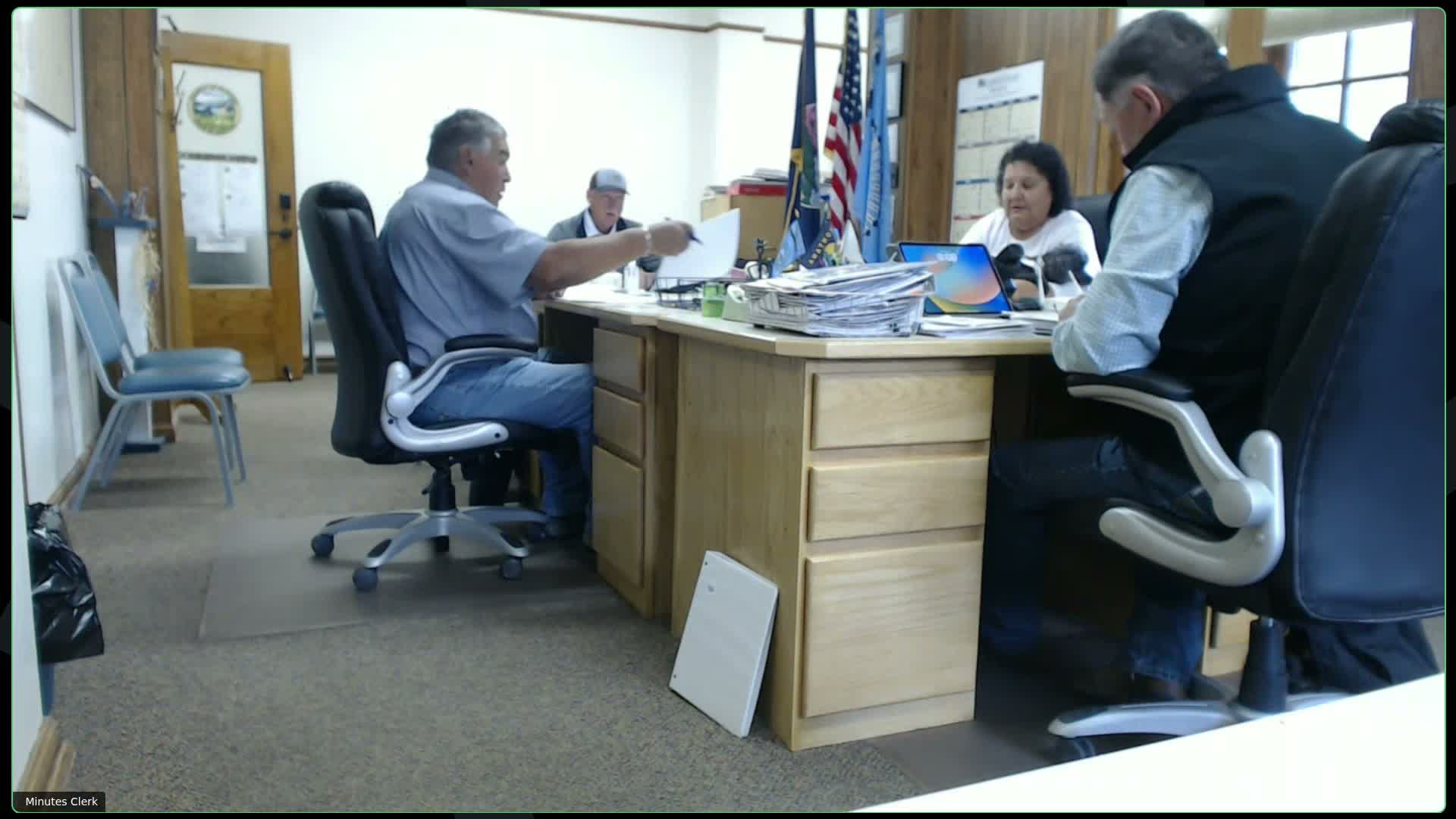
Glacier County commissioners discuss replacing aging water trucks, ask staff for formal bids
Summary
County road supervisor told commissioners aging water trucks need replacement; staff identified a local truck priced at about $110,000 and a new tank at roughly $48,000. Commissioners asked staff to solicit two formal bids and return the item for approval.
Unidentified Road Supervisor (S4) told Glacier County commissioners on July 17 that several water trucks used for road maintenance are worn and repeatedly repaired and that the fleet now needs replacement. He said he located three candidate trucks, including a local unit offered by Wyatt Stokes in Conrad, and estimated the locally available package at roughly $110,000 while noting a replacement tank costs about $48,000 and installation could push that tank project to about $55,000.
Why it matters: water trucks are used year-round for dust control, chloride application and other road-maintenance tasks. The supervisor said failing trucks have caused roadside leaks and repeated repairs that have become impractical and potentially unsafe.
Details and discussion: the supervisor said the local truck includes a new tank and pump and that components are modular and serviceable, so a failed module can be replaced quickly. He described an older alternative in Montana that had sold and a Texas unit that would require shipping. ‘‘These ones are just getting wore out,’’ he said, explaining months of patching and increasing maintenance costs. He told commissioners he budgeted for a new tank and that fuel-tax receipts are an intended funding source for road equipment, adding the county expects regular fuel-tax inflows.
Commissioners asked about vehicle age and condition, local sourcing and whether the county should instead buy a tank and mount it on an existing chassis. The road supervisor recommended advertising the purchase if the total exceeds $80,000 to solicit competitive bids. No motion or purchase authorization was taken at the meeting.
What happens next: commissioners directed staff to obtain two formal bids (or the statutory number required for purchases over the county threshold), advertise as needed and return the item for a future vote. The supervisor agreed to hold the preferred unit while staff completes the procurement steps and reports back.
Ending: the discussion concluded with no public comment and a clear instruction that the item will return to a future agenda with formal bid documentation.