Get Full Government Meeting Transcripts, Videos, & Alerts Forever!
Get email alerts on the Access Management Amendment topic
No spam. Unsubscribe anytime.
Commission gives negative recommendation on access‑management ordinance after legal and enforcement concerns
Summary
The planning commission voted a negative recommendation on a proposed access‑management zoning amendment, citing unclear financial responsibility language, enforcement problems and potential legal exposure; commissioners asked the city attorney to refine wording before the Board of Commissioners sees the text.
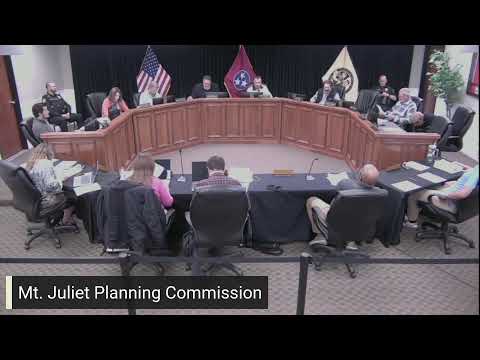
The Mount Juliet Planning Commission on Nov. 20 issued a negative recommendation on a proposed zoning text amendment to section 9‑106 (access management) after lengthy debate about cross‑access requirements and enforcement.
The draft amendment — sponsored at the Board of Commissioners level by Commissioners Giles and Mullaly — would clarify when new development must provide cross‑access or joint‑use driveways and included a sentence assigning financial responsibility to adjoining property owners when stubs can be connected. Several commissioners and members of the public warned that the clause could be unenforceable and expose the city to inverse‑condemnation risk or protracted litigation if it effectively required one private owner to bear costs for another private owner's development.
A developer who spoke during public comment, Bill Robinson, described his experience trying to secure reciprocal easements for a Sprouts project, saying it took eight months and legal intervention; he cautioned the commission that requiring private parties to sign easements could be both impractical and legally risky.
Commissioners proposed edits including removing the mandatory shared‑cost sentence, clarifying that obligations apply only where cross‑access is recorded on plats or otherwise dedicated, and specifying which decision‑making body (Board of Commissioners or the planning commission) may waive or modify cross‑access requirements rather than leaving authority to a generic "city" designation.
After discussion commissioners moved for a negative recommendation to the Board of Commissioners, with a request that legal counsel work with the ordinance sponsor to revise the language to close loopholes and limit unintended consequences. The motion passed by voice vote.
Next steps: the commission asked that the city attorney review and rework the amendment to address enforceability and financial‑responsibility language before the Board of Commissioners considers the item.