Get Full Government Meeting Transcripts, Videos, & Alerts Forever!
Get email alerts on the Public Safety topic
No spam. Unsubscribe anytime.
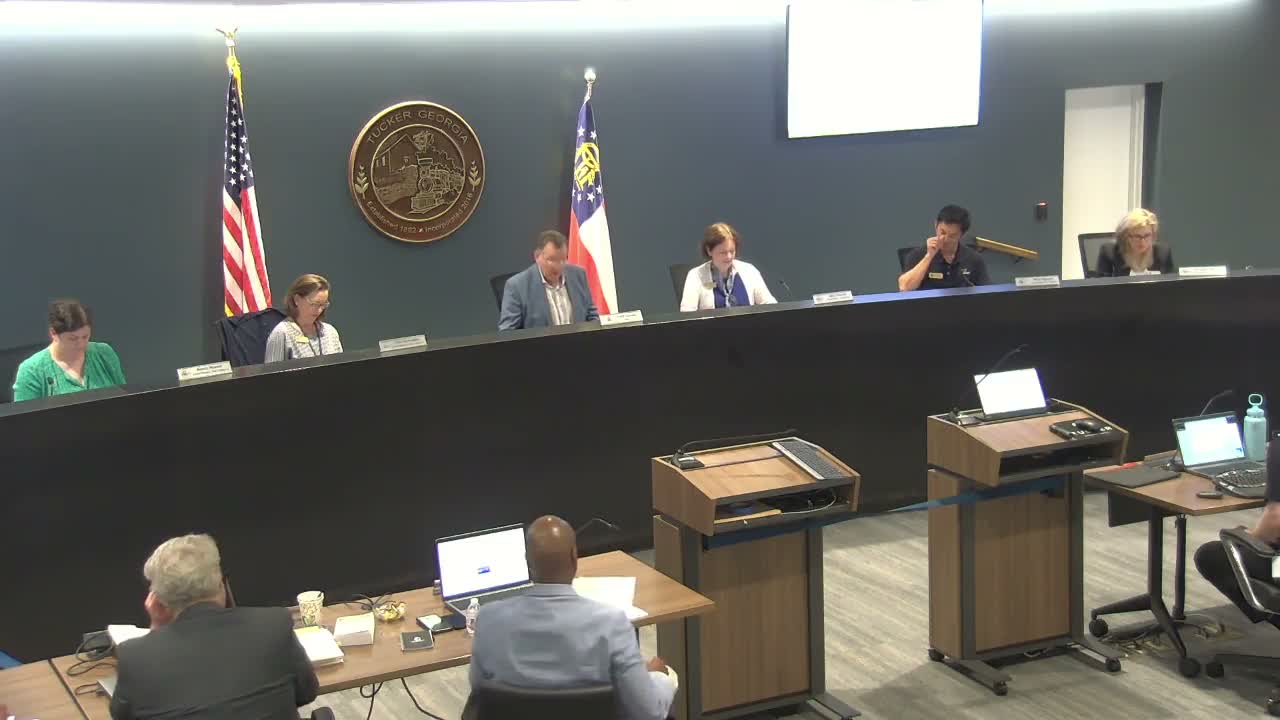
Council hears first read on City Marshal's Office; debate centers on POST certification and role limits
Summary
Council held a first reading to establish a City Marshal's Office requiring POST certification for marshals. Staff stressed training and court security benefits; council asked for a policy to define deployment, use‑of‑force limits and municipal responsibilities beyond court functions.
Tucker City Council held a first read on June 23 of an ordinance to establish a City Marshal's Office and to require POST (Peace Officer Standards and Training) certification for marshals assigned to court and city properties.
City attorney and court leadership explained the ordinance's purpose: marshals would be POST‑certified peace officers whose training includes firearms requalification, de‑escalation, crisis intervention and other annual training requirements. "This is required by POST," city attorney Derek (court director) said, adding that certification helps provide standardized training and operational readiness.
City staff described the marshal duties as centered on courtroom security, transporting detainees for hearings and providing security at City Hall and city‑run facilities such as Tucker Rec. Council members sought clearer policy language and operational boundaries for marshals outside municipal court. One member asked for explicit limitations on deploying marshals for routine public‑facing incidents and recommended a written policy to define when police (DeKalb County) should be called for enforcement or arrests beyond court duties.
Council discussed accreditation options, community input and oversight. The city attorney and staff said POLICIES (to be developed) rather than the ordinance would set deployment specifics and that those policies could be adopted administratively and shared with council. Staff requested time to draft deployment policies, including use‑of‑force limits, escalation procedures, and coordination protocols with DeKalb County police.
Council did not vote on the ordinance (first read). Members indicated they expect a second reading in three weeks and asked staff to provide draft policies and clarifications on powers and limits before final adoption.