Get Full Government Meeting Transcripts, Videos, & Alerts Forever!
Get email alerts on the Stormwater And Stream Buffer Variance topic
No spam. Unsubscribe anytime.
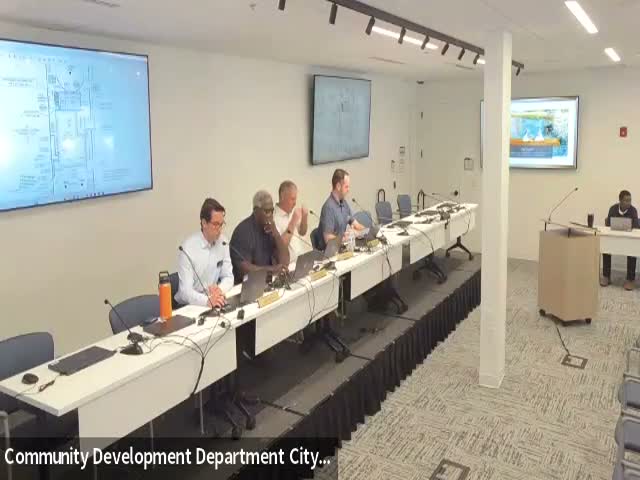
Neighbors and developers clash over stream-buffer relief for Brookhaven lots; board debates stormwater mitigation
Summary
A contentious hearing over variances for 2511 and 2517 centered on stormwater risks and a requested reduction of the stream buffer from 75 to 25 feet; neighbors warned of increased flood risk while applicants and their engineers said proposed mitigation would improve water quality and control runoff.
The board spent a large portion of the session on AR/VAR 25-00014 and related AR25-0025, requests tied to two rear lots (identified as 2511 and 2517) that sit within a 5.4-acre watershed. Applicants and their engineers argued the properties suffer an exceptional hardship because of concentrated stormwater flows and a city-owned storm pipe that lacks an easement. They presented video evidence of significant runoff from a July 30, 2022 rainfall event and cited hydrology calculations estimating large volumes of water during storm events; the applicants said the proposed stormwater management system would not increase downstream flooding and would reduce sediment loads and improve water quality.
A wave of neighbors opposed relief, arguing the lots had been treated as undevelopable for decades, that prior water studies and a detention pond were designed to protect the neighborhood, and that building within the city’s broader stream buffer would move sediment and flood risk onto downstream properties. Opposition speakers repeatedly urged the board not to weaken the stream-buffer standard, contending approval would set a precedent allowing over-built parcels and repeated buffer encroachments.
DeKalb County Soil and Water Conservation District Supervisor Victoria Webb (speaking for the record) told the board the site plan appears to bring construction within about 1 foot of the 25-foot stream buffer line and that the property will likely encroach on the buffer under current proposals. Applicants’ engineers and staff debated the modeling: applicants said revised stormwater calculations and on-site controls would capture upstream flows and reduce erosive sediment, while some board members remained concerned about enforcement and long-term maintenance of mitigation measures.
A board motion was made to approve AR25-00014 with multiple reductions (stream buffer from 75 to 25 feet, front setback reduction from 30 to 8 feet, and side setback reduction to 6.5 feet) subject to staff-recommended conditions. Several members, however, raised procedural and quorum concerns and discussed a possible deferral to ensure a full five-member quorum for final action; the transcript records a later motion to defer one related request (AR25-00015) 30 days to allow fuller board participation. The record shows deep neighborhood opposition and several technical claims and counterclaims about whether the proposed controls would materially alter downstream flood risk.
The board’s deliberations emphasized the limited scope of variance criteria: whether strict application of the code would create an exceptional, undue hardship; whether relief requested was the minimum necessary; and whether the proposal would be materially detrimental to public welfare. Several board members said the stormwater pipe and maintenance concerns were a separate policy and operational issue for the city’s stormwater utility and council, while recognition of a real physical hardship on the lots factored into the motion to grant buffer relief subject to conditions.
Next procedural steps recorded in the transcript included motions and discussion of deferral to ensure a full board quorum for final decisions on some related items. The board did not record a final, uncontested vote on all requested buffer reductions in the excerpted transcript; multiple technical follow-ups and staff conditions were attached to any approval motion.