Get Full Government Meeting Transcripts, Videos, & Alerts Forever!
Get email alerts on the Data Centers topic
No spam. Unsubscribe anytime.
Albany utility board pauses on data‑center offer, asks staff for financial and contract analysis
Summary
The Albany Utility Board heard a proposal to subscribe to a multi‑city data‑center project and voted to pause action for two weeks while staff and ECG produce detailed revenue, cost and contract scenarios, including risks tied to generation resources and term length.
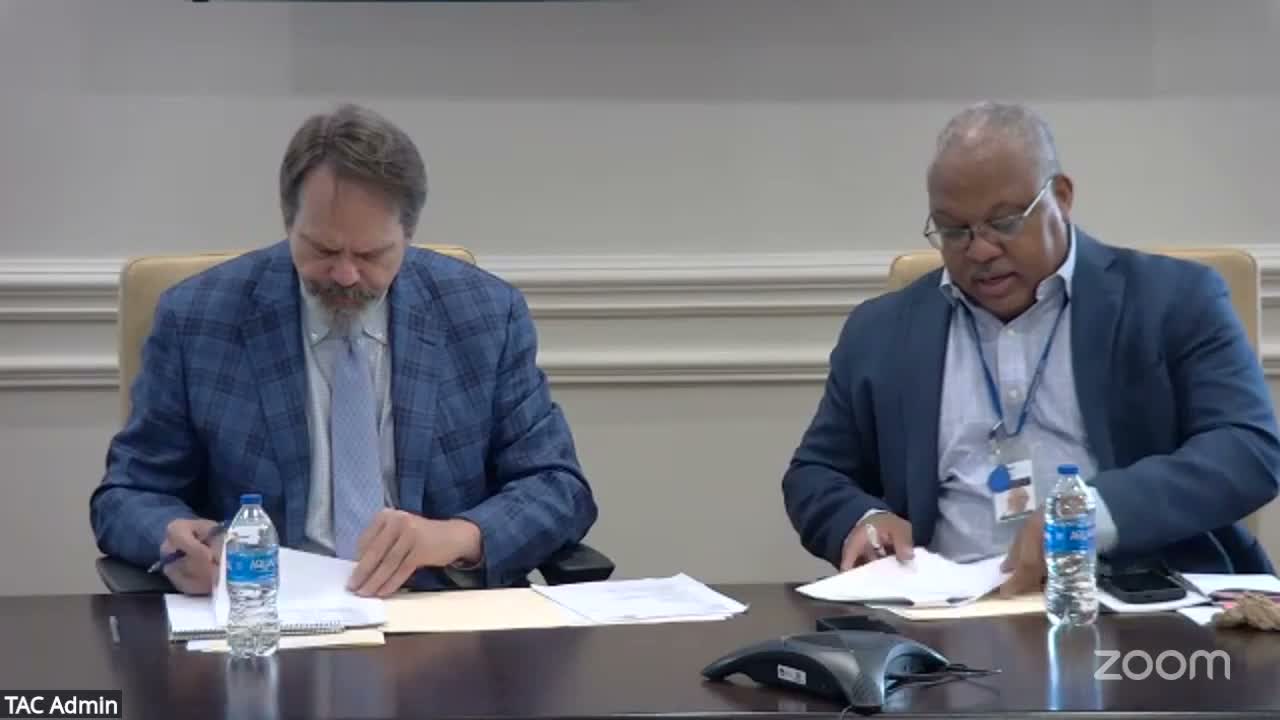
The Albany Utility Board on Aug. 14 reviewed a multi‑city proposal to share power for a new data‑center development and voted to continue negotiations while staff provides more detailed financial and contractual analysis.
Mister Jacobs, who introduced the opportunity, said the Municipal Electric Authority proposal stems from a broader state‑level demand surge: “there have been some opportunity here in the state of Georgia to either serve or either partner with 1 of the other electric cities… at this point, from last, about 7,000 megawatts of potential data center service” and MEAG is planning roughly 1,200 megawatts in its current cycle. Jacobs told the board that Albany currently shows about 18 megawatts of excess capacity and that a nearby county has rezoned about 600 acres for an initial 80‑megawatt phase.
Jacobs described the revenue‑sharing term under discussion: the host city would retain 100% of its committed share while participating cities would split the remaining revenues 50/50. Board members pressed for clarity on term lengths, the possibility of later, more favorable offers from other cities, and how long‑term contracts could lock Albany into commitments while the utility’s generation mix evolves.
Several members raised operational and market risks tied to the utility’s dispatchable resource (referred to in discussion as Shearer) and recent litigation and federal policy shifts that could change the viability of coal‑fired dispatch resources. One member asked staff to model several subscription levels (for example, 5, 10 and 13 megawatts) and show the net revenue or cost to Albany under each scenario.
The board did not approve a subscription at the meeting. Instead it approved a motion to continue negotiations and request that Electric Cities (ECG) and staff return within two weeks with a comparative analysis showing: revenue projections under different subscription levels, the price Albany would pay MEAG or market purchases versus fixed price arrangements, contract term options and associated exit/overrun provisions, and sensitivity to changes in generation availability.
The board’s next formal step will be to review the staff‑prepared analysis and then decide whether to commit any portion of its excess capacity to the data‑center subscription.