Get Full Government Meeting Transcripts, Videos, & Alerts Forever!
Get email alerts on the Data Center topic
No spam. Unsubscribe anytime.
Albany utility board agrees to continue negotiations on regional data-center power partnership
Summary
After hearing a staff briefing on regional data-center demand and revenue-sharing terms, the Albany Utility Board voted to continue negotiating a subscription to a proposed 80 MW phase at a Chris County site and asked staff for more analysis on contract terms and pricing options.
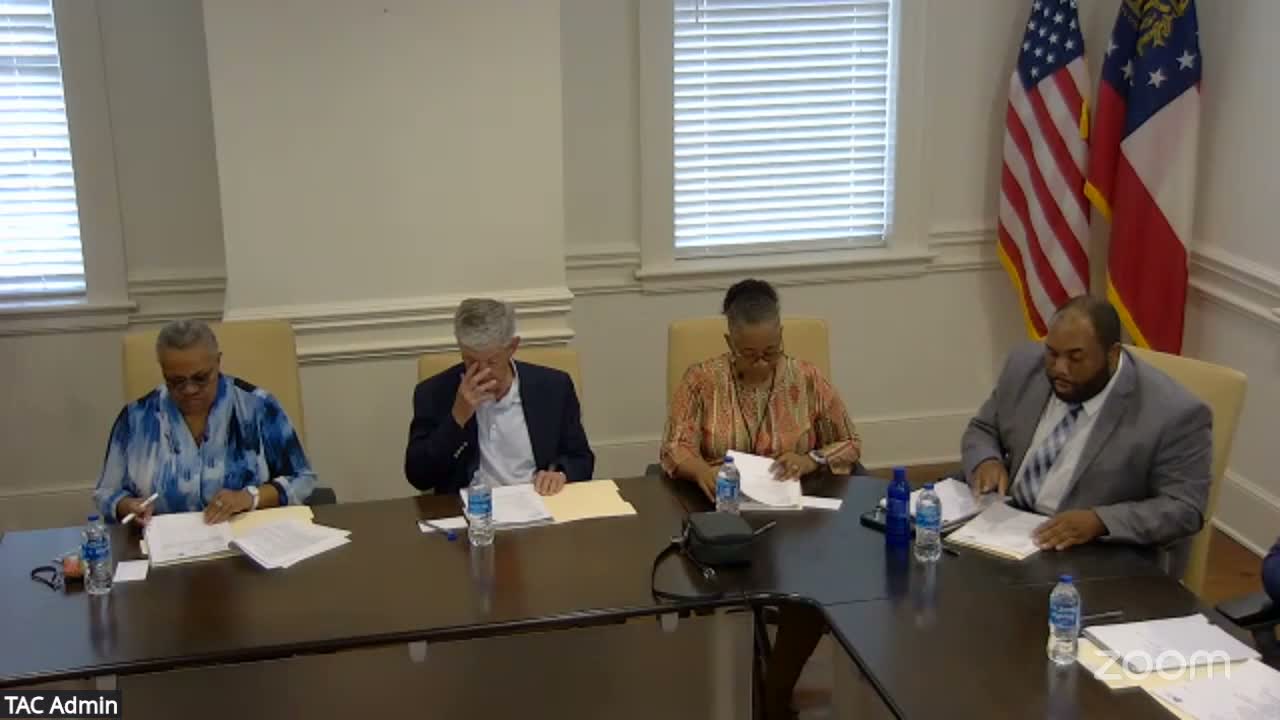
The Albany Utility Board voted Aug. 14 to continue negotiations with regional partners on a proposed data-center power partnership that would allow participating cities to subscribe to megawatts at a planned Chris County development.
Mister Jacobs, who led the briefing, said the state faces roughly “7,000 megawatts” of potential data-center load and that MEAG is exploring a roughly 1,200 MW initiative to serve some of that demand. Jacobs said Chris County has rezoned about 600 acres adjacent to I‑75 and plans a phase that would require about 80 megawatts; Chris County has committed 30 megawatts and is seeking other municipal participants to supply the remaining capacity.
Jacobs described the proposed revenue-sharing arrangement: the host county would retain 100% of the revenue from its committed 30 MW, and other participating electric cities would share remaining revenue on a 50/50 basis with the host for their subscribed megawatts. He told the board the agreement under discussion contemplates a long-term subscription term and that some cities have accepted different contract lengths in similar deals.
Board members raised concerns about committing long-term capacity. One member said the board already has a five-year commitment tied to a prior Robertsdale arrangement and questioned whether Albany should lock in additional megawatts for 10 years given uncertainties about future demand, technology improvements and the possibility other communities could offer more favorable splits. Another member asked whether the 50/50 split could be renegotiated and emphasized the need to understand the effect if a partner later offered a different ratio.
Jacobs recommended staff return with modeled revenue scenarios and options at different subscription levels; he said he would coordinate with ECG/MEAG and that the board would likely provide an answer within two weeks. The board unanimously approved a motion to continue negotiations and to have staff produce a detailed analysis of pricing, term alternatives and revenue projections before deciding whether to subscribe further.
The board did not authorize a final commitment; the vote was limited to continuing discussions and gathering additional information. The matter will return to the board for a decision after staff analysis.