Senate HELP Subcommittee Divided Over School Choice and Public School Investment
Get AI-powered insights, summaries, and transcripts
SubscribeSummary
At a Senate HELP Subcommittee hearing on family empowerment in education, witnesses and senators split over expanding school choice versus investing in public schools and special education funding; witnesses cited charter growth and evidence-based literacy reforms while lawmakers debated tax-credit scholarships and IDEA funding.
WASHINGTON â Lawmakers and education advocates on the Senate Health, Education, Labor, and Pensions Subcommittee on Education and the American Family clashed Friday over whether federal policy should prioritize school choice or strengthen public schools and special education funding.
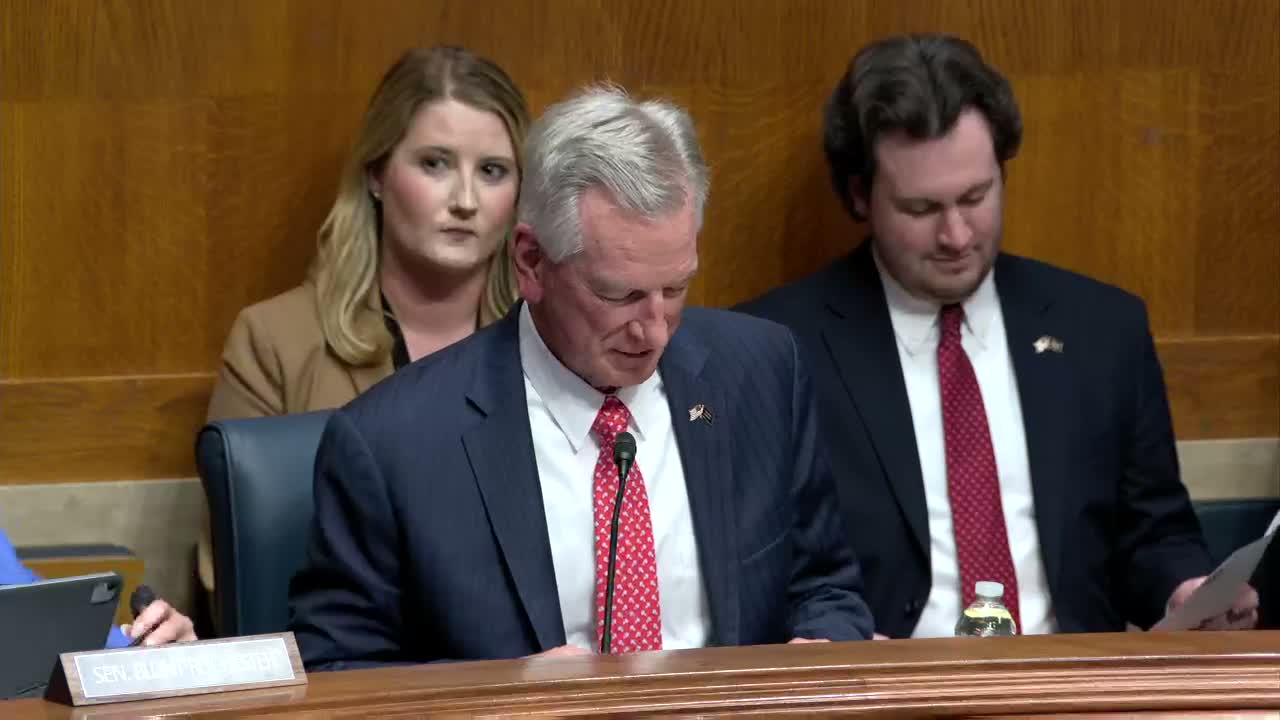
Chairman Tuberville opened the hearing saying it was meant to explore how "empowering families" could improve outcomes and pointed to several state efforts expanding options outside low-performing schools. "This afternoon, we're having a hearing on empowering families for better educational results," he said.
Ranking Member Blunt Rochester warned against diverting federal resources to private-school subsidies and accused the administration of withholding funds targeted to teacher preparation. "The administration... is illegally withholding over $5,000,000,000 in funds that would directly support teacher preparedness and student success," she said, urging full funding for IDEA and investment in public schools.
Tyler Barnett, founder and CEO of New Schools for Alabama, credited charter expansion with improving literacy in his state and highlighted federal support that helped that growth. "In 2019, New Schools for Alabama was awarded a $25,000,000 CSP state entities grant," Barnett said, noting that Alabama's sector grew from one charter serving 250 students to 17 charters serving over 8,000.
Jenny Gentles, director of education freedom and parental rights at the Defense of Freedom Institute for Policy Studies, defended state-driven choice programs and federal tax-credit scholarship proposals, calling them tools to expand options for families. She described the "1 big beautiful bill act" as a step that could "open up educational opportunities for millions of students."
Witnesses and senators sharply debated accountability and protections for students with disabilities. Senators pressed whether private schools participating in scholarship or tax-credit programs would be bound by the Individuals with Disabilities Education Act. Richard Barrera, vice president of the San Diego Unified School District board, warned that underfunding IDEA places large burdens on local districts and said fully funding the law could free local dollars for literacy supports.
The subcommittee also spent significant time on literacy policy. Anne Wicks of the Bush Institute urged states to implement the science of reading, expand teacher preparation and professional development, and adopt early screening and intervention. "We had a 15 jump in a very short amount of time of third graders on grade level," she said of a district curriculum change, arguing such results show state policy can make a difference.
No formal votes were taken. Senators requested additional questions for the record and signaled follow-up on funding priorities, screening practices, and the details of proposed federal tax-credit scholarship programs. The subcommittee set a deadline for written questions and adjourned.
The hearing underscored a persistent divide: witnesses and Republican members emphasized expanding parental options and reducing federal constraints, while Democratic members pushed for investing federal dollars in public schools, teacher capacity and full funding for IDEA. The subcommittee left the record open for further questions and potential follow-up legislation.