Get Full Government Meeting Transcripts, Videos, & Alerts Forever!
Get email alerts on the Data Center Partnership topic
No spam. Unsubscribe anytime.
Albany utility board delays decision on joining Georgia data‑center deal, requests financial analysis
Summary
Board members debated a proposed data‑center partnership and voted to pause final commitment so staff can analyze revenue splits, contract terms and scenarios; Mister Jacobs said Georgia shows about 7,000 megawatts of potential data‑center demand and Albany reports roughly 18 megawatts of excess capacity.
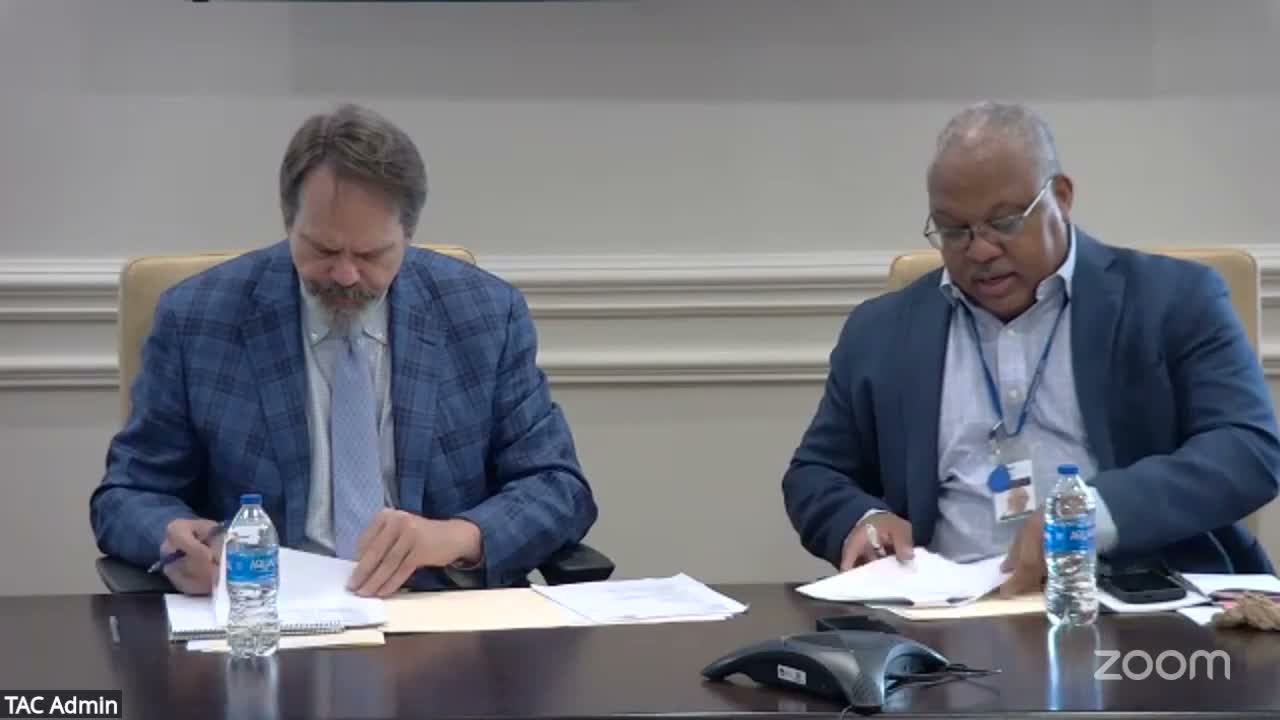
The Office Building Board of Albany on Aug. 14 reviewed a proposal to join a multi‑city data‑center partnership and agreed to delay a final commitment while staff prepares financial analyses.
Mister Jacobs, who presented the opportunity, told the board that "there have been some opportunity here in the state of Georgia" and that the state shows about "7,000 megawatts of potential data center service," with MEAG planning roughly 1,200 megawatts of new combined‑cycle capacity. Jacobs said a nearby host community has rezoned land and expects an initial phase that would require roughly 80 megawatts; that host would commit 30 megawatts and is seeking other municipal participants to fill the balance.
Board members raised multiple concerns, including the proposed revenue split (hosting communities keep the full value of their committed megawatts while participating utilities would share 50 percent of the pooled revenue), the length of proposed commitments (several members questioned 10‑year terms) and the risk of missing later, more favorable offers from other cities. "We are a total of, 18, megawatts, excess," Jacobs said when asked about Albany's current position; board members noted the city already has a 5‑megawatt commitment in place for five years and pressed staff for scenarios covering different subscription levels.
In response, Jacobs and staff agreed to work with Electric Cities/ECG and internal finance staff ("Joe") to produce a short financial analysis showing revenue and cost outcomes at several commitment levels and to clarify what the city would be paying versus what it would receive. The board made a motion to continue negotiations and return within two weeks with the requested information; the motion passed on a recorded roll call and the item will return to the board after staff presents the analysis.
What happens next: Staff will produce a comparative analysis for the board and follow up with ECG; the board delayed any decision on a long‑term subscription until it has revenue‑sharing scenarios and clearer cost estimates.