Get Full Government Meeting Transcripts, Videos, & Alerts Forever!
Get email alerts on the Transit Security topic
No spam. Unsubscribe anytime.
Transit riders and advocates urge Detroit council to review metal detectors and indoor access at Rosa Parks, Jason Hargrove centers
Summary
Riders and transit advocates told the Public Health & Safety committee that newly installed metal detectors and instructions from private security barring people from sitting inside the Rosa Parks and Jason Hargrove transit centers deter riders, risk senior and disability access, and should be reviewed by city officials.
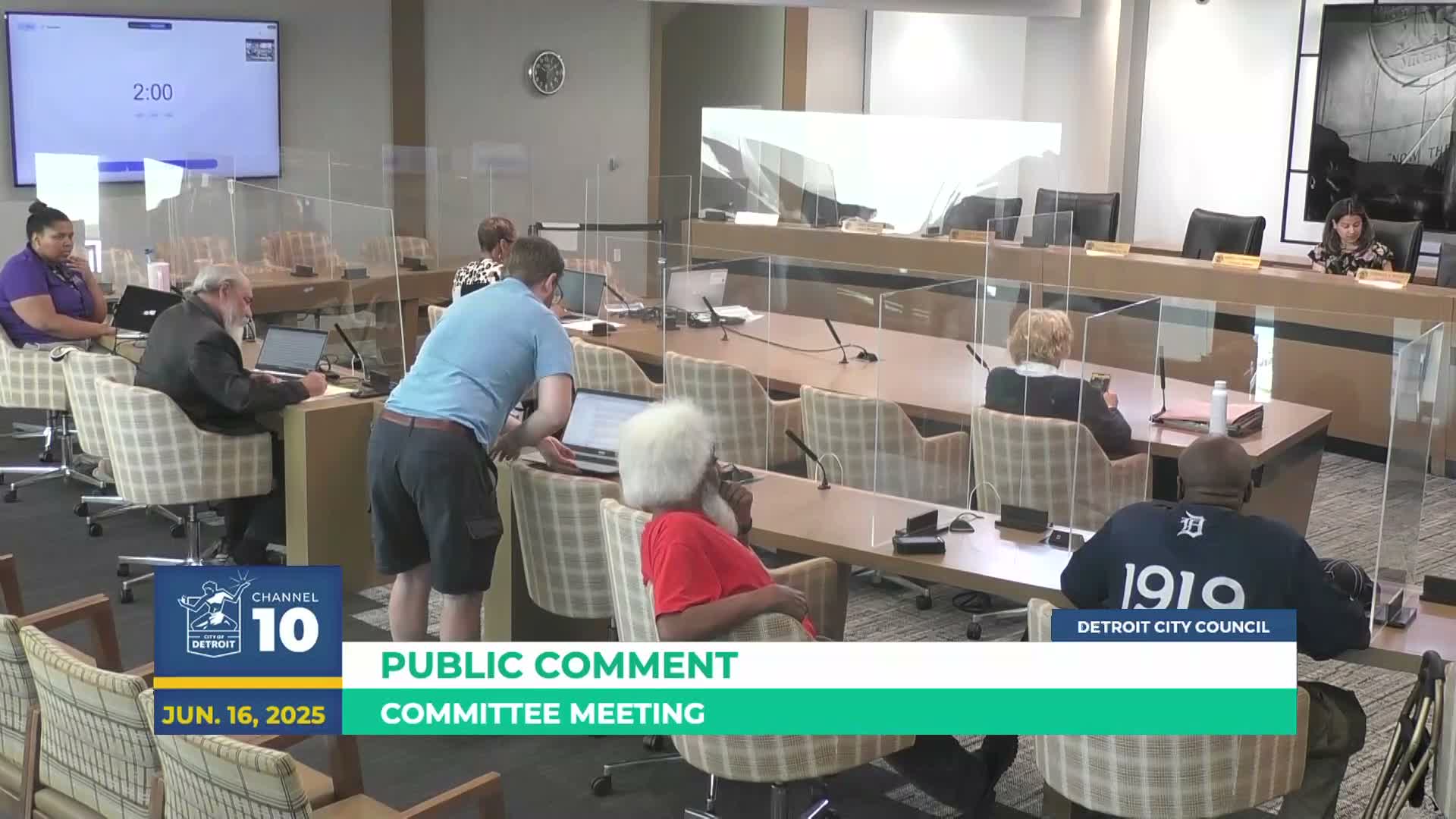
Public comments at the Detroit Public Health & Safety Standing Committee on June 16 pressed elected officials to investigate recent security measures at two major transit hubs.
Multiple speakers, including Joel Batterman, campaigns manager for Transportation Riders United, told the committee that private security at the Rosa Parks and Jason Hargrove transit centers has been screening every person entering indoor waiting areas and in some cases telling riders they may not sit inside while they wait for buses. "Denying transit riders access to a warm or air conditioned space to wait for their buses, many of which arrive only once per hour, is outrageous," Batterman said, adding that many riders are seniors or people with disabilities.
Michael Cunningham, a frequent commenter and local advocate, asked council members to send an unbadged observer to test whether riders are being denied indoor seating. "Please don't have a council shirt on or a council badge. Just go on, try to sit down, and see what they say," Cunningham said, describing direct encounters in which riders were told they could not sit indoors after security installed metal detectors.
Speakers argued the screening measures both fail to improve safety and may chill ridership. "These measures may actually deter people from using transit," Batterman said, calling the procedures "irrelevant to rider safety" and saying the presence of metal detectors risks criminalizing riders and reinforcing perceptions that transit is unsafe.
Other callers backed those concerns. Lucas Lisakian of Transportation Riders United described an encounter in which a security guard told him, "you'll get more than my name if you keep asking questions," which Lisakian interpreted as a threat. Bernard Majenski, a transit rider and organizer, said alternative screening for riders with pacemakers, implants or other medical needs appears not to be in place and warned of potential lawsuits and safety risks for people who need accommodations.
Committee members responded that DDOT contracts were on the day's agenda and said they would raise the comments with department staff. The chair noted the committee will try to have DDOT staff or the department director respond to the issues in a future session and said there are quarterly updates with DDOT during which council could seek further information.
The committee did not take formal action on the security measures during the meeting; public commenters asked the council to hold hearings and requested clear notice on when centers are closed for maintenance versus closed all day. Several commenters also asked the city to publish contact information for follow‑up and to consider how the measures affect vulnerable riders.