Get Full Government Meeting Transcripts, Videos, & Alerts Forever!
Get email alerts on the Home Heating Oil Insurance topic
No spam. Unsubscribe anytime.
Homeowners and LSPs push mandate to include fuel‑oil spill coverage in all homeowners policies
Summary
Licensed Site Professionals, homeowners harmed by heating‑oil tank failures, and advocacy groups urged the committee to pass S813/H1302 to require that standard Massachusetts homeowners policies include fuel‑oil spill cleanup coverage, citing widespread uninsured exposure and multi‑ten‑thousand‑dollar cleanup bills.
LicensedSite Professionals (LSP) and affected homeowners told the Joint Committee on Financial Services that the Commonwealth’s existing approach — where insurers merely “make available” fuel‑oil rider coverage — has left many families unaware and financially exposed.
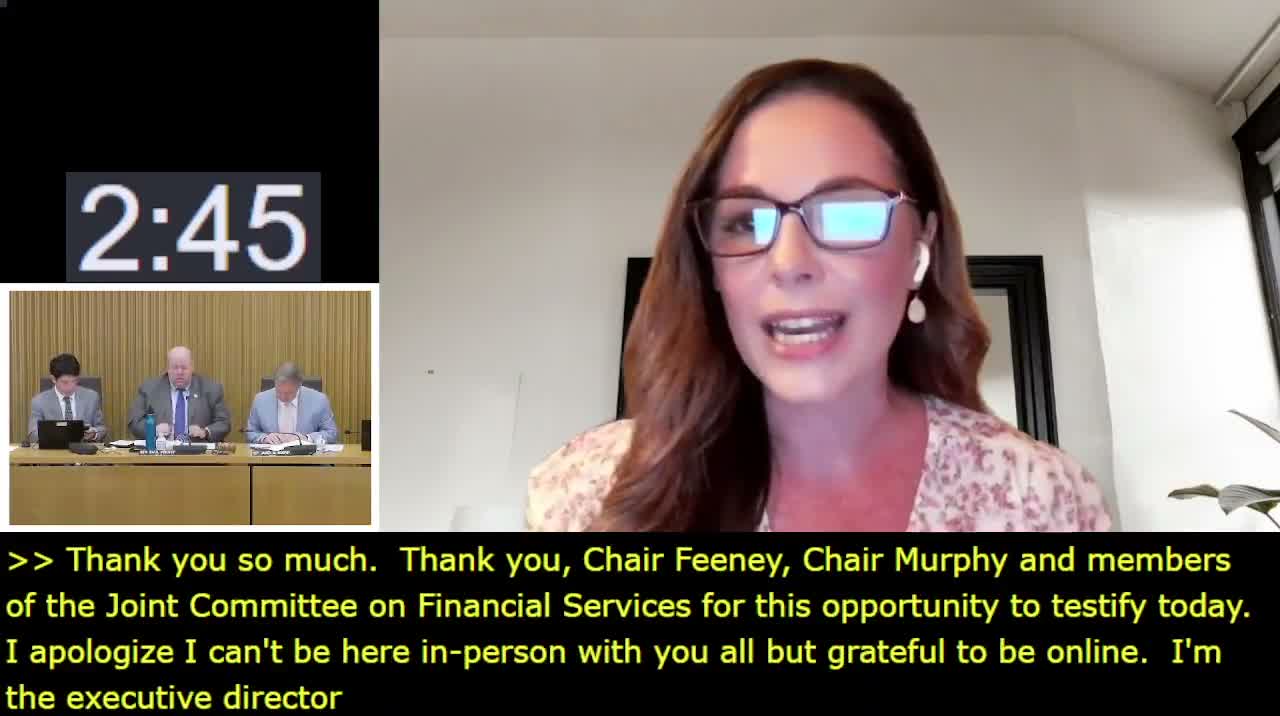
Mary Ellen (Mariel) Morris, executive director of the LSP Association, said that roughly 100 residential heating oil spills are reported annually to the Massachusetts Department of Environmental Protection and that cleanup costs can range from $20,000–$50,000 for simple releases up to $500,000 for complex groundwater impacts. She testified that fewer than 20% of homeowners with oil heat have purchased the optional riders that would cover cleanup costs, despite outreach and media coverage.
Homeowners gave emotional, detailed accounts. Kathleen Murray described a catastrophic 190‑gallon leak under her house that she said left her family facing six‑figure remediation bills and needing to hire licensed site professionals, contractors and specialists; she said insurers and agents never disclosed the optional rider. LSPs and advocates urged the committee to require inclusion of spill coverage in all homeowners policies or to require stronger agent disclosure practices.
The insurance‑industry representative on the panel (Massachusetts Insurance Federation) raised concerns about first vs. third‑party damage language, risk‑mitigation and the need for a one‑year effective date to allow pricing and regulatory review; industry witnesses suggested alternative approaches such as mandatory agent notification. Committee members asked for enrollment and claims data; industry representatives offered to provide numbers about uptake after prior media coverage.
No vote was taken at the hearing, and committee chairs signaled continued engagement to reach compromises on mitigation language and cost containment.