Get Full Government Meeting Transcripts, Videos, & Alerts Forever!
Get email alerts on the Public Transit Security topic
No spam. Unsubscribe anytime.
Transit riders and advocates press Detroit council over metal detectors, denial of seating at Rosa Parks and Jason Hargrove centers
Summary
Riders and advocates told the Public Health & Safety Committee that private security and newly installed metal detectors at Rosa Parks and Jason Hargrove transit centers are excluding people from indoor waiting areas and may deter vulnerable riders; council said it will raise the issue with DDOT during upcoming contract discussions.
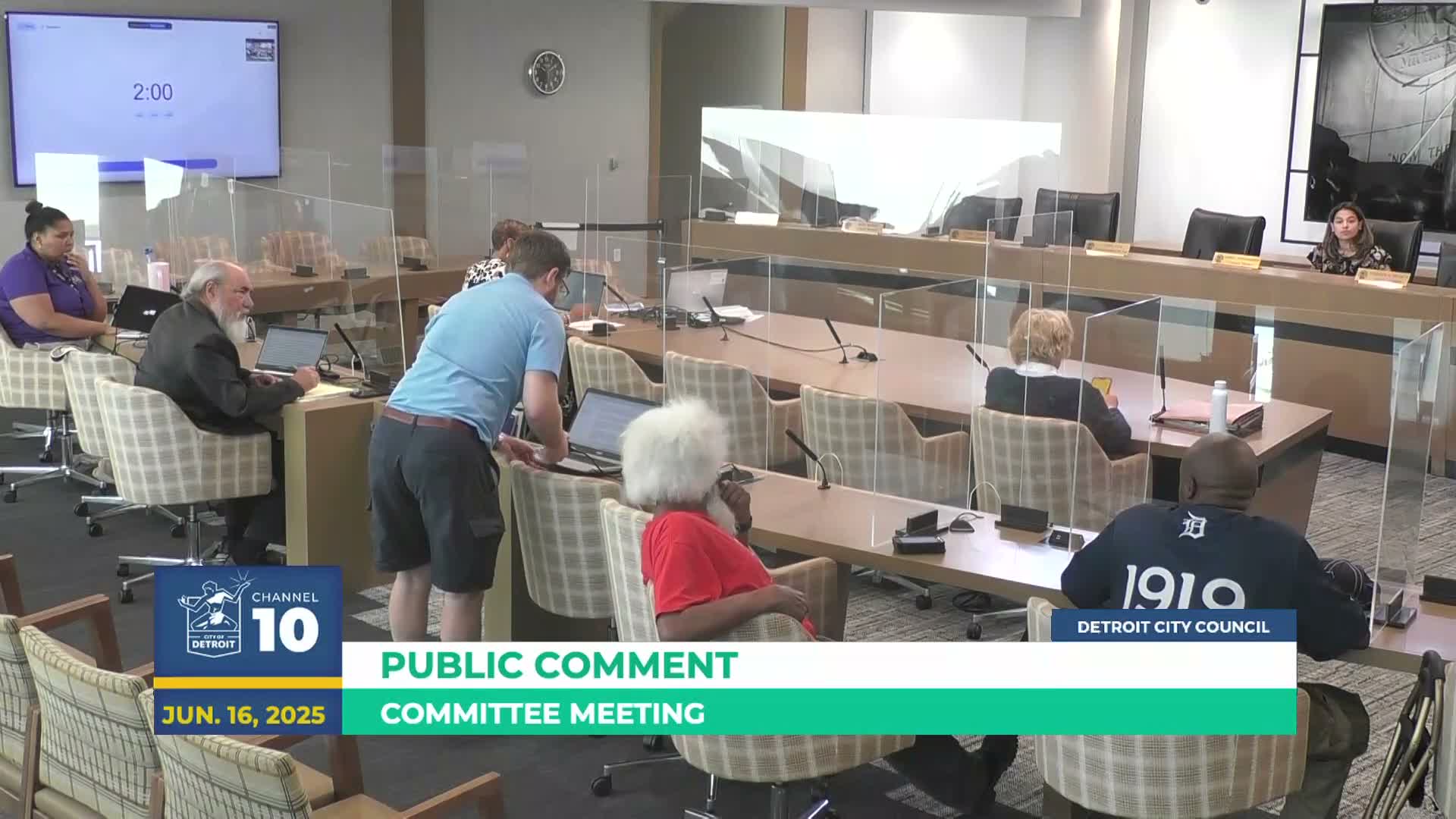
Transit riders and transit‑advocacy groups told the Detroit Public Health & Safety Committee on June 16 that new security measures at the Rosa Parks and Jason Hargrove transit centers are preventing riders from using indoor seating and could discourage people from using public transit.
"They won't let people sit down on the inside," said Michael Cunningham during public comment, asking the council to send an unbadged observer to test whether riders are being denied access. Joel Batterman, campaigns manager for Transportation Riders United, said private security is searching every person entering the indoor portion of the centers and that guards have told riders they cannot wait indoors for buses that often run only once an hour.
"This seems particularly egregious at a facility named for Rosa Parks," Batterman said, urging the committee to inquire further and consider less restrictive safety measures. Other callers — including Bernard Majenski of Transit Justice Team and Lucas Lisakian of Transportation Riders United — criticized the professionalism of some guards, raised civil‑liberties concerns about searches without individualized suspicion, and warned that denying access to sheltered, climate‑controlled space places seniors and people with disabilities at risk.
The chair acknowledged the complaints and said council will raise the activists' concerns with DDOT during today's agenda and in quarterly DDOT briefings. Committee members asked staff to invite DDOT leadership to a future session for a briefing early on the agenda so the body can get more information about the security policy, training for contracted guards, and alternative screening procedures for people with implants or other medical needs.
The comments came during the committee's public‑comment period before a quorum was established; members later said they planned follow‑up questions during review of DDOT contracts on the agenda.
What happens next: Council said it will try to get DDOT or its director to appear at a future committee meeting and to ask contracting staff about the company or companies providing security at the centers, the training requirements, and whether the practice is covered under existing contracts.