Get Full Government Meeting Transcripts, Videos, & Alerts Forever!
Get email alerts on the Transit Security topic
No spam. Unsubscribe anytime.
Transit riders press Detroit committee to investigate metal detectors, say guards block indoor waiting
Summary
Riders and transit advocates told the Public Health & Safety Committee that private security at Rosa Parks and Jason Hargrove transit centers is searching everyone, preventing riders from waiting indoors and creating safety and civil‑liberties concerns; council members said they will raise questions with DDOT and the director.
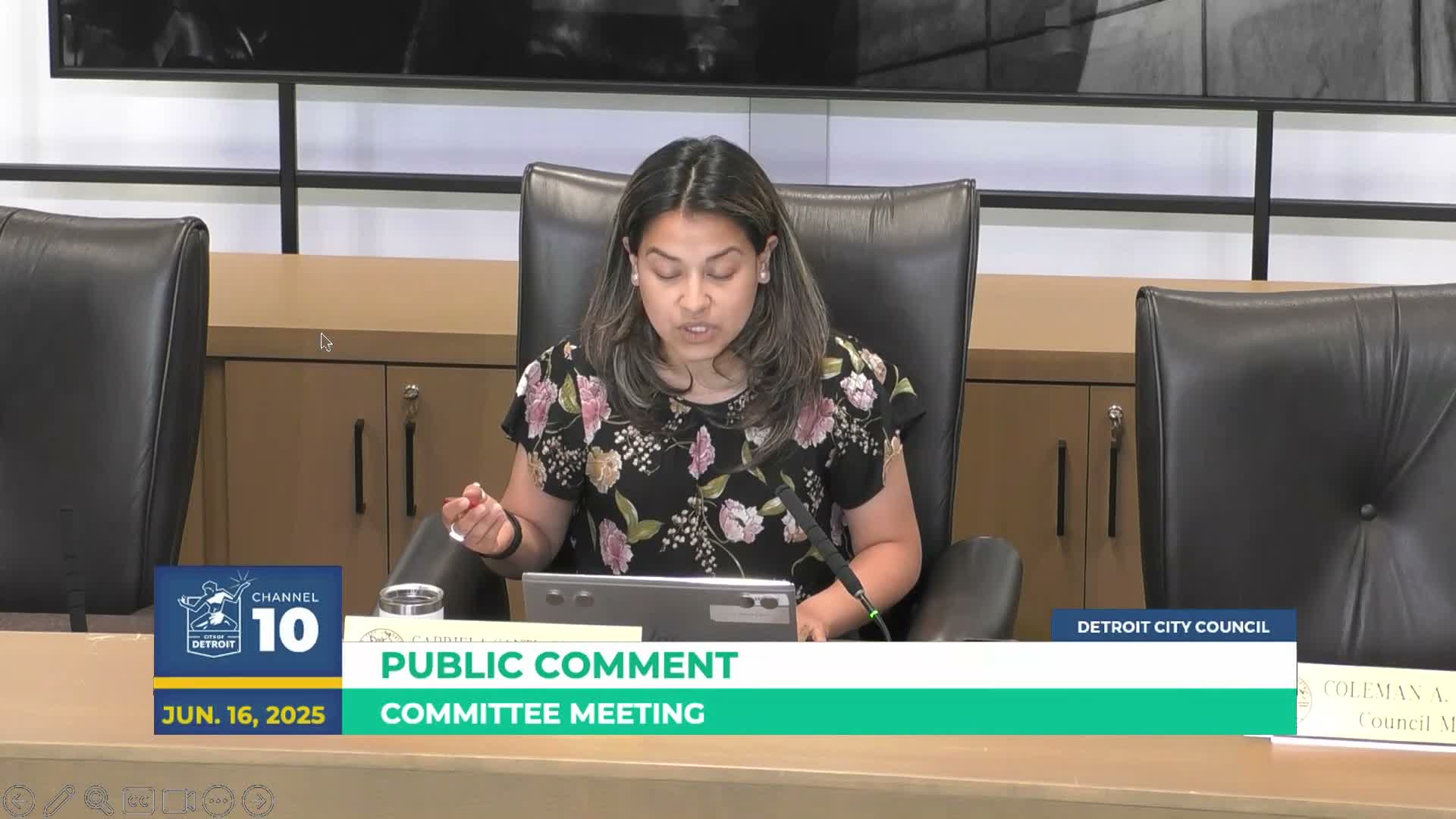
Riders and transit advocates urged the Detroit Public Health & Safety Standing Committee on June 16 to investigate new security procedures at two downtown transit centers, saying private guards operating metal detectors have been telling riders they may not sit inside while waiting for buses.
Transportation Riders United campaigns manager Joel Batterman told the committee that metal detectors and private searches at the Rosa Parks and Jason Hargrove centers have left many riders — including seniors and people with disabilities — waiting outdoors for infrequent buses. "Denying transit riders access to a warm or air conditioned space to wait for their buses," Batterman said, "many of which arrive only once per hour, is outrageous." He asked the council to inquire into the measures and consider alternatives that do not discourage ridership.
The complaints were echoed by multiple public commenters. Michael Cunningham, introduced by the chair as a local transit advocate, asked council members to conduct anonymous audits and report back on whether riders are being barred from seated indoor areas. Bernard Majenski of Transit Justice Team and Lucas Lisakian of Transportation Riders United raised civil‑liberties and safety concerns, warning that private security searches can disadvantage people with medical implants or survivors of assault and that some guards have behaved unprofessionally. Lisakian said a guard told him, "you'll get more than my name if you keep asking questions," a remark he characterized as a threat.
Committee members acknowledged the complaints and said they would pursue answers. The chair noted several DDOT contracts were on the day's agenda and said staff could invite the DDOT director or bring the issue to upcoming quarterly updates with DDOT. "We can also raise the questions and concerns that you raised to us this morning," the chair said, promising follow‑up with the department and the opportunity to ask the director to join a future session.
The comments did not result in an immediate committee vote; several transit contracts on the agenda were discussed later in the meeting. Committee members asked staff to flag the transit security issue for further review and suggested inviting DDOT officials to explain the policy, training and vendor selection for contracted security.
Next steps: Council staff said they would include transit security questions in follow‑up with DDOT, request documentation about the contracts that funded security services, and consider asking the DDOT director to brief the committee at a future meeting.