Get Full Government Meeting Transcripts, Videos, & Alerts Forever!
Get email alerts on the Transit Security topic
No spam. Unsubscribe anytime.
Riders and advocates press Detroit committee over metal detectors and indoor seating bans at transit centers
Summary
Dozens of riders and transit advocates told the council June 16 that new metal detectors and security rules at the Rosa Parks and Jason Hargrove transit centers are deterring riders from using indoor waiting areas and may harm seniors and people with disabilities; advocates urged the city to investigate alternatives and questioned contractor training and oversight.
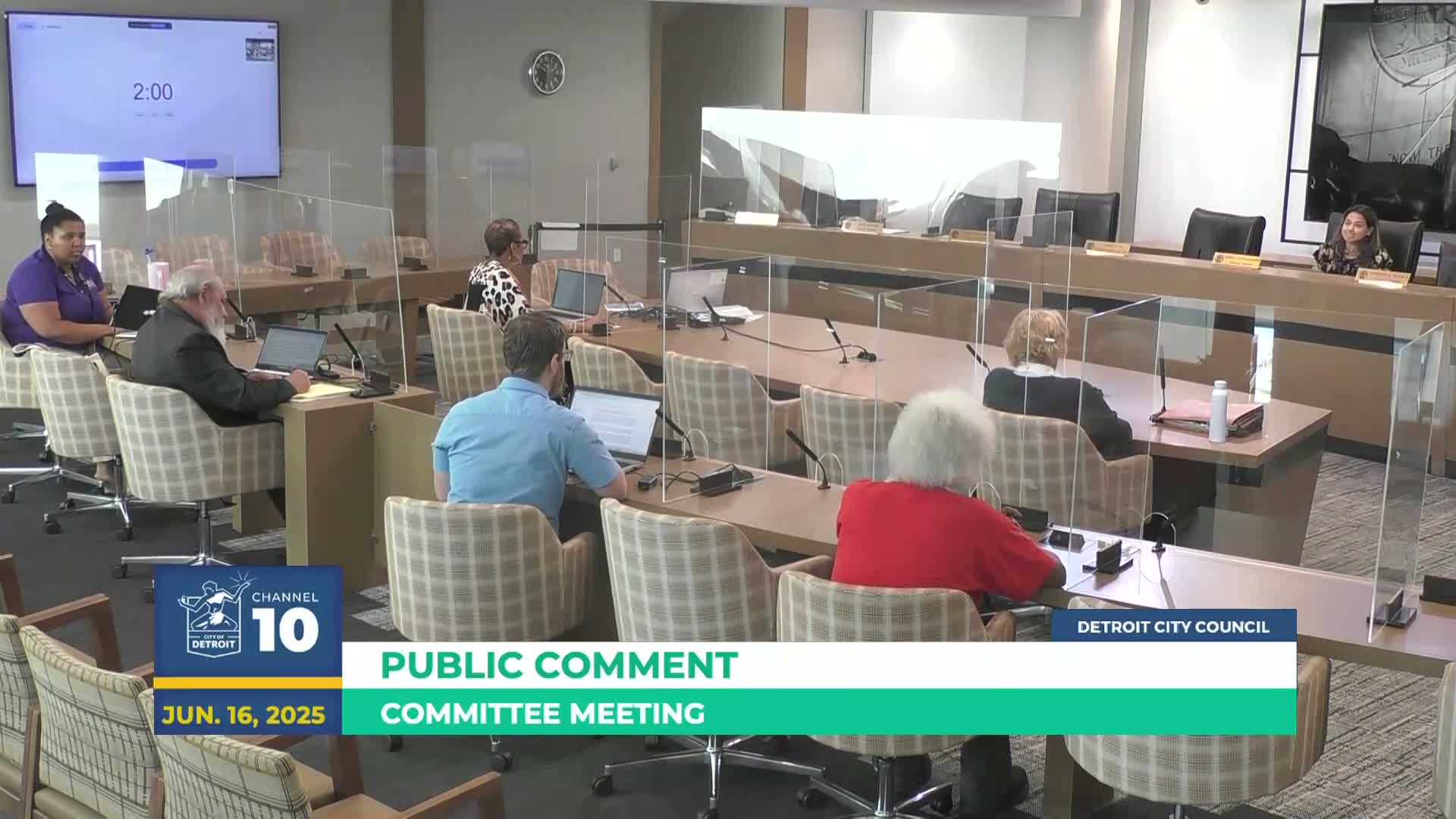
Public comment at the Detroit City Council Public Health and Safety Standing Committee on June 16 centered on a sudden security change at two downtown transit hubs. Riders and transit advocates said private security and newly installed metal detectors at the Rosa Parks and Jason Hargrove transit centers are telling people they may not wait indoors and have created a barrier to using the system.
"These measures may actually deter people from using transit," Joel Batterman, campaigns manager for Transportation Riders United, told the committee. Batterman said the majority of riders previously waited inside near bus bays and that denying access to climate-controlled spaces is "outrageous," particularly for seniors and people with disabilities who face infrequent schedules.
Several callers and in-person commentators recounted confrontations with security staff and described screening practices that they said were demeaning or inconsistent. Lucas Lisakian of Transportation Riders United said private security searches at the centers resemble a "stop-and-frisk" and that he was told by a guard, "you'll get more than my name if you keep asking questions," which Lisakian said he took as a threat.
"They're not allowing people to sit down," Michael Cunningham said in public comment, urging the council to send staff without insignia to test enforcement and report back. Other callers described being told to use earplugs or alter how they use phones to pass security checks and reported long waits outdoors when buses arrive infrequently.
Advocates also raised civil-liberties and accessibility concerns: Bernard Majenski, a bus rider activist, asked whether security staff are trained to provide appropriate alternative screening for riders with pacemakers, cochlear implants or trauma histories, and warned that poor training creates a risk of lawsuits and harm.
Council staff acknowledged the volume of testimony and told riders that the committee has DDOT contracts on today’s agenda and that staff will try to raise the questions with DDOT, including during an upcoming quarterly update with agency leadership. The chair said the committee can invite the DDOT director or other staff to speak at a future session to clarify the security protocol and the vendor training.
No formal DDOT representative defended the installations during public comment; the committee did not take immediate formal action during the comment period but signaled it would pursue answers during consideration of transit-related agenda items.
The committee’s immediate next steps included flagging DDOT contract items later on the agenda for questions and inviting the department to the next quarterly update; riders asked for a public hearing and for clarity about screening procedures for people with medical devices or with prior trauma.