Get Full Government Meeting Transcripts, Videos, & Alerts Forever!
Get email alerts on the Public Transit Security topic
No spam. Unsubscribe anytime.
Transit riders and advocates tell Detroit committee metal detectors deny people access to transit centers
Summary
Transit riders and advocacy groups told the Public Health & Safety Committee that private security and new metal detectors at the Rosa Parks and Jason Hargrove transit centers are forcing people to wait outside, risking seniors and people with disabilities and chilling ridership; advocates urged an inquiry and alternatives to current screening.
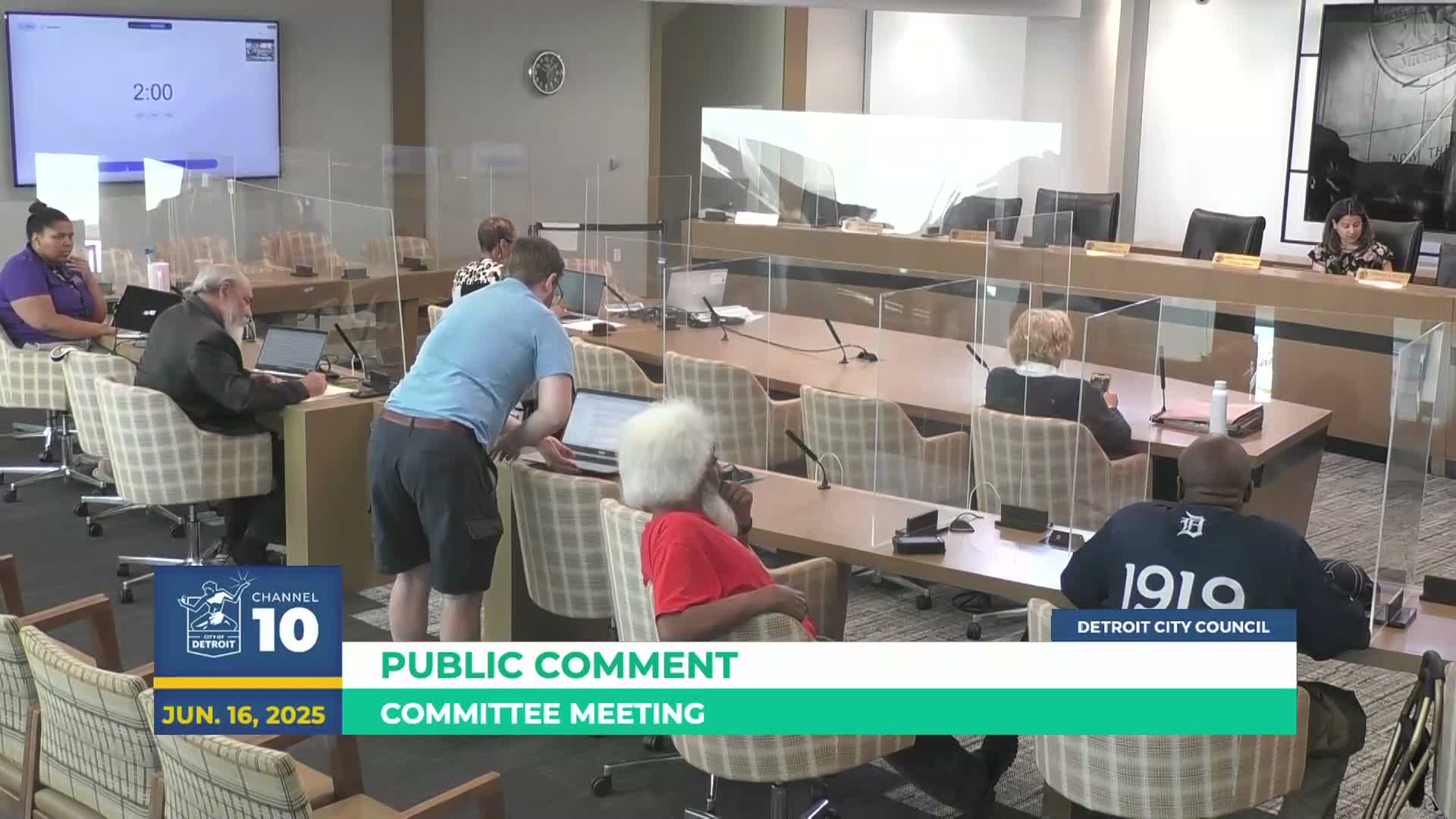
Transit riders and advocates urged Detroit city officials on Monday to reconsider security policies that they say bar people from waiting indoors at two major transit centers. At the Public Health & Safety Standing Committee’s public-comment session, multiple speakers described private-security screenings at the Rosa Parks and Jason Hargrove centers and said guards are preventing riders from sitting inside the buildings even when spaces were designed for that purpose.
"They're not allowing people to sit down," said Michael Cunningham, whose in-person comment kicked off a series of statements on the issue. "If they're not causing problems, they ought to be able to sit in there to get some respite time." Cunningham said the change followed the installation of metal detectors.
Joel Batterman, campaigns manager for Transportation Riders United, told the committee private security now searches everyone entering indoor portions of the centers and has told riders they cannot wait by doors intended for that purpose. "We do not believe that these measures make riders safer," Batterman said, arguing that the policy "criminalizes transit riders and reinforce[s] the perception that transit is unsafe." He and other speakers said the restriction particularly harms seniors and people with disabilities who may wait an hour for infrequent buses.
Lucas Lisakian of Transportation Riders United and Bernard Majenski, a transit-justice organizer, urged a public hearing and questioned training and oversight for security guards conducting alternative screening for people with medical implants, survivors of sexual assault and transgender riders. Lisakian said he was once told by a guard, "you'll get more than my name if you keep asking questions," which he said he took as a threat and he said he plans to report the incident to the city's public-safety contacts.
Committee members acknowledged the concerns and the meeting record shows the Chair told attendees that DDOT-related contracts were on the agenda later in the session and that staff would be asked to bring answers in committee or at quarterly DDOT briefings. The Chair also offered to invite the department director to a future session and to raise questions about the specific contractors and security arrangements when those agenda items are discussed.
The committee took no formal action on the complaints at Monday’s meeting; the remarks were recorded during the public-comment period and the Chair said the body would try to raise the issue during related contract discussions on the agenda and at future updates with DDOT.