Get Full Government Meeting Transcripts, Videos, & Alerts Forever!
Get email alerts on the Transit Security topic
No spam. Unsubscribe anytime.
Riders and advocates press Detroit council to investigate metal detectors and seating bans at transit centers
Summary
Riders, transit advocates and multiple callers told the Public Health and Safety committee that private security and newly installed metal detectors at Rosa Parks and Jason Hargrove transit centers are keeping people from sitting inside and deterring use. They asked council to probe policies and guard conduct.
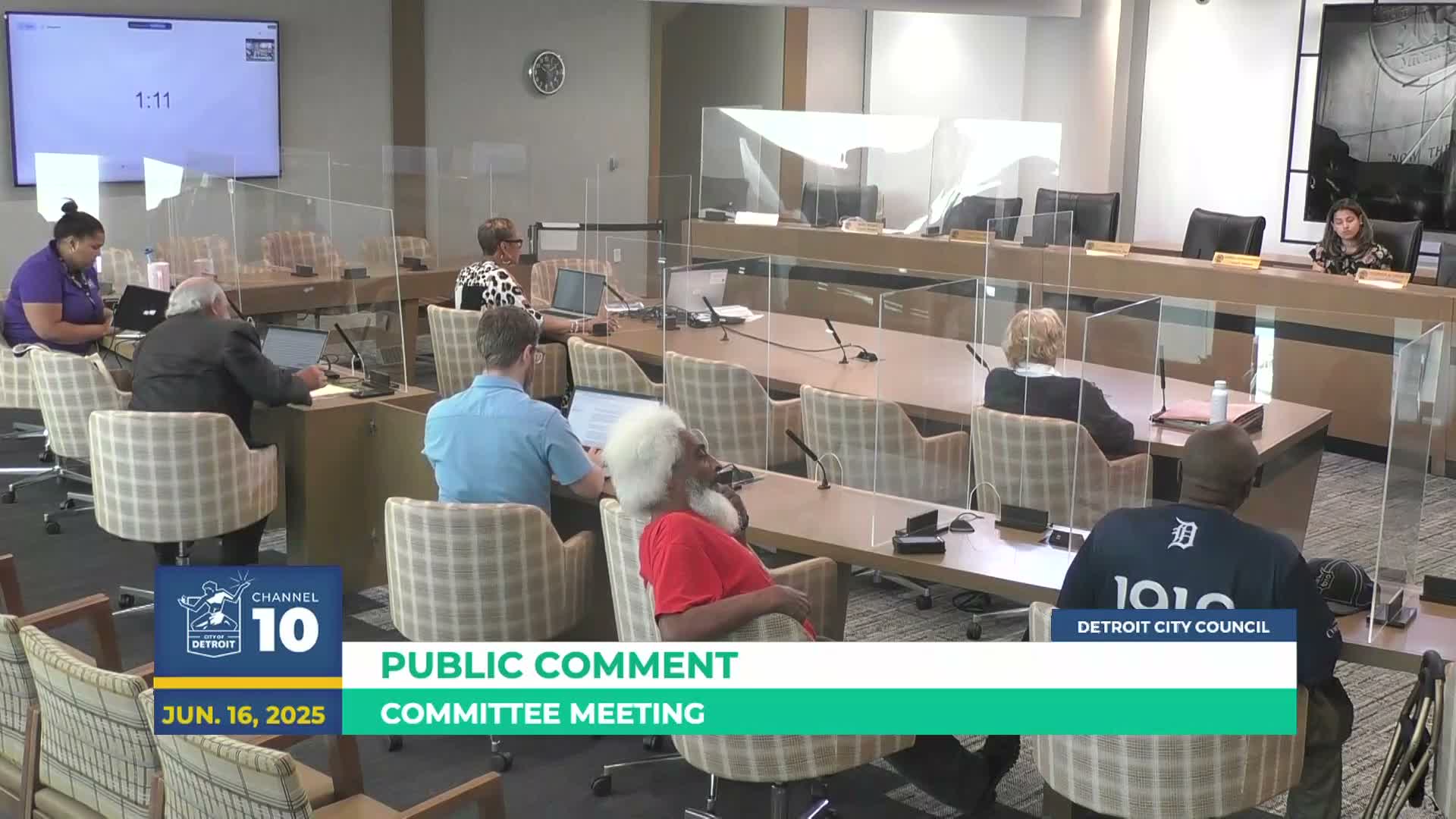
Riders and transit advocates urged the Detroit Public Health and Safety Standing Committee on Monday to investigate recent security measures at the city’s transit centers, saying metal detectors and private security have led to people being told they cannot sit inside facilities named for civil-rights figures.
"They're not allowing people to sit down on the inside," said Michael Cunningham during in-person public comment, describing several people who have been turned away since the detectors were installed. "If they're not causing problems, they ought to be able to sit in there to get some respite time."
Joel Batterman, campaigns manager for Transportation Riders United, told the committee that private security are searching everyone who enters indoor portions of the Rosa Parks and Jason Hargrove centers and then telling riders they cannot wait inside. "These measures may actually deter people from using transit," Batterman said, arguing the screening does not make riders safer and risks criminalizing transit users.
Multiple callers echoed that account. Lucas Lisakian of Transportation Riders United said the searches amount to a "stop-and-frisk" style approach without individualized suspicion and described a recent instance where a guard told him, "you'll get more than my name if you keep asking questions," which Lisakian interpreted as a threat.
Speakers emphasized disproportionate effects on seniors and people with disabilities whose buses arrive infrequently and who rely on indoor spaces to avoid extreme weather. "Many riders are seniors or people with disabilities who are especially vulnerable to extreme heat or cold," Batterman said.
Council members acknowledged the concerns and noted DDOT contracts on the meeting agenda. The chair said staff would try to raise the advocates' questions during the day's DDOT contract discussions and suggested inviting the DDOT director to a future committee meeting for further answers.
The committee did not take a formal vote on transit security at Monday’s meeting; members said they would pursue follow-up, including asking for information at the next quarterly DDOT update and inviting DDOT leadership to respond to the allegations.
What's next: advocates asked the council to request DDOT and the contracted security vendors provide a written justification for screening policies, explain alternative screening procedures for people with implants or other medical needs, and make clear whether riders are being told they may not wait inside transit centers.