Get Full Government Meeting Transcripts, Videos, & Alerts Forever!
Get email alerts on the Transit Security topic
No spam. Unsubscribe anytime.
Riders and advocates press Detroit council over metal detectors, access at Rosa Parks and Jason Hargrove transit centers
Summary
Multiple riders and transit advocates told the Public Health & Safety Committee (June 16) that private security and metal detectors at Rosa Parks and Jason Hargrove transit centers have blocked people from waiting inside, risking seniors and riders with disabilities, and urged council inquiry and a public hearing.
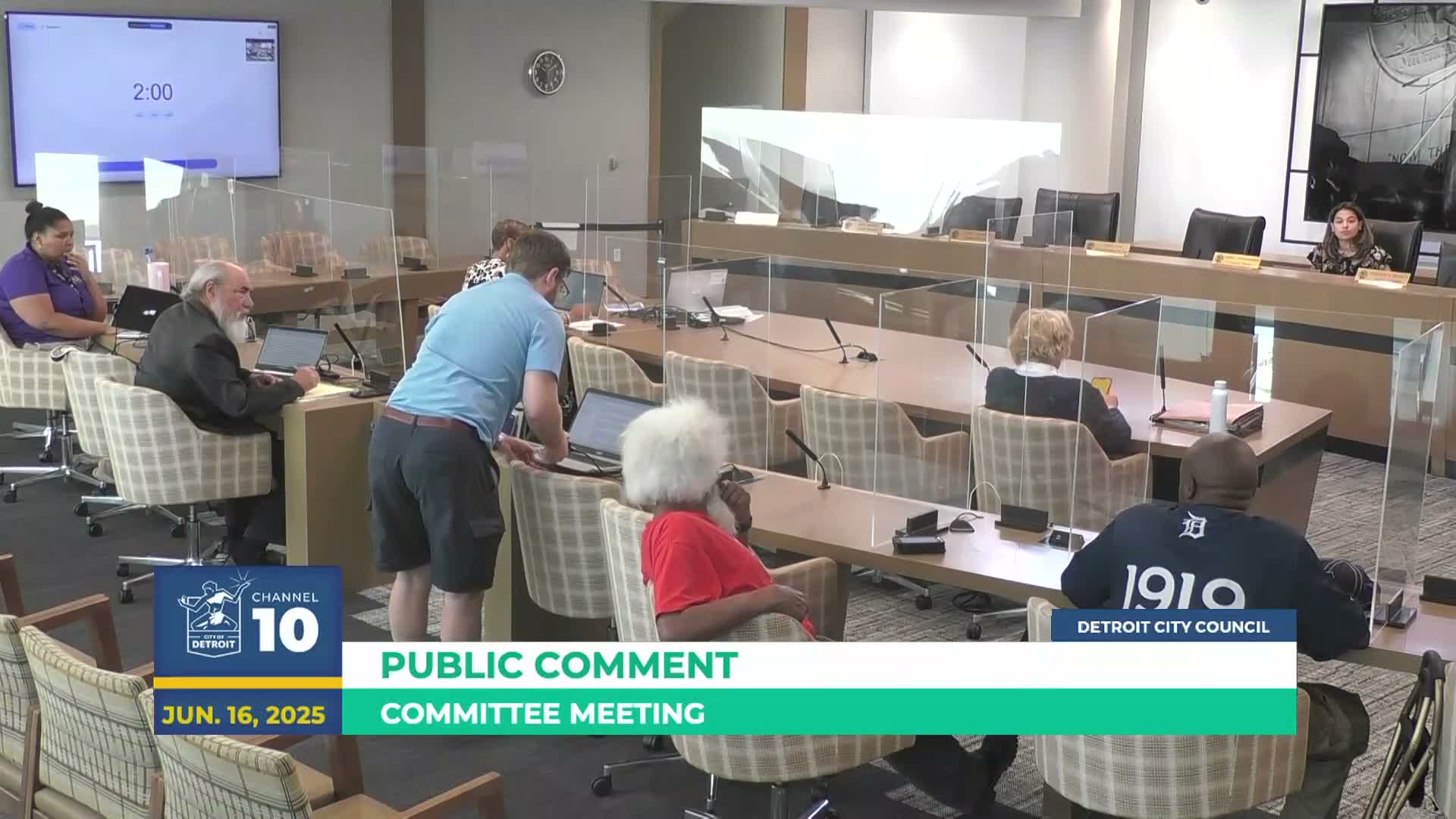
Public comment at the Detroit City Council’s Public Health & Safety Committee on June 16 centered on complaints that recent security measures at two major transit hubs are denying riders indoor access and creating civil‑liberties and safety concerns.
Michael Cunningham, speaking in person, described visits to Rosa Parks and Jason Hargrove transit centers and said the centers ‘‘are not allowing people to sit down’’ after metal detectors and private security screenings were installed. ‘‘If they’re not causing problems, they ought to be able to sit in there to get some respite time,’’ Cunningham said.
Joel Batterman, campaigns manager for Transportation Riders United, told the committee the measures ‘‘do not make riders safer’’ and that guards have been telling riders they cannot wait inside facilities designed for that purpose. ‘‘Denying transit riders access to a warm or air conditioned space to wait for their buses, many of which arrive only once per hour, is outrageous,’’ Batterman said, adding that many riders are seniors or people with disabilities.
Other callers echoed those concerns. Bernard Majenski, a bus‑rider organizer, urged the city to stop unannounced changes and asked why the installations occurred without a public hearing. He warned that private security conducting searches raises special risks for people who need alternative screening because of pacemakers, implants or for survivors of sexual assault and transgender riders.
Several callers described interactions they said were unprofessional or threatening. Lucas Lisakian (Transportation Riders United) reported a guard told him, ‘‘you’ll get more than my name if you keep asking questions,’’ which he interpreted as a threat and said he plans to follow up with city officials.
Committee members acknowledged the repeated public comments and said DDOT contracts on that day’s agenda created an opportunity to raise the issue with the department. The chair said the committee could ask the DDOT director to appear at a future meeting or use the quarterly DDOT update to seek answers.
The committee did not take formal action on the complaints during the public‑comment period; multiple speakers requested investigation, public hearings and clearer notice when centers are closed for maintenance. The chair said staff would attempt to raise the questions with DDOT during the meeting’s contract discussions and in future sessions.
What’s next: Council members flagged several DDOT items later in the agenda and said they would pursue follow‑up questions or invite DDOT leadership to report to the committee.