Get Full Government Meeting Transcripts, Videos, & Alerts Forever!
Get email alerts on the 911 Reform topic
No spam. Unsubscribe anytime.
Detroit Fire Department proposes nurse-navigation pilot to divert non-emergency 911 calls
Summary
The Detroit Fire Department presented a nurse-navigation plan to triage low-acuity 911 calls to nurses, citing about 150,000 annual 911 requests with roughly 25% non-emergent; the department said vendor selection will occur in Q3, contract by Q4, and a pilot could start in January.
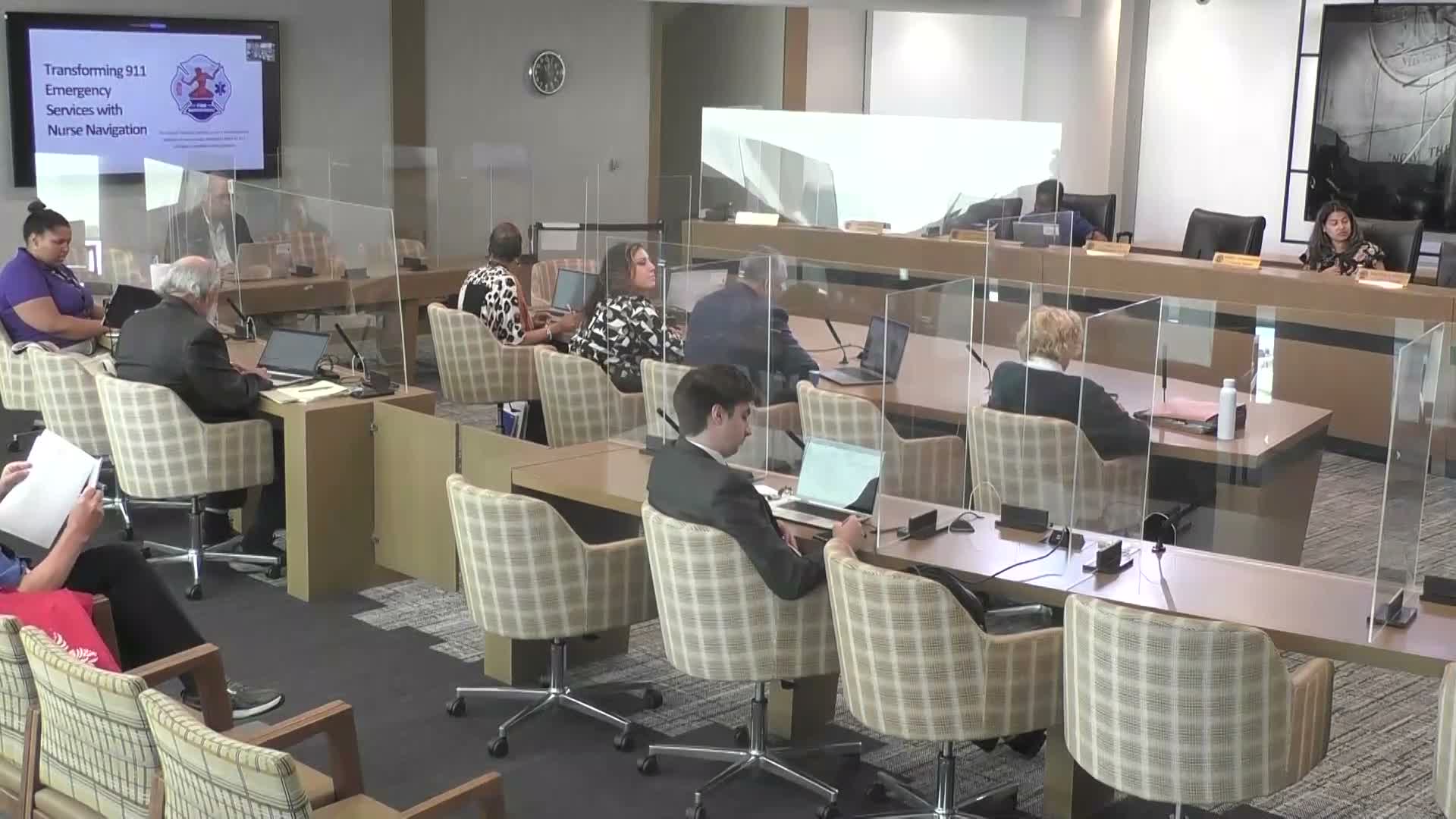
The Detroit Fire Department told the Public Health & Safety committee on June 16 that it wants to divert low-acuity 911 calls from emergency responders to nurses through a nurse-navigation program.
Deputy Commissioner Derek Hellman said the department fields roughly 150,000 911 requests annually and that about 25% of those are non-emergent. "We want to create a health equity program within the city to give our residents the ability to be directed to the proper care," Hellman said, describing options such as immediate nurse advice, scheduled transport, telehealth, or referral to urgent care rather than an unnecessary ambulance and emergency-room visit.
Hellman outlined an implementation timeline: a vendor-selection and bid-review process in Q3, contract negotiation in Q4, a pilot beginning in January of the following year, a soft rollout in Q1, and a broader rollout in spring (March'April). He said the vendor proposals include translation capacity able to support up to 200 languages.
Council members expressed support and asked for more details on vendor partnerships and language access; Member Waters compared the approach to health-system call centers that often route callers first to a nurse. Hellman and other DFD staff said the system aims to reduce non-emergency dispatches, lower costs for residents referred away from ER trips, and reduce fatigue among field crews so ambulances are available for high-priority calls.
The committee requested additional vendor information when available and said it will invite further briefings as the department moves through procurement.